Basic Math Learning Games for Beginners
Learning math doesn’t have to be frustrating. In fact, it can be one of the most rewarding skills to practice - especially when it feels like play. The secret is to turn numbers into something that’s fun, interactive, and rewarding. That’s exactly what Moadly and other math-based brain games do. They take the fear out of math and turn it into something your brain actually enjoys.
Whether you’re a parent teaching your child, a student who wants to build confidence, or an adult trying to refresh old skills, math learning games are one of the easiest ways to make progress without pressure.
The right game can turn “I can’t do this” into “Wait, that was actually fun.”
Why Start with Games Instead of Worksheets
Math is all about patterns, memory, and logical thinking. Worksheets train those skills in theory, but games make them come alive. A good game doesn’t just make you practice equations - it makes your brain react, predict, and connect ideas in real time. That kind of active learning is where real understanding begins.
For beginners, especially kids or anyone struggling with math anxiety, the difference is huge. A game gives instant feedback and a reason to keep going. That’s why apps like Moadly have become so popular - you get the same learning benefit as a lesson, but in small, enjoyable bursts that actually feel rewarding.
We covered this idea in Best Learning Games for Kids That Actually Teach Something, where short, focused games proved more effective for long-term learning than repetitive drills.
What Makes a Math Game “Beginner-Friendly”
Not all math games are designed for beginners. Some throw players into complex challenges too early. The best ones build confidence first, then gradually increase difficulty. They guide you step by step - like a personal trainer for your brain’s number sense.
Here’s what makes a math learning game great for beginners:
- Clear feedback: You know instantly when you’re right or wrong
- Small challenges: Problems come in bite-sized steps
- Visual learning: Colors, shapes, and movement make it easier to understand
- Repetition without boredom: It keeps your attention by changing pace and rewards
- Progress tracking: You see yourself improving, which builds motivation
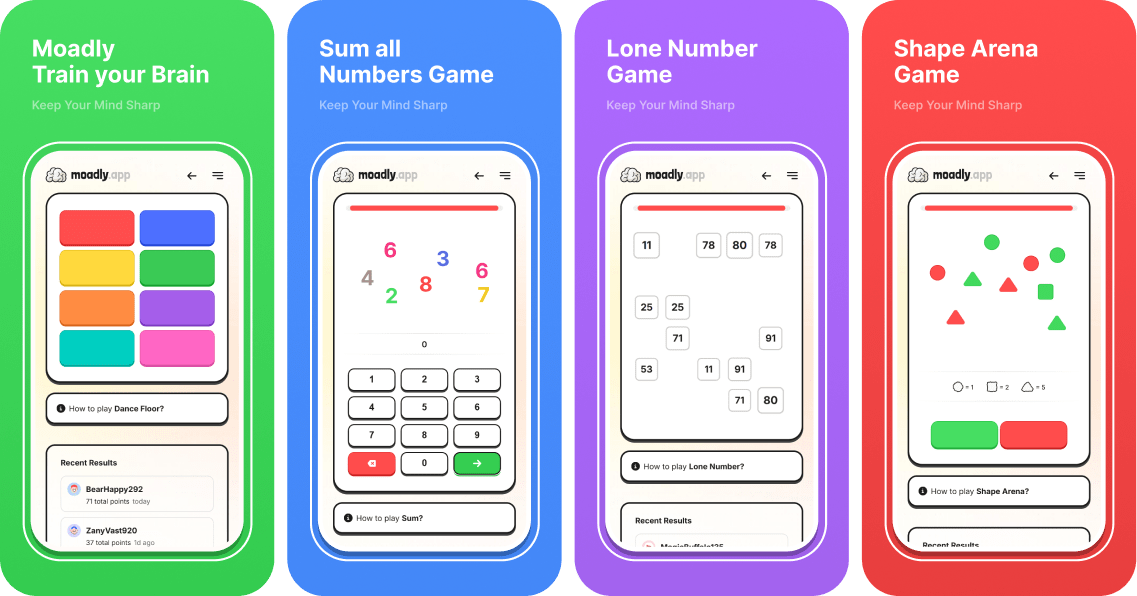
Moadly’s design fits perfectly here. Its math mini-games start simple - quick additions or comparisons - and then adapt to your skill level. You’re always right at the edge of your comfort zone, which is where real learning happens.

Why Math Games Work for All Ages
Even adults who think they’re “bad at math” can rebuild confidence through games. That’s because games use repetition disguised as fun. Instead of doing 50 problems on a sheet, you solve 50 mini-puzzles in under 10 minutes - and your brain barely notices the effort.
Math-based brain training works because it lights up multiple regions of your brain: visual, logical, and motor. You’re processing numbers, making quick choices, and reacting all at once. That combination is what strengthens cognitive flexibility and working memory.
If you’ve ever struggled with focus while learning, you might also like How Do I Correct Brain Fog? - it explains how mental training (like math puzzles) improves clarity and attention.
Core Math Skills Every Beginner Should Practice
Before jumping into advanced math, it helps to master the basics. Games can make these core skills automatic, which frees your mind to handle harder concepts later.
| Skill | Why It Matters | Best Game Type |
|---|---|---|
| Number Recognition | Builds foundation for all other math | Visual number games |
| Addition & Subtraction | Develops mental calculation speed | Quick-response games |
| Pattern Recognition | Trains logic and prediction | Sequence or pattern puzzles |
| Comparison (More or Less) | Builds numeric intuition | Visual comparison mini-games |
| Counting in Steps | Prepares for multiplication and division | Rhythm or timing-based math games |
Moadly’s math mini-games cycle through these skills naturally. One moment you’re matching patterns, the next you’re racing against a timer to find the right sum. It’s that variety that keeps your mind engaged without ever feeling like homework.
Examples of Easy Math Games That Teach
1. Number Pop
A simple but effective idea: numbers appear quickly, and you have to tap them in the right order or match the total. It teaches number recognition, quick thinking, and hand-eye coordination - perfect for young learners. Moadly’s early math challenges use this fast-paced format to build comfort with basic operations.
2. Pattern Builder
This kind of game trains the brain to predict sequences. You might see “2, 4, 6, ?” and need to fill in the next step. It strengthens logic and sets the stage for algebraic thinking later. You’ll find similar pattern recognition challenges in Cognitive Exercises That Actually Work According to Science.
3. Quick Math Reflex
Great for both kids and adults. A question appears - “8 + 7 = ?” - and you get a few seconds to answer. The time pressure improves processing speed and focus. It’s one of the most popular modes inside Moadly because it combines math with reaction time training, which boosts alertness.
4. Visual Count
Instead of reading numbers, you count objects that appear briefly. It strengthens visual learning and number sense, which are both key for beginners. This method helps bridge the gap between abstract numbers and real-world quantities.
How to Keep Beginners Motivated
Motivation is the hardest part of learning math. That’s why games are so effective - they use small goals and instant rewards to keep you going. The brain releases dopamine every time you win or get a correct answer, which creates a natural learning loop.
To build consistency, follow these three rules:
- Set a time, not a score. Aim for 10 minutes a day instead of chasing perfect results.
- Mix game types. Switch between math, logic, and memory games to stay fresh. Moadly automatically does this for you.
- Celebrate progress. Notice when problems feel easier - that’s real growth.
If you want more ways to make brain training stick, check out Why Routine Brain Training Is Essential for Mental Health. It explains why consistency matters more than intensity when building lasting skills.
Common Mistakes to Avoid
Some math learning games get the formula wrong. They either make things too complicated too soon or rely too much on luck. Here’s what to watch out for:
- Games that don’t increase difficulty as you learn
- Too much visual clutter or distractions
- No feedback or explanation for wrong answers
- Time limits that feel stressful instaed of motivating
Good math games, like those in Moadly, balance tension and fun. They push you just enough to keep your brain active without making you feel overwhelmed.
Turning Math Anxiety Into Confidence
Many people who say they “hate math” don’t actually hate numbers - they hate the feeling of being confused or left behind. Games solve that problem by breaking complex ideas into small wins. Each round gives a bit more confidence, and before you realize it, your brain is handling math problems automatically.
This improvement isn’t just psychological - it’s neurological. The brain strengthens connections between the prefrontal cortex and parietal lobe, which handle reasoning and number processing. That’s how consistent math puzzles can literally rewire your brain for better focus and memory. You can read more about this in How Brain Plasticity Can Help You Recover from Brain Fog.
Daily Math Game Routine
If you want to make steady progress, here’s a simple schedule that works for both kids and adults:
- Morning (5 minutes): Do a warm-up game like simple addition or number matching
- Afternoon (5 minutes): Try a pattern or sequence puzzle to activate logic
- Evening (5 minutes): Finish witha quick mental math challenge for focus
This totals just 15 minutes a day - and it’s all it takes to start seeing improvement in number recall, focus, and confidence. Moadly makes this easy since it automatically rotates between math, logic, and memory challenges for you.

How Games Improve More Than Math
Even if your goal is to get better at math, the benefits go far beyond numbers. Math games build transferable skills like problem-solving, pattern recognition, and focus. These are the same cognitive skills that help you in reading, writing, and even emotional control.
That’s why brain training isn’t just about school or IQ - it’s about overall mental health. When your brain stays active and confident, you think more clearly and handle challenges better in every part of life. For more on that, read Understanding the Cognitive Benefits of Brain Training Apps.
Final Thoughts
Basic math learning games are more than a shortcut to learning - they’re a smarter, more enjoyable way to grow your mind. They replace pressure with curiosity and help you build real skills through experience instead of repetition.
If you’re starting fresh, or helping someone else begin their math journey, don’t overthink it. Just start small, stay consistent, and have fun with it. Apps like Moadly make it simple - a few minutes a day of fun, focused play that builds a stronger, faster, and more confident brain.
Because the truth is, everyone can learn math. You just need the right kind of game to remind your brain how good it can be at learning.