What do doctors think about brain training apps?

Many people struggling with brain fog, memory issues, stress, and slow thinking eventually ask the same question: Do doctors actually recommend brain training apps? It's a fair question.
There are so many apps out there that it's hard to know which ones are helpful and which ones are just hype. And when you're already feeling mentally drained, you don't want to waste time on something that won't make a difference.
Do Doctors Support the Use of Brain Training Apps?
Most doctors don't say that brain training apps are a miracle cure. But many do support them as part of a larger cognitive health routine. They see them as useful tools for improving:
- Attention
- Memory recall
- Mental speed
- Focus and concentration
- Problem-solving skills
Doctors especially recommend them for people who:
- Have mild cognitive issues
- Experience brain fog after illness or stress
- Want to maintain a healthy brain as they age
- Need structured mental activity to stay sharp
There's been studies showing that consistent mental exercise helps improve certain cognitive functions or slow down their decline. This doesn't mean every app is good. But it does mean the concept is solid.
What Kind of Brain Training Do Doctors Favor?
Most doctors prefer apps that focus on simple, repeatable tasks. These tasks stimulate the brain without overwhelming it. They're most effective when the exercises are short and engaging.
Here are the types of training doctors tend to support:
- Attention training - Helps users stay focused longer.
- Working memory drills - Improves short-term mental storage.
- Executive function tasks - Strengthens planning and decision-making.
- Simple arithmetic or logic games - Keeps the mind active and stimulated.
- Reaction and speed tasks - Sharpens mental quickness.
Doctors often emphasize that training should be:
- Short
- Consistent
- Low-pressure
- Easy to stick with daily
This is why apps built around quick sessions are more doctor-friendly than apps requiring long or stressful training times.
Why Brain Training Helps People With Brain Fog
Brain fog is a mix of slowed thinking, poor focus, and mental fatigue. It makes everyday tasks feel harder. Brain training helps rebuild the cognitive systems that fog weakens.
Here's a simple breakdown:
| Brain Fog Symptom | How Training Helps |
|---|---|
| Slow thinking | Repetitive tasks speed up mental processing |
| Poor focus | Attention exercises rebuild concentration control |
| Memory slips | Working memory games strengthen recall |
| Mental fatigue | Short sessions build cognitive endurance |
| Difficulty completing tasks | Executive function drills improve task management |
The key is consistency. Small daily sessions make the biggest difference.
Where Apps Like Moadly Fit In
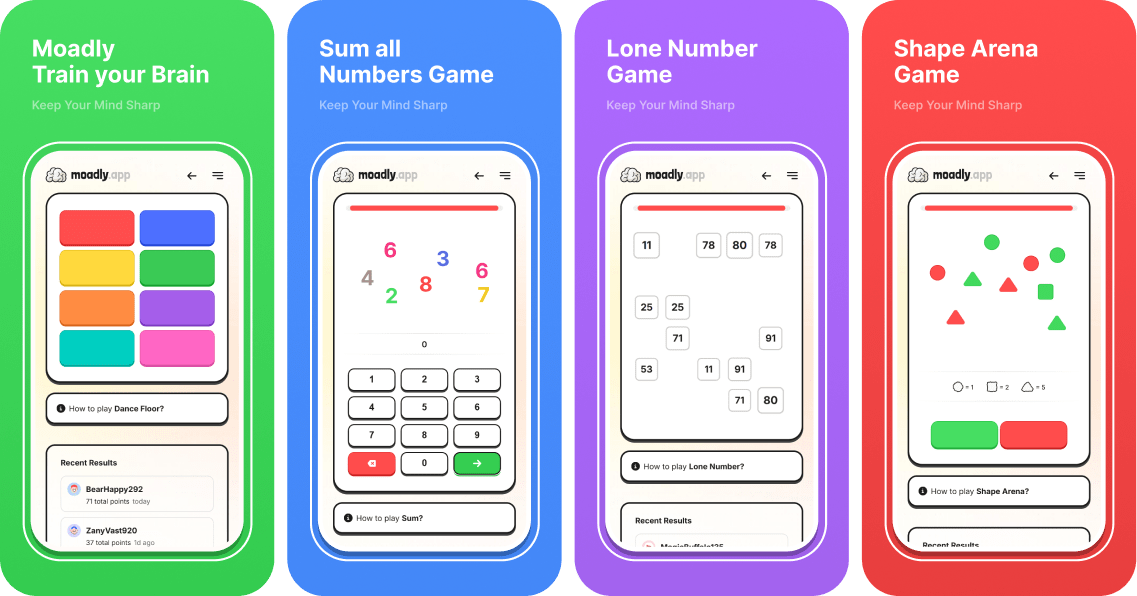
Moadly is a brain training app built around exactly the kind of exercises doctors prefer. Every game is short. Every task is simple. And everything is designed to gently challenge your brain while keeping you motivated.
Moadly is completely free, and you can unlock all 25+ mini-games without paying. There's an optional subscription to remove ads, but gameplay stays free.
Each mini-game targets a specific skill. These include:
- Memory
- Attention
- Logic
- Arithmetic
- Problem solving
Moadly works especially well for people dealing with:
- Brain fog from stress
- Brain fog after illness
- Cognitive slowdown from burnout
- Low productivity and scattered focus
Since the sessions are short, you can train on a coffee break, while waiting in line, or during a quiet moment before bed.
Why Doctors Often Encourage Light Mental Activity Over Complex Tasks
Doctors generally want patients to avoid overwhelming themselves mentally. When you're already dealing with fog, stress, depression, or anxiety, heavy cognitive work makes things worse.
That's why apps featuring simple tasks are preferred. Light stimulation keeps the brain engaged without burning it out.
Here's a comparison:
| Type of Task | Effect on Brain Fog |
|---|---|
| Complex tasks | Overwhelm, increased fatigue, worse fog |
| Simple short tasks | Improves clarity, builds focus, gentle recovery |
Simple tasks also build confidence. Many people feel discouraged when brain fog prevents them from completing complicated mental work. Training routines like Moadly's bring that confidence back by offering small wins.
What Doctors Warn Against
Doctors aren't against brain training apps. They just want users to avoid pitfalls like:
- Expecting instant results
- Pushing too hard
- Using apps that promise miracle cures
- Choosing apps with long, stressful sessions
- Focusing only on speed instead of clarity
Brain training should feel supportive, not stressful. If an app makes you anxious or presured, it's not a good fit.
Do Brain Training Apps Actually Work?
The short answer: Yes, but within limits.
Brain training apps help with:
- Attention
- Working memory
- Processing speed
- Mental clarity
- Consistency and discipline
They also keep your brain active ina fun way. And for many people, especially those recovering from brain fog, that's exactly what's needed.
However, they're not designed to cure medical conditions. They're a tool, not a replacement for medical care.
Who Can Benefit the Most?
You might benefit a lot from brain training apps if you:
- Feel mentally slow or foggy
- Have trouble focusing
- Forget small things often
- Feel mentally fatigued even with simple tasks
- Want a fun way to stay sharp daily
These apps are especially useful for older adults, students, remote workers, developers, and anyone dealing with cognitive stress.
How Moadly Supports Brain Training
Moadly is built around the exact principles doctors support. It's light. It's simple. It's fast. And it's 100% free.
Here's a quick table showing how Moadly lines up with what doctors recommend:
| Doctor Recommendation | Moadly Feature |
|---|---|
| Short sessions | 1-2 minute mini-games |
| Simple tasks | Easy arithmetic, logic, memory drills |
| Daily repetition | Quick games you can play anytime |
| Low stress | No pressure gameplay |
| Accessible for all ages | Beginner-friendly design |
| Free access | All games unlockable without payment |
If you're unsure where to start, Moadly gives you a simple path.
Internal Resources You Might Like
You can explore related brain training topics here:
- Do doctors recommend brain training apps?
- How Brain Games Stimulate Neuroplasticity and Focus
- Brain Changer Game That Rewires Your Thinking
- How to Stay Focused During Mental Burnout
These articles dive deeper into focus, neuroplasticity, and cognitive recovery.
Final Thoughts
So, do doctors recommend brain training apps? Yes - as long as they're simple, consistent, and used for the right reasons. They help improve focus, speed, memory, and clarity. They support brain fog recovery. They offer mental activity that's easy to stick with.
Brain training won't solve everything overnight. But it gives you a real, practical way to take control of your mental clarity again.
If you want something free, simple, and built around doctor-supported training methods, try Moadly. It's one of the easiest ways to keep your brain active daily.