How Brain Games Stimulate Neuroplasticity and Focus
Your brain is not fixed. It changes every day. Every thought, every skill, every mistake, every pattern you learn leaves a mark. This constant ability to change is called neuroplasticity. It is the reason you can relearn focus after burnout, get sharper with age, or improve memory even if you have always felt forgetful.
Brain games tap into this ability. Not in a magic way. Not in a superhuman way. In a very real, biological way. When you engage with certain types of games, the brain builds stronger pathways. It prunes weak ones. It speeds up signals. It becomes more efficient.
Why brain games affect neuroplasticity
Neuroplasticity happens when neurons fire repeatedly. The more they fire, the stronger the connections become. When you stop using certain pathways, the brain trims them to save energy. Brain games work because they force repeated firing in very specific cognitive areas.
Here is what that looks like in real life:
- You solve a pattern puzzle. Your brain strengthens pattern recognition circuits.
- You practice short term memory games. Your brain strengthens working memory pathways.
- You do timed arithmetic. Your brain improves processing speed and reaction time.
This is not theory. This is biology. Neurons that fire together wire together.

Focus benefits from controlled challenge
Focus is not something you magically switch on. Focus is a skill. You train it like you train a muscle. If you throw a huge task at a tired mind, it collapses. If you give it short, structured tasks, it strengthens gradually.
This is why brain games help focus. Especially simple ones. Short bursts of concentrated attention teach the brain how to stay on one task. They also train the prefrontal cortex, the area responsible for control, planning, and attention.
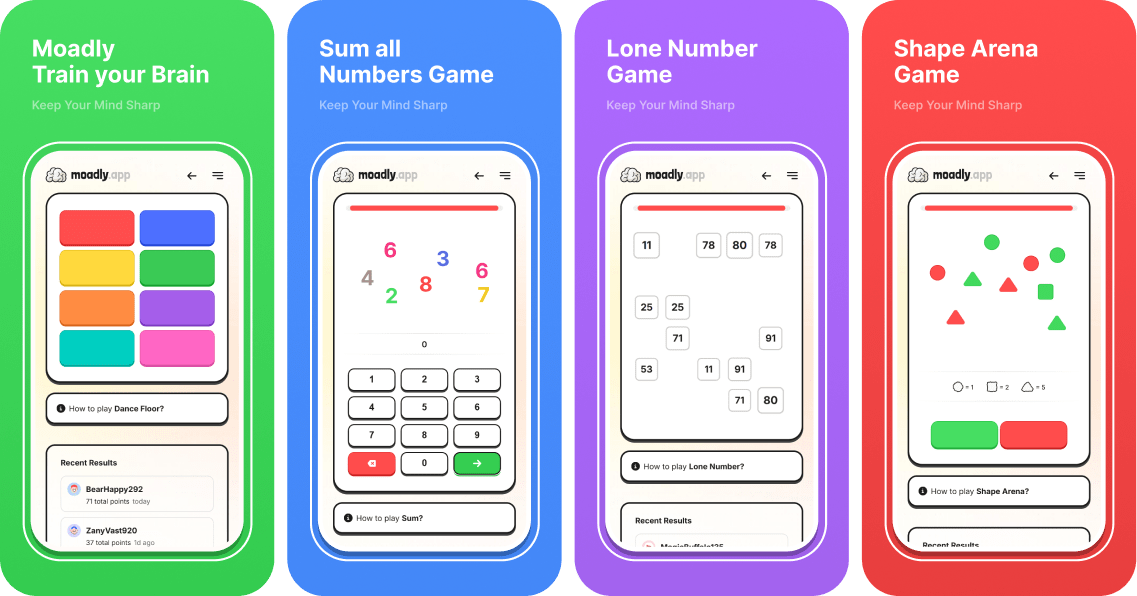
Games that require quick decisions, pattern tracking, or memory juggling are especially powerful. If you want a place to start, Moadly has games designed to target exactly these skills. It does not feel heavy or academic. It is more like small workouts for your attention span.
Not all games stimulate neuroplasticity equally
Let’s be real. Some brain games are fluff. They look cool but do almost nothing for your mind. Others genuinely push cognition in a good way.
Here is a simple table to help you understand what matters.
| Game Type | Impact on Neuroplasticity | Why It Works |
|---|---|---|
| Memory recall games | High | Force working memory circuits to fire repeatedly |
| Pattern puzzles | High | Strengthen recognition and prediction pathways |
| Fast arithmetic | High | Boost processing speed and mental clarity |
| Slow casual games | Low | Not enough cognitive demand |
| Multitasking games | Medium | Can improve attention switching but may increase stress |
The takeaway is simple. If the game makes you think quickly, remember something, track a pattern, or plan ahead, it builds neuroplasticity. If the game mostly entertains you, it does not.
Why simple games work better than complex ones
Big complicated games often look smart but stimulate fewer cognitive systems. They become passive after a while. Simple games stay mentally active because they demand fast reactions and constant attention.
Examples:
- Tap whenever a number repeats.
- Remember a pattern of shapes and repeat it.
- Choose the correct answer before the timer ends.
These do more for your brain than a complex open world game. Not because they are deep or philosophical. But because they force your brain to fire rapidly under controlled pressure.
Moadly leans into this. Most of the mini games take under 30 seconds. That short format is perfect for neuroplasticity and focus training.
The role of repetition
The brain does not change from a single session. It changes through repetition. The more often you engage with challenging tasks, the more your neural pathways adapt.
This is why daily brain games work so well. They fit into small pockets of time. You do not need an hour. You need five minutes. You need consistency.
If you want a daily routine, try something like this:
Morning: one quick memory round. Midday: one logic or pattern mini game. Evening: one short arithmetic sprint.
That alone stimulates enough neural activity to improve attention and thinking speed over a few weeks.
Your brain rewards variety
Doing the same game every day eventually stops being effective. The brain adapts. It becomes efficient. That efficiency kills the challenge, which kills the neuroplasticity effect.
Variety keeps the brain guessing. Switching between memory games, logic puzzles, math drills, and pattern tasks hits more circuits and keeps them active.
Moadly has this built in. The app rotates mini games so you do not get stuck in the same cognitive routine. You get variety without planning it yourself.
Neuroplasticity improves focus through three mechanisms
Here are the three main ways brain games sharpen focus. Simple explanation. No fluff.
1. Faster signal speed
Repeated stimulation makes neurons fire faster. Faster signals mean smoother concentration and quicker reactions.
2. Stronger filtering
Games that require focus train the brain to ignore irrelevant information. This is the same skill used in real life when you block out distractions.
3. Better working memory capacity
A stronger working memory means you can hold more information at once. This makes tasks feel lighter and easier to manage.
These changes accumulate. Focus stops feeling like a fight. Thinking becomes easier. Mental fog lifts.
Brain games vs real life focus tasks
You might wonder if brain games help with real life responsibilities. Yes. If the games target specific cognitive skills that spill over into daily tasks.
Here is what transfers well:
- Memory games improve remembering deadlines, names, and information.
- Pattern games improve problem solving and quick decision making.
- Math games improve mental speed and clarity.
- Reaction games improve attention switching and alertness.
These benefits show up in school, worka nd everyday routines.
What brain games do not do
They are not miracle cures. They will not fix your life. They will not replace sleep, exercise, or nutrition. They are a tool, not a replacement for real habits. Use them as a supplement. A daily spark for the brain.
Start with short sessions
You do not need long sessions. In fact, long sessions reduce effectiveness. The brain learns best in short, sharp bursts. Think ten minutes or less.
This is why Moadly uses tiny games instead of long ones. The design fits the way the brain actually learns.
A simple starter plan
If you want a routine that builds neuroplasticity and focus without stress, start with this:
| Time of Day | Game Type | Goal |
|---|---|---|
| Morning | Memory mini game | Wake up working memory circuits |
| Afternoon | Fast arithmetic drill | Boost processing speed |
| Evening | Pattern or logic puzzle | Strengthen reasoning pathways |
Do this daily for two weeks. You will notice clearer thinking, faster reactions, and longer focus periods.

Final thoughts
Brain games work because they activate the exact mechanisms responsible for neuroplasticity. They challenge. They repeat. They fire circuits that normally sit idle during passive entertainment.
If you want to add daily stimulation without stress, try something like Moadly. The games are small, direct, and built around the science in this article. Use them in short bursts. Pair them with good sleep, simple movement, and consistent hydration.
Your brain is always changing. You get to choose the direction.