Best Websites And Apps To Help Keep Your Brain Sharp And Focused
If you want a straightforward list you can try this week, this is it.
Below I list the best websites and apps for different goals, explain what each one does, and give practical tips for using them so you actually stick with the habit.
Top picks. Best apps and websites
1. Moadly (web and app)
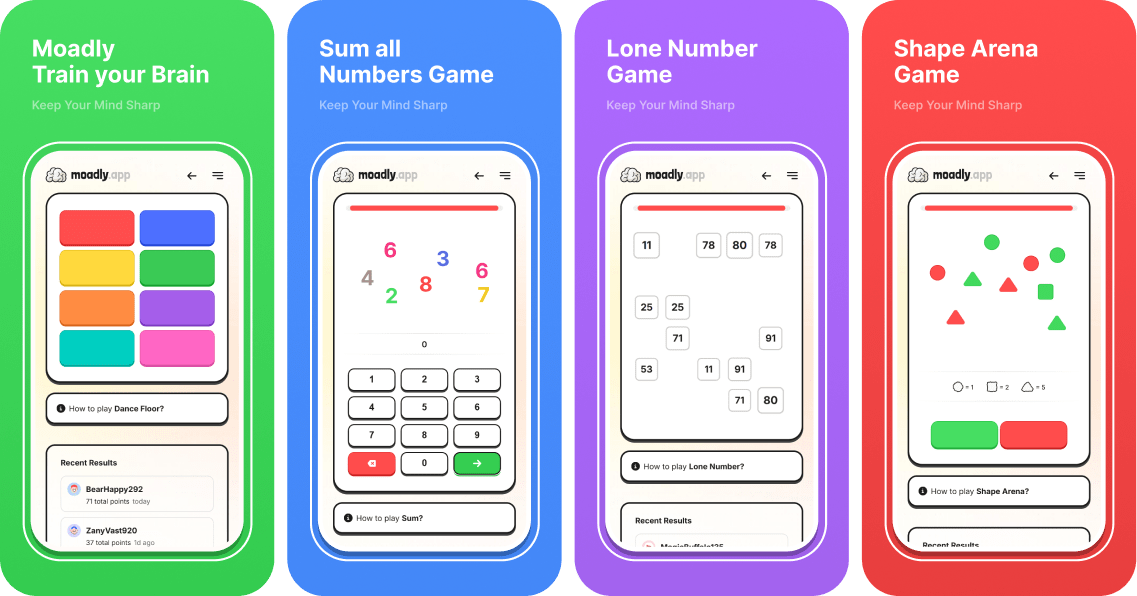
What it is. A balanced brain training app with memory, attention, and reasoning games that are short and practical. Why it stands out. It focuses on short daily drills you can keep doing, and it has free levels you can use forever. Best for. People who want a gentle, sustainable routine that includes both memory and attention work.
Try this. Start with a five minute attention drill, then a ten minute memory block. For more on how to use Moadly and the science behind it, read How to improve concentration and memory with Moadly and the overview article Do memory training apps like Moadly work.
2. Lumosity (web and app)
What it is. One of the most recognizable commercial brain training platforms. It offers short daily workouts that adapt to your performance. Why it stands out. Polished interface and a large variety of game types. Best for. Users who like a game-like experience and want adaptive difficulty.
Note. Many studies focus on improvement on Lumosity tasks. Transfer to daily life varies, so treat it as one tool in a broader routine.
3. Elevate (app)
What it is. A skill-building app with games for speaking, reading, math, and memory. Why it stands out. Strong focus on language, comprehension, and information processing. Best for. People who want cognitive training that doubles as practical skill practice, like faster reading or clearer communication.
4. Peak (app)
What it is. A mixed platform with short, fun challenges across attention, memory, problem solving, and mental agility. Why it stands out. Slick UI, many bite-sized games, and clear progress indicators. Best for. Casual users who want variety and short daily sessions.
5. BrainHQ (web and app)
What it is. A research-backed platform focused on speed and accuracy training. Why it stands out. Built on decades of neuroscience research, it emphasizes perceptual speed and auditory tasks. Best for. People who want scientifically structured training and are comfortable paying for premium features.
6. Cognifit (web and app)
What it is. A platform that offers assessment tools and training programs tailored to specific cognitive domains. Why it stands out. Useful for targeted training and tracking specific abilities over time. Best for. Users who want detailed assessments and personalized training plans.
7. NeuroNation (web and app)
What it is. European-born training app with brain exercises and cognitive tracking. Why it stands out. Many structured courses and an emphasis on gradual progression. Best for. Users who like a course-like approach rather than random games.
8. Anki (desktop and mobile) and other spaced repetition systems
What it is. A flashcard system using spaced repetition to maximize long-term retention. Why it stands out. Extremely effective for learning facts, names, vocabulary, and anything you want to remember long term. Best for. People who want to improve long-term memory for specific information.
Pro tip. Use Anki in the evening or split sessions between morning and evening for better retention. Combine with Moadly or daily micro tasks for balance.
9. Memrise
What it is. A language and memory platform that uses spaced repetition and gamified practice. Why it stands out. Great for language learning with memory-improving techniques. Best for. People who want to fold language learning into cognitive training.
10. Cambridge Brain Sciences (web)
What it is. A web platform offering validated cognitive tests used in research. Why it stands out. Good if you want rigorous baseline testing and periodic re-testing to measure changes. Best for. Users who care about assessment quality and want to measure real change over time.
11. Duolingo
What it is. A wildly popular language learning app. Why it stands out. Short lessons that build memory, pattern recognition, and processing speed. Best for. People who want cognitive benefit plus practical language skill. Use it as a memory and attention booster that has concrete utility.
12. Khan Academy and problem-focused learning sites
What it is. Not a standard brain-training platform, but learning math and logic solves real cognitive problems and builds reasoning skills. Why it stands out. Deep practice and concept mastery. Best for. Learners who enjoy structured, educational challenges that improve reasoning and working memory indirectly.
13. Free web games and puzzles
Examples. Crosswords, Sudoku, chess, logic puzzles, and daily pattern games. Why they matter. They are free, widely available, and target important cognitive skills like strategy, memory, and attention. Best for. People looking for low-cost ways to practice different skills.
Comparison table. Quick at-a-glance
| Platform | Best for | Session length | Free tier |
|---|---|---|---|
| Moadly | Memory, attention, short daily practice | 5-15 minutes | Yes |
| Lumosity | Adaptive games, mixed cognition | 10-20 minutes | Limited |
| Elevate | Language, processing, practical skills | 10-15 minutes | Limited |
| BrainHQ | Speed and perceptual accuracy | 15-25 minutes | Limited |
| Anki | Long-term memory, spaced repetition | User controlled | Yes |
| Cambridge Brain Sciences | Validated assessment | 20-40 minutes per test | Paid assessments |
How to build a simple weekly plan using these tools
Use the options above to design a plan that fits your life. Here is a flexible template you can copy.
- Daily 5 minute attention warm-up: use Moadly or a fast reaction trainer before work.
- Three times a week 10 minute memory block: Anki, Memrise, or Moadly memory tasks.
- Two times a week 15-20 minute mixed session: Elevate, Peak, or Lumosity for variety.
- Weekly 20-30 minute challenge: a Cambridge Brain Sciences assessment or a long puzzle session to test real progress.
Short sample sessions you can start today
Five minute focus prime
- Open Moadly or a reaction app.
- Do a five minute selective attention drill where you only tap targets and ignore distractors.
- Note accuracy and use it as a daily benchmark.
Ten minute memory workout
- Use Anki or Moadly memory games.
- Study a set of 8 items for 30 seconds, then recall them in order.
- Repeat with variations and increase list length gradually.
Fifteen minute mixed routine
- Five minutes reaction training.
- Five minutes sequence memory.
- Five minutes logic puzzle or language exercise on Elevate or Duolingo.
Practical tips to avoid wasting time
- Keep sessions short and consistent. Consistency beats intensity.
- Mix tools to reduce boredom. Rotate between Moadly, Anki, and a puzzle app.
- Use adaptive modes if available. They keep the challenge just right.
- Track small metrics like daily minutes, accuracy, and streaks. They keep motivation up.
- Test if improvements transfer. Ask yourself weekly whether you remember lists or focus better.
Realistic expectations and common myths
Brain training helps with trained tasks and often improves related skills, but it is not a guaranteed cure for serious cognitive decline. Combine cognitive practice with exercise, sleep, nutrition, and social activity for the best overall effect. For deeper reading on realistic benefits, check Do memory training apps like Moadly work.
Accessibility and device tips
- Prefer tablets for touch-friendly games if you have vision or motor needs.
- Use desktop for assessment tests and longer sessions.
- Enable large text or high contrast modes where possible.
How to measure whether the training actually helps
App scores matter, but functional change is the goal. Use real-world measures like these.
- Do you finish ta sks with fewer errors?
- Can you focus longer on deep work sessions?
- Are you remembering names, appointments, and lists more reliably?
Troubleshooting. What to do when you stall
- If you stop practicing, shorten sessions even more and set a non-negotiable two minute daily habit to restart momentum.
- If an app feels boring, switch to a different platform for a week and rotate back later.
- If scores improve but daily life doesn't, try different tasks that are closer to real life, like memory for names or multi-step instructions.
Helpful Moadly resources and internal links
Below are Moadly pages you can visit for free workouts, targeted games, and science-backed explanations. Use them alongside the other apps listed above.
- Free brain training games for adults . Quick, free options to start practicing today.
- Free memory improvement app for iPhone . Settings and tips for iOS users.
- Free memory improvement app for Android . Android alternatives and tips.
- Free app for improving your mind and mental clarity . Exercises to pair with training sessions.
- Free math game app for seniors . Simple numerical challenges to improve attention and reasoning.
- Free app to get rid of COVID brain fog . Tips and targeted exercises for clarity.
- App to prevent brain aging . Long-term strategies for cognitive health.
- Free app for playing IQ games and smarter thinking . Puzzles to stretch reasoning skills.
- How to improve concentration and memory with Moadly . Practical routine suggestions.
Sample 30 day plan using apps from this list
- Week 1: Daily 5 minute Moadly attention warm-up. Two Anki sessions of 10 minutes each week for memory basics.
- Week 2: Add three 10 minute sessions on Peak or Elevate for variety. Keep Moadly warm-ups daily.
- Week 3: Begin alternating BrainHQ or a Cambridge Brain Sciences test once per week to assess progress. Increase Anki reviews as needed.
- Week 4: Mix all elements. Track streaks, note real-life changes, and adjust difficulty.
Final advice
Start small, choose tools you enjoy, and be consistent. Apps are aids, not miracles. Combine training with sleep, movement, and social connection. If you want a tailored 30 day plan built entirely from free tools listed here, say the word and I will make one using only free tiers and Moadly links.