Brain Test Games That Actually Train Your Mind
There are so many “brain test” games out there that it’s hard to know which ones actually do anything for your mind. You’ve probably seen those flashy ads promising to “boost your IQ in 10 minutes” or “make your brain younger,” but let’s be real - most of them are just flashy time-killers with no real benefit.
The truth is, there are some games that really can improve how your brain works. They don’t magically make you smarter overnight, but they strengthen the mental muscles that help you focus, think faster, and remember better. The trick is knowing which ones actually train your brain, and which ones just waste your time.
What Makes a Brain Game “Real”?
Not every game that calls itself a brain trainer actually helps your brain. The ones that work share a few key features:
- They make your brain actively solve problems, not just guess or tap randomly.
- They challenge memory, attention, and reasoning all at once.
- They get progressively harder as you improve, so you’re never stuck in “easy mode.”
- They’re short enough to keep your focus sharp, not drained.
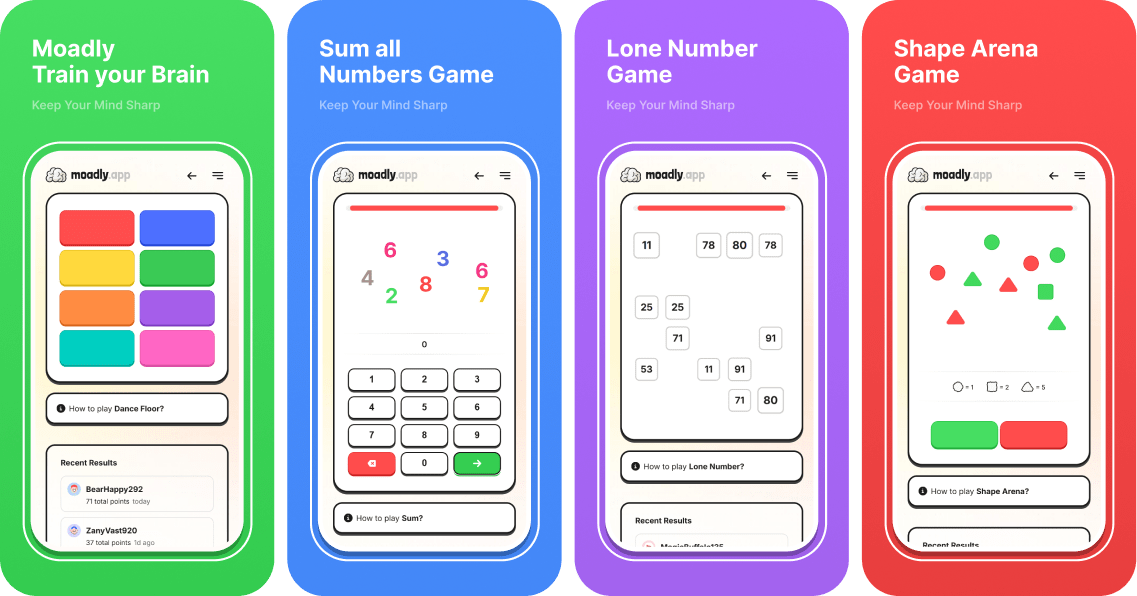
That’s what makes apps like Moadly stand out. Each mini-game is designed to hit different parts of your brain - one might test memory, another might push logic or math speed - and they all adapt to your performance. It’s like having a personal trainer for your brain.
Why “Brain Test” Games Work
Our brains love novelty. When you challenge yourself with new tasks, your brain starts creating fresh neural connections. Over time, this strengthens pathways responsible for focus, memory, and decision-making. That’s basically what brain training does - it forces your mind to adapt and grow.
Here’s what’s happening behind the scenes when you play a real brain test game:
- Memory: You practice storing and retrieving information faster.
- Attention: You learn to block out distractions and concentrate longer.
- Problem-solving: You think more creatively and logically.
- Processing speed: You make decisions more quickly and accurately.
That’s why a few minutes of daily brain training can actually help you feel mentally sharper throughout the day. If you’ve been struggling with focus lately, check out how to fix brain fog asap for some quick recovery ideas that go hand-in-hand with brain training.
Types of Brain Test Games That Work
Let’s break down the kinds of games that genuinely challenge your brain, and what they improve.
| Game Type | Main Skill Trained | How It Helps |
|---|---|---|
| Memory Games | Working and short-term memory | Improves recall and mental organization |
| Logic Games | Reasoning and critical thinking | Strengthens problem-solving and decision-making |
| Math and Number Games | Numerical reasoning | Sharpens focus and processing speed |
| Word and Language Games | Verbal fluency and vocabulary | Boosts verbal reasoning and comprehension |
| Reaction Time Games | Attention and reflexes | Improves alertness and response speed |
| Pattern Games | Visual processing | Improves recognition and prediction skills |
You’ll find all these categories in Moadly, which makes it super easy to mix up your training so you’re not just doing one type of thinking. You can go from a fast math challenge to a memory recall task in seconds, keeping things fun and balanced.
1. Memory Games That Make You Think
Memory games are a classic for a reason. Whether you’re matching cards, recalling sequences, or remembering patterns, they strengthen working memory - the part of your brain that handles short-term information.
Try this: look at a list of numbers for five seconds, then write down as many as you can remember. It sounds simple, but it trains your brain to store information efficiently. Moadly has several mini-games built around this exact concept, except way more fun - flashing tiles, number sequences, and fast recall challenges that get tougher as you improve.
Want more games like that? Check out which game increases IQ most for a breakdown of games that can raise your mental sharpness faster than you’d think.
2. Logic Games for Smarter Problem Solving
Logic games make your brain work for real. You have to reason through patterns, rules, or relationships. Sudoku, logic grids, or even short riddles all force your brain to think critically instead of just reacting.
When you use apps like Moadly, you get short, focused logic puzzles that can be done in a minute or two - but they still give your brain that satisfying “click” feeling when you figure them out. Over time, these games improve how fast you identify solutions in everyday problems, too. You can also read Understanding the Cognitive Benefits of Brain Training Apps for a deeper dive into how logic and reasoning exercises improve your brain’s flexibility.
3. Math Games That Boost Focus
Math games are the hidden heroes of brain training. When you do quick calculations, your brain has to process numbers, hold them in working memory, and apply logic all at once. That combination makes math challenges one of the fastest ways to improve focus and mental clarity.
One of Moadly’s most popular mini-games involves rapid-fire arithmetic - you get just a few seconds to answer before the next question hits. It’s fast, it’s fun, and it’s addictive in a good way. And even if you’re not a math fan, it feels more like a reflex challenge than a test. If you have kids, they might love these fun math games for 4th graders that make learning numbers surprisingly fun.
4. Pattern Games That Sharpen Attention
Pattern recognition is a huge part of intelligence. Your brain constantly looks for order - in numbers, visuals, or even speech. Pattern games strengthen your ability to notice details quickly, which translates to better attention and faster decision-making.
Moadly’s pattern games show grids or shapes that change quickly. You have to spot the odd one out or remember the sequence. It’s like giving your visual brain a speed workout. The more you play, the faster your brain gets at catching details in real life, too. You might also like these puzzles for adults if you enjoy spotting tricky patterns and testing your focus.
5. Word Games That Train Language Skills
If you love Scrabble or word search puzzles, you’re already giving your brain a solid workout. Word games improve verbal fluency, comprehension, and memory. They also help with problem-solving, since you’re often looking for creative solutions or hidden connections between words.
Moadly’s word mini-games test both vocabulary and logic, asking you to spot letter patterns, match words, or solve quick anagram-like puzzles. You can play them in under 2 minutes, which makes it easy to build language strength a little every day. And if you’re curious about games that truly teach and develop thinking skills, check out learning games for kids that actually teach something.
6. Reaction and Reflex Games
Games that test reaction time don’t just help you move faster - they make your brain faster. When you respond to visual or sound cues under time pressure, your brain’s processing speed improves, and your ability to stay alert gets sharper.
Moadly includes short tapping and timing games that keep your attention locked in. The better you get, the faster the pace. It’s like sprint training for your brain. Even a few rounds can make you feel more awake and mentally agile. For more quick-hit ideas, see fast-paced brain training games to boost focus.
7. The Balance Between Speed and Focus
One common mistake people make when doing brain training is focusing only on speed. The goal isn’t just to go faster - it’s to balance speed with accuracy. Moadly handles this perfectly. The mini-games encourage quick thinking but also reward focus and consistency. You’re not just reacting, you’re learning to control your thoughts under pressure.
8. How Long Should You Play Each Day?
Most studies suggest that 10–15 minutes a day is enough for real improvement. The trick is to do it regularly. Your brain thrives on repetition. That’s why Moadly’s short sessions work so well - you can squeeze them in during a coffee break or before bed.
If you treat it like brushing your teeth - something small you do every day to maintain your brain - you’ll notice big changes over time. You’ll focus better, think quicker, and maybe even start solving everyday problems faster without realizing it. If you’re struggling to stay focused after a break or illness, check out how to regain focus after illness or fatigue.
9. What to Avoid in Brain Test Games
Here’s the part most people don’t talk about: a lot of so-called “brain games” are just entertainment. There’s nothing wrong with that, but if you actually want to train your mind, avoid games that:
- Have no difficulty progression (if it’s always easy, you stop imporving)
- Don’t track progress or feedback
- Rely mostly on luck or guessing
- Use distractions instead of mental challenges
Moadly keeps you challenged by adjusting the difficulty level automatically. That means as you get better, the games get harder, so your brain never stops adapting.
10. Mixing It Up
Doing the same kind of brain game every day can make your mind plateau. That’s why variety is important. Alternate between math, memory, and logic challenges. Try pattern recognition one day and word puzzles the next. Keeping things fresh helps different parts of your brain grow at once.
Moadly rotates challenges daily, so you don’t even have to think about it. It keeps your training balanced automatically. If you want to go deeper, read why routine brain training is essential for mental health.
Final Thoughts
Brain test games don’t need to be complicated or full of fake promises. The ones that work are the ones that make you think, react, remember, and adapt. When you train your brain with the right balance of focus and speed, you’re not just getting better at thegame - you’re getting better at life skills like concentration, decision-making, and memory.
If you want something that actually works and doesn’t feel like homework, Moadly is one of the best places to start. It combines math, memory, logic, and pattern challenges into quick, daily bursts of fun. You can play anytime, anywhere, and actually feel your focus getting stronger week after week.
Your brain deserves a challenge. The right games can make it sharper, faster, and more resilient. And honestly, who doesn’t want that?