Mind Puzzle Games That Make You Think Harder
Some games are just fun to kill time. Others make your brain work in ways you don’t even realize until you feel sharper, quicker, and more alert. Those are the mind puzzle games worth playing - the ones that actually make you think harder.
Whether you love solving riddles, cracking logic puzzles, or doing quick math challenges, puzzle games are one of the easiest ways to keep your brain active.
You can literally train your mind anywhere - on your phone, at your desk, or while you’re waiting for coffee. That’s what makes them so powerful.
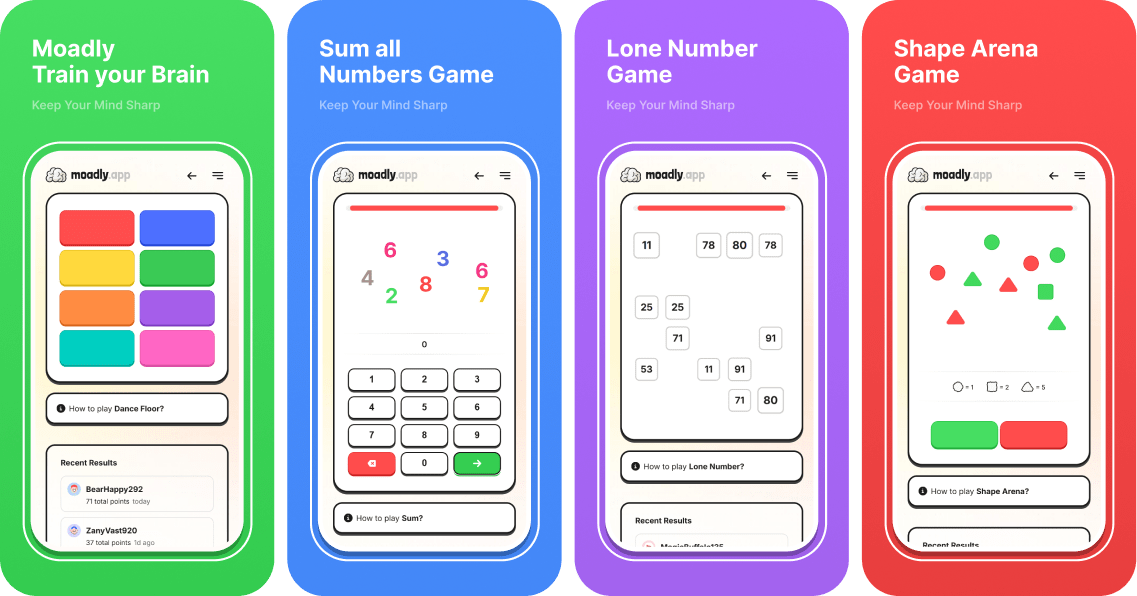
One app that nails this idea perfectly is Moadly. It’s a collection of quick, fun mini-games that sharpen focus, memory, and logic in just a few minutes a day. The games feel light and fast, but behind the scenes, they give your brain a serious workout.
Why Your Brain Loves Puzzle Games
Your brain is like a muscle - the more you use it, the stronger it gets. But not all games give it a real challenge. The best mind puzzle games push you to think differently, remember patterns, make decisions under pressure, and adapt when things change. That’s exactly the kind of mental exercise that builds new neural connections and keeps your mind sharp.
Here’s what happens when you play brain puzzles regularly:
- Your focus improves because you’re constantly paying attention to details
- Your memory strengthens from recalling rules, patterns, and numbers
- Your problem-solving skills get sharper because your brain learns to spot patterns faster
- You feel mentally quicker and more confident tackling new challenges
And the best part? You don’t have to spend hours doing it. Just 10 minutes of puzzle-based brain training every day can make a noticeable difference in focus and mental clarity. Apps like Moadly are designed exactly for that kind of short, daily brain boost.
What Makes a Mind Puzzle Game “Good”?
There are tons of puzzle games out there, but most of them either get repetitive or too easy. The best ones hit that sweet spot where your brain feels slightly stretched, but not frustrated. Here’s what to look for:
- Quick challenges: You can play in short bursts but still feel progress
- Adaptive difficulty: The game gets harder as you improve
- Clear feedback: You instantly know when you’re right or wrong
- Variety: Different puzzle types to train multiple brain areas
Moadly checks all of these boxes. One minute you’re doing a logic pattern puzzle, the next you’re testing your short-term memory. It’s unpredictable enough to keep your brain guessing, which is exactly what makes it effective.
Types of Mind Puzzle Games That Train Your Brain
Different kinds of puzzles train different skills. The best approach is to mix a few types regularly so your brain gets a balanced workout. Here’s a breakdown of what each kind does best:
| Puzzle Type | Main Skill | How It Helps |
|---|---|---|
| Logic Puzzles | Reasoning, deduction | Improves critical thinking and decision-making |
| Math Puzzles | Numerical reasoning | Builds problem-solving and speed |
| Memory Puzzles | Short-term recall | Strengthens working memory and focus |
| Pattern Puzzles | Recognition and prediction | Enhances attention to detail and abstract thinking |
| Word Puzzles | Language and logic | Boosts communication and mental flexibility |
Logic Puzzles That Make You Smarter
Logic puzzles make your brain break down complex problems step by step. They’re great for improving reasoning and focus. Think Sudoku, riddles, or number grids. Moadly’s logic mini-games fall right into this category - short, snappy, and designed to stretch your thinking without being frustrating.
Playing logic puzzles regularly can even help in real life. You’ll start seeing connections faster, solving problems more calmly, and making decisions with more confidence. It’s like giving your brain a quick tune-up every day.
Math Puzzles That Don’t Feel Like Homework
Math games get a bad reputation for being boring, but when done right, they’re fast, challenging, and satisfying. You get that little spark of joy when you nail the right answer under pressure.
Moadly has quick arithmetic games where you solve equations in seconds. They train your processing speed, focus, and numerical reasoning. Perfect for kids who want to improve school math skills or adults who just want to stay sharp.
Memory Games That Push Recall
Memory puzzles make your brain store and recall information fast - numbers, colors, patterns, you name it. The trick is to make it fun, not tedious. That’s what Moadly does right: you remember visual or numerical patterns under time pressure, which makes your brain fire on all cylinders.
If you’ve ever struggled with brain fog or forgetfulness, these games are especially helpful. They exercise the part of your brain that keeps short-term information active. If that sounds like you, check out how Moadly improves memory and concentration.
Pattern Games for Creative Thinking
Pattern puzzles are all about recognizing relationships. It could be shapes, numbers, or sequences that follow a hidden rule. These puzzles train your brain to think abstractly, which helps with creativity and problem-solving. You can find this style of game inside Moadly too - simple visuals, but surprisingly deep once you start playing.
Why These Games Actually Work
Mind puzzle games work because they make your brain process information in real time. Each puzzle type fires up different areas of the brain - memory, reasoning, attention, and speed. Over time, these skills transfer into real life. You’ll notice yourself remembering more, reacting quicker, and staying focused longer.
Studies have shown that consistent cognitive training improves mental flexibility and focus. Apps like Moadly make that easy tostick with because the sessions are short and engaging. You can literally get results from just 10 minutes a day.
Mixing It Up: The Secret to Real Progress
Playing just one type of puzzle over and over isn’t enough. The brain needs variety to keep growing. That’s why the best approach is to mix logic, memory, and math puzzles regularly. Moadly makes this easy because it automatically rotates between different mini-games every session.
If you want a good balance, try this simple routine:
- Start your day with a memory puzzle to warm up
- Do a quick logic or math puzzle on your break
- End the day with a pattern or word puzzle for relaxation
It’s like a gym routine for your brain - short sessions, big long-term results.
Signs You’re Getting Smarter From Puzzles
When you play the right kind of puzzle games consistently, you’ll start noticing small but clear changes:
- You solve problems faster at work or school
- Your focus lasts longer during conversations or tasks
- You recall names, numbers, and details more easily
- You handle stress better because your mind feels more organized
Basically, you’ll start feeling mentally lighter - like your brain’s warmed up and ready to handle whatever the day throws at you.
Why Moadly Stands Out
There are lots of puzzle apps, but most either feel too simple or too bloated. Moadly keeps it balanced - short, smart, and genuinely fun.
You don’t need to spend hours or pay for subscriptions. It’s designed for people who just want to train their minds a little each day and actually feel the difference.
Its puzzles cover memory, logic, math, attention, and focus - the core areas behind sharper thinking. And since the sessions are quick, you can fit them anywhere in your day.
If you’re curious about brain apps that really work, check out this article on how memory training apps make a real difference.
Final Thoughts
Mind puzzle games aren’t just a way to pass time - they’re one of the easiest ways to stay sharp, think faster, and actually train your brain to perform better. Whether you prefer logic riddles, memory challnegges, or math puzzles, the goal is the same: keep your brain active and curious.
If you want something that mixes all those elements into quick, fun sessions, Moadly is a great place to start. You can jump in anytime and give your brain a solid mental workout without feeling like you’re studying.
Your brain’s capable of amazing things - sometimes it just needs the right kind of challenge to prove it.