Best app to upgrade your intelligence
.png)
If you want to sharpen thinking, boost focus, and actually enjoy the process, this is for you. Whether you have five minutes before a meeting or thirty minutes after dinner, the right app can make practice feel less like a chore and more like a little daily win. Below I walk through what actually helps, how to make progress that sticks, and why a consistent, science-friendly app routine is one of the fastest ways to upgrade your intelligence.
Quick note. This piece mixes practical tips, small routines, and specific game types that work best. I also link to lots of free resources and specific Moadly pages so you can jump straight into exercises that match your goals.
What I mean by "upgrade your intelligence"
When I say upgrade your intelligence I don’t mean a cartoonish, overnight IQ spike. I mean measurable improvements in reasoning, working memory, attention, and problem solving that let you think faster, learn better, and make smarter decisions. That includes:
- Faster pattern recognition and flexible thinking.
- Stronger working memory for juggling ideas in your head.
- Better sustained attention so distractions don’t win.
- Improved learning speed when studying new skills.
Why an app is a great way to build intelligence
Apps make training consistent. They give adaptive difficulty so every session is challenging but not impossible. They provide feedback and short, repeatable exercises you can do daily. Most importantly, good apps harness neuroplasticity, the brain's ability to rewire itself through practice, which is the real engine behind improved intelligence.
What to look for in a brain-training app
- Adaptive difficulty that intensifies as you improve.
- Variety of tasks that train different cognitive skills.
- Short sessions you can easily repeat each day.
- Clear feedback and simple progress tracking.
- Evidence-based design that focuses on working memory, attention, and reasoning.
Daily blueprint for faster gains
Here is a compact, practical routine you can use right away.
- Warm up. 3 to 5 minutes of a quick attention or reaction task to wake the brain up.
- Core training. 15 to 20 minutes of adaptive working memory and reasoning games.
- Transfer practice. 5 to 10 minutes doing real-world challenge problems or learning something new that uses the same skills.
- Review. Check your stats and jot one short note about the day. Small reflection boosts learning retention.
Types of games and exercises that actually move the needle
Not all games are equal. Here are the highest-impact categories, with examples and why they work.
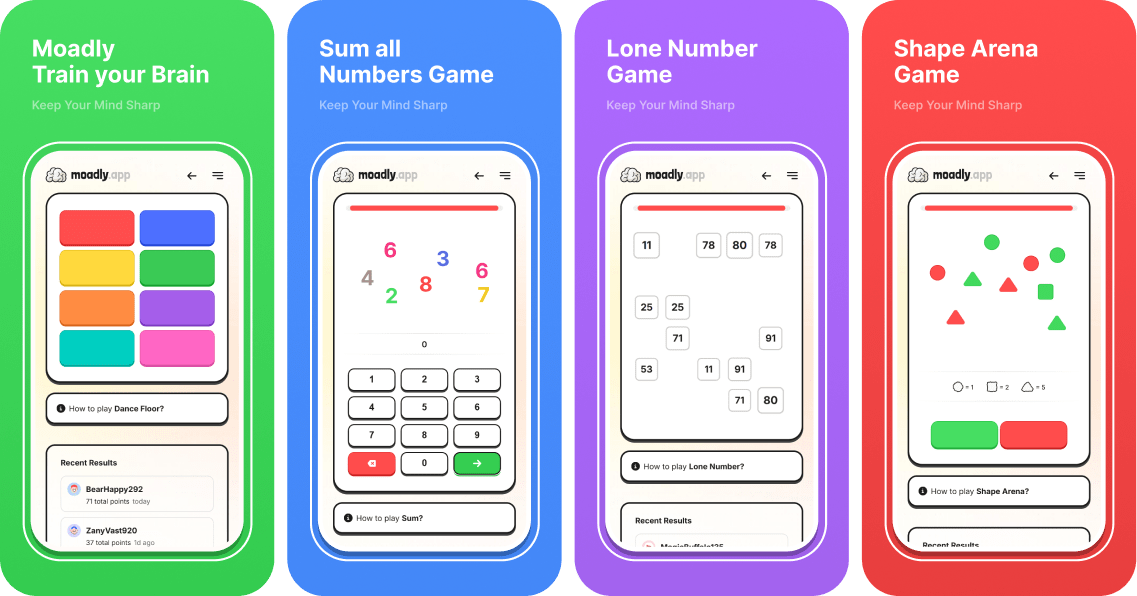
Working memory training
Tasks that make you hold and manipulate information in mind. These are strongly linked to reasoning and learning. Try dual n-back style tasks, digit-span variations, and sequence-reordering puzzles. If you want guided options, check a set of daily memory workouts that are short and effective. See this resource for daily warm-ups and mental wakes.
Speeded attention tasks
Exercises that force fast decisions improve information-processing speed and selective attention. Look for quick-reaction visual search tasks and timed pattern matches. There are curated fast-paced training options in this piece about fast-paced training games.
Problem solving and reasoning
Puzzles that require planning and logic encourage transferable thinking skills. Try adaptive logic puzzles and multi-step math challenges. Want more ideas? See thinking games to improve logic and focus.
Attention switching and multitask practice
Shifting between tasks trains cognitive flexibility. Micro-sessions that alternate rules or goals build better task control. Moadly has a number of articles on attention training and recovering from brain fog, including why attention training helps brain fog and 5-minute clearing techniques.
How often and how long
Consistency beats intensity. Ten minutes a day across months will beat three hours in one day. Use an app that nudges you to practice daily and adapts session length so you can stay consistent. A helpful schedule:
| Stage | Duration per day | Why it works |
|---|---|---|
| Starter | 10–15 minutes | Builds habit and prevents burnout |
| Growth | 20–30 minutes | More focused practice, faster improvements |
| Maintenance | 10–20 minutes | Keeps gains stable while freeing time |
How to choose a single app and stick with it
Apps only work if you use them. Pick one that feels fun and fits your life. Look for immediate micro-rewards, clear progress metrics, and a social or streak component if that motivates you. If you want curated picks and what to try first, check the Moadly guide to best websites and apps to keep your brain sharp.
Examples of exercises to do inside an app
- Pattern recall — view a 6-item visual pattern, then reproduce it from memory.
- Reverse sequences — hear or see a list, then repeat it backward while adding one item.
- Timed logic — solve a reasoning mini-puzzle under a short timer.
- Rapid target switching — respond to one rule for 20 seconds, then another for 20 seconds.
These can be found across many focused Moadly workouts like fast-paced brain training and memory-specific sequences such as free brain games for seniors.
How training transfers to real-world intelligence
Transfer is the big question. Training working memory and attention can improve related real-world tasks: studying, following complex conversations, multitasking at work, and problem solving. It helps to mix training with real-world practice, for example when learning a language or picking up new skills. See the practical transfer suggestions in how brain games stimulate neuroplasticity.
Common myths and how to avoid them
Myth. One game will make you smarter overnight. Reality. Gains are gradual and require consistent practice. Use adaptive, varied training, and pair it with healthy lifestyle choices.
Myth. Any game counts. Reality. Games that train attention, working memory, and reasoning are the best bets. Casual trivia or repetitive pattern-matching with no progression tends to help less.
Lifestyle habits that turbocharge app training
Training inside an app is powerful, but it works best when paired with other habits.
- Sleep. Memory consolidation happens during sleep. Prioritize regular sleep and naps when possible.
- Movement. Aerobic activity increases BDNF, a brain growth factor that supports learning.
- Nutrition. Balanced meals with omega-3s and antioxidants support brain health.
- Reduced multitasking. Practice single-tasking for parts of your day to strengthen attention control.
Moadly covers many daily recovery and focus routines in posts like how to get a fast cognitive boost every day and how to stay focused during mental burnout.
.png)
How to measure progress sensibly
Ignore flashy single-session scores and focus on trends over weeks. Track:
- Accuracy and speed improvements.
- Consistency of daily practice.
- Real-world changes, like faster reading, better concentration, or fewer mistakes at work.
For tracking tips and games that measure transfer, see which brain training games improve IQ the most and brain-test games that actually train your mind.
How to avoid burnout and frustration
Burnout kills momentum. Mix challenging sessions with playful ones. If performance stalls, switch task types for a few days or drop session length to five minutes for a recovery week. You can also use micro-sessions to maintain practice without fatigue. See quick fog-clearing techniques for on-the-spot resets.
Recommended progression plan
Try this 12-week plan to build and maintain solid gains.
- Weeks 1–2. Start with 10 minutes daily of mixed working memory and attention exercises.
- Weeks 3–6. Increase to 20 minutes and focus sessions on reasoning twice a week.
- Weeks 7–10. Add real-world transfer tasks like language drills or problem-solving practice.
- Weeks 11–12. Move to maintenance: 10–15 minutes daily with weekly challenge sessions.
For specific daily workout ideas, you can browse daily brain games to wake up and best free brain games to play right now.
Who benefits most
Almost everyone. Students, professionals learning new skills, seniors aiming to preserve cognition, and people recovering from brain fog. There are even targeted games and routines for specific groups like seniors and kids. Explore dedicated collections such as fun senior games and educational games for kids.
Real user tips that helped me stick with training
- Make it part of an existing habit, like before your morning coffee.
- Use a calendar reminder that looks like a meeting so you don’t skip it.
- Swap days with friends and compare one simple stat for accountability.
- Reward small streaks with tiny treats so the habit feels enjoyable.
Case studies and evidence
There is a growing body of research showing targeted training improves working memory and attention, which are tied to reasoning and learning. For practical interpretations and studies, check Moadly summaries about neuroplasticity and focus and curated reviews such as what doctors think about brain training apps.
When to see a professional
If your forgetfulness is severe, sudden, or accompanied by major functional changes, consult a doctor. For everyday training and recovery from mild brain fog, app-based routines and lifestyle changes often help. Read practical medical-adjacent advice in what doctors recommend for brain fog and how to stop being so forgetful.
Top in-app features that matter most
- Progress analytics with week-by-week trend lines.
- Adaptive algorithms that match difficulty to performance.
- Short bite-sized sessions and a clear daily plan.
- Reminders and gentle nudges to keep practice regular.
- Practice modes that focus on transfer to real tasks.
How Moadly fits into this picture
Moadly offers targeted game types, daily plans, and a focus on practical transfer. If you want specific playbooks, explore their guides on fast cognitive boosts and targeted training. For memory-specific workouts check free brain games for seniors, and for general fast-paced training check fast-paced brain training.
Quick pick: three training sessions to try right now
Copy these mini-sessions and run them inside your app of choice.
- Wake-up sprint. 5 minutes. Rapid visual search and 60-second sequence recall.
- Deep focus block. 20 minutes. Alternating 5-minute working memory, 5-minute reasoning, 5-minute attention switching, 5-minute reflection.
- Transfer challenge. 10 minutes. Learn one short concept in another field and apply it to a puzzle.
Resources and reading
If you want to explore deeper, here are curated Moadly resources that map closely to sections above.
- How to get a fast cognitive boost every day
- Best websites and apps to keep your brain sharp
- Daily brain games to wake up your mind
- How brain games stimulate neuroplasticity and focus
- Which brain training games improve IQ the most
- How to stop being so forgetful
Final micro checklist before you start
- Pick one app and stick with it for at least 8 weeks.
- Commit to short daily sessions over long, infrequent ones.
- Track trends, not single scores.
- Pair app practice with sleep, movement, and focused single-task work.
Start small, be curious, and keep it playful. Intelligence grows from consistent, targeted practice and the right feedback loop. Try one short session today, see how it feels, and build from there. If you want ready-made workouts and daily plans, Moadly has tailored guides and game collections to get you started: best free brain games, brain changer games, and focus recovery tips.
Small next step. Choose one micro-session and mark it on your calendar for tomorrow morning. Do it, then check your notes. Tiny actions compound into big changes.