Memory slips are annoying. Losing a name, misplacing keys, blanking on a word-those things pile up and make you feel off. The good news is you can do something about it. Just steady, simple practice that helps your brain work better. Free brain games are an easy, low-pressure way to start.
Why games actually help
Brains adapt. When you do tiny, repeated mental tasks your brain strengthens the circuits those tasks use. That means memory, attention, and processing speed can get better with steady practice. It’s like light exercise for your mind.
Games work because they're short and motivating. You get instant feedback. You see progress. That keeps you coming back. And that’s what matters more than anything-consistency.
What to look for in a game
Not all games are useful. Some are just flashy time-wasters. Here’s the checklist I use:
- Short rounds. Two to five minutes is perfect.
- Clear rules. No need to read a manual.
- Gradual difficulty. The game should get slightly harder as you improve.
- Variety. Mix memory, attention, speed, and logic.
- No heavy stress. If it makes you anxious, skip it.
Games that follow this pattern help the most. They train real skills without wasting time.
Best types of games for memory
Here are the categories I recommend. Use a mix.
- Matching / memory pairs - great for short-term recall.
- Sequence recall - hold a list in your head and repeat it.
- Simple arithmetic - boosts working memory and speed.
- Pattern recognition - trains visual memory and reasoning.
- Attention drills - helps you stay focused on one thing at a time.
Combine these and you’ll train different parts of memory, not just one small corner of it.
How often should seniors play?
Keep it tiny and consistent. Ten minutes a day is excellent. Five minutes is still good. The trick is to do it regularly. Small daily wins beat long, rare sessions.
A simple plan: morning warm-up (2–3 min), midday refresh (3–5 min), evening wind-down (2 min). That’s under ten minutes and it adds up fast.
Free games that actually help (types and examples)
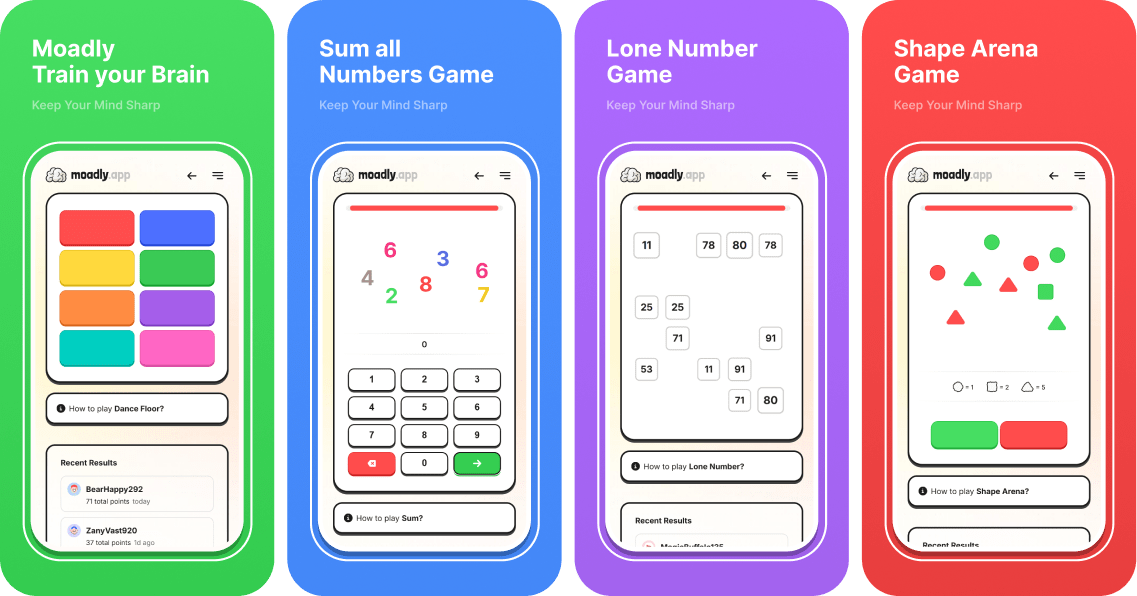
I won’t push specific apps too hard, but here are game formats that appear in many effective free options, including Moadly.
- Memory flip - flip cards, match pairs. Easy to start.
- N-back style - hold and update info; good for working memory.
- Quick math - basic sums under a timer. Boosts mental speed.
- Sequence tap - repeat short sequences of colors or numbers.
- Spot the change - find differences between two images quickly.
Moadly packs many of these into short mini-games. It’s free to play and unlocks everything without a subscription, which is handy if you want to try a range of game types. See more on how it helps here: Free memory improvement app for Android.
Simple routine that actually works
Use this routine for four weeks and track progress.
- Day 1–7: 5 minutes daily. Try one memory pair game and one quick math game.
- Day 8–21: 8–10 minutes daily. Add a pattern recognition game and one attention drill.
- Day 22–28: 10–15 minutes daily. Mix categories, keep sessions short, and focus on smooth progress.
Write down one small change you notice each week. That keeps motivation real.
Signs the games are helping
Look for these signs. They show real improvement, not placebo.
- You remember appointments more easily.
- You need fewer reminders for simple tasks.
- Conversations are easier because words come faster.
- You feel less mentally tired after doing small tasks.
If you see those, keep going. If not, change game types or check lifestyle factors below.
Combine games with these daily habits
Games are helpful, but they work best with basic health habits. Don’t skip these.
- Sleep. Aim for consistent sleep time.
- Hydration. Drink water regularly.
- Movement. Short walks boost brain blood flow.
- Social time. Talk with others daily.
- Reduce stress. Try small breathing exercises.
Also, if you want quick tips on clearing brain fog, check this: How to clear brain fog in 5 minutes.
How to choose a free game platform
When you look at options, use these filters.
- Does it have short, repeatable games?
- Does it offer multiple game types?
- Is it free to play or does it lock everything behind paywalls?
- Is the interface simple and readable?
- Does it track progress in a simple way?
Moadly meets these points. It focuses on short arithmetic mini-games, memory challenges, and light logic puzzles that are easy to repeat. If you like research-backed reads, see: How brain games stimulate neuroplasticity and focus.
How to make it social and fun
One great trick is to play with others. Family, friends, even local groups can join. It turns practice into a social ritual and that increases consistency.
Ideas:
- Play one quick game together after breakfast.
- Share weekly progress and small wins.
- Turn it into a friendly challenge with small rewards.
What to avoid
Don’t do these things.
- Don’t overdo long sessions. Fatigue ruins learning.
- Don’t obsess over scores. Progress is slow and steady.
- Don’t rely on apps that promise instant cures or dramatic IQ jumps.
If a game stresses you out, trash it and pick a calmer one. The goal is a steady habit, not torture.
Examples of a weekly plan
Two sample plans you can start with, pick what fits you.
Easy plan - 5 minutes a day
- 1 minute memory pairs
- 2 minutes quick math
- 2 minutes attention drill
Moderate plan - 10 minutes a day
- 2 minutes memory pairs
- 3 minutes N-back or sequence game
- 3 minutes pattern recognition
- 2 minutes reaction/attention game
More internal resources you’ll find useful
Here are some links on the site that dig into related topics. Read them as you like.
Tracking progress without getting obsessed
Track one or two simple things:
- Days in a row you played
- One small daily note: “I remembered X today”
That’s it. That’s more powerful than watching every score rise and fall. The real wins are small changes in daily life.
When to see a doctor
If memory problems are sudden, getting worse fast, or interfering with basic tasks, see ad octor. Brain games help mild forgetfulness and support cognitive fitness, but they are not a replacement for a medical check when something serious is happening.
Final thoughts - short and real
Don’t overthink it. Start small. Five minutes a day of the right games will do more for your memory than an hour once a week. Mix memory, attention, speed, and simple logic. Keep it low stress. Keep it consistent. Use free tools like Moadly to try different games without paying. If you stick with it, you’ll notice tiny wins that add up into real improvement.
If you want a focused starter, begin with these two pages: Free Online Memory Game App for Focus and Recall and Daily Brain Games to Wake Up Your Mind. Try one short session now. That’s the hardest part. After that it gets easier.
And yes-be kind to yourself. Memory slips happen. You are doing something smart by starting small and being consistent. That’s the real power here.