Social Recall and Community Volunteering: A 45-Day Moadly Case Study with Maggie

| Attribute | Details |
|---|---|
| Participant | Maggie O. |
| Location | Ireland |
| Age | 68 |
| Occupation | Retired Librarian / Community Volunteer |
| Usage Duration | 45 Days |
| Primary Result | Subtle Improvement: Enhanced name-face association during weekly meetings. |
Tell us a bit about yourself.
I’m a retired librarian living in a small village outside Cork. Retirement hasn't exactly been quiet; I volunteer for the local heritage society, a tidy towns committee, and a weekly "coffee and chat" for seniors. In a small town, knowing who’s who is a major part of the social fabric. I spent decades organizing catalogs, but lately, I felt like the indexing system in my own head was getting a bit sluggish.
What made you look for a brain training app?
It was that "tip of the tongue" frustration. I’d be at the community hall, looking right at someone I’ve known for years, and their name would just vanish. I started keeping a "cheat sheet" in my handbag with names of people I expected to see at meetings.
One day I forgot the notebook and felt a genuine flash of anxiety. I realized I was becoming too reliant on external notes and wanted to see if I could sharpen my own recall instead.
Have you used other memory training apps?
My daughter set a few up for me last year. Honestly, they were a bit loud and patronizing. One had a cartoon bird that seemed to nag me if I missed a day. I’m sixty-eight; I don’t need a digital pet.
I wanted a utility, something quiet and focused. Moadly felt easier to use.
How long have you used Moadly for?
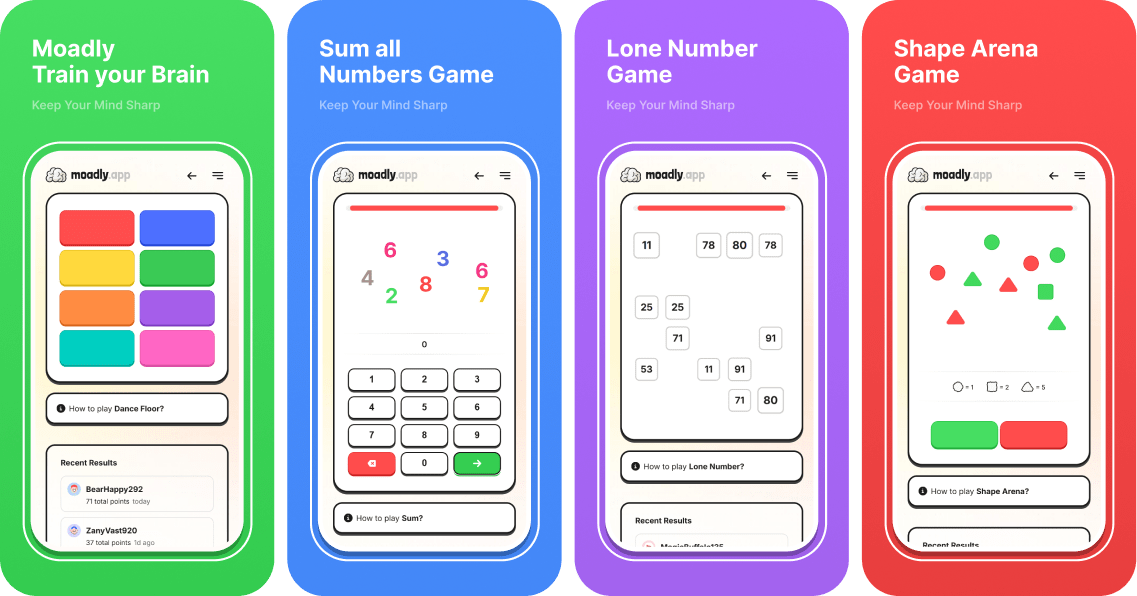
I’ve been using it daily for about six weeks. I make it part of my morning tea ritual, sit by the window, have a brew, and go through my game rotation before the day properly starts.
What’s your favorite game type?
I find Match Cards and Pattern Trace the most relevant. Memory at my age is often about spatial awareness, where things are and where I’ve seen a face before. I also use Fast Reading. As a former librarian, I’m used to scanning text, but this forces me to maintain a certain pace, which helps keep my mind from drifting.
How many minutes a day are you actually active on the app?
About 10 to 12 minutes. I don’t believe in overdoing it. It’s like any other exercise; if I went for a five-hour walk, I’d be limping. I do enough to feel that mental "hum," and then I put it away for the day.
If the app crashed and deleted your progress today, would you start over or just move on?
I’d start again. The points are fine for a bit of encouragement, but they aren't why I’m here. I’m here for the real-world result. If the app disappeared, I’d miss the structure it provides for my morning routine.
How do you know that "improvement" isn't just you getting better at the specific games?
Because I’ve stopped reaching for the notebook in my bag. Last week at the Heritage Society, a woman walked in who I hadn't seen in over two years.
Usually, I’d be frantically searching my brain and coming up empty. This time, her name just surfaced naturally. You can’t "game" that, it’s a real-world connection being restored.
Do you use the app because it’s effective, or just because it’s a habit?
It’s a bit of both. It’s a pleasant habit now, but I’m a practical person, if I didn't see the benefit at my meetings, I wouldn't bother with it. I use it because it makes my social life less stressful.
If we removed the "fun" elements, would the core training actually be worth doing?
It would be. Some of the math-heavy types like Quick Math aren't exactly "fun" for me, they’re work. But I do them because I know they’re good for the gears. The visual elements just make it a bit easier to get through on days when I’m feeling tired.
Have you noticed any improvements?
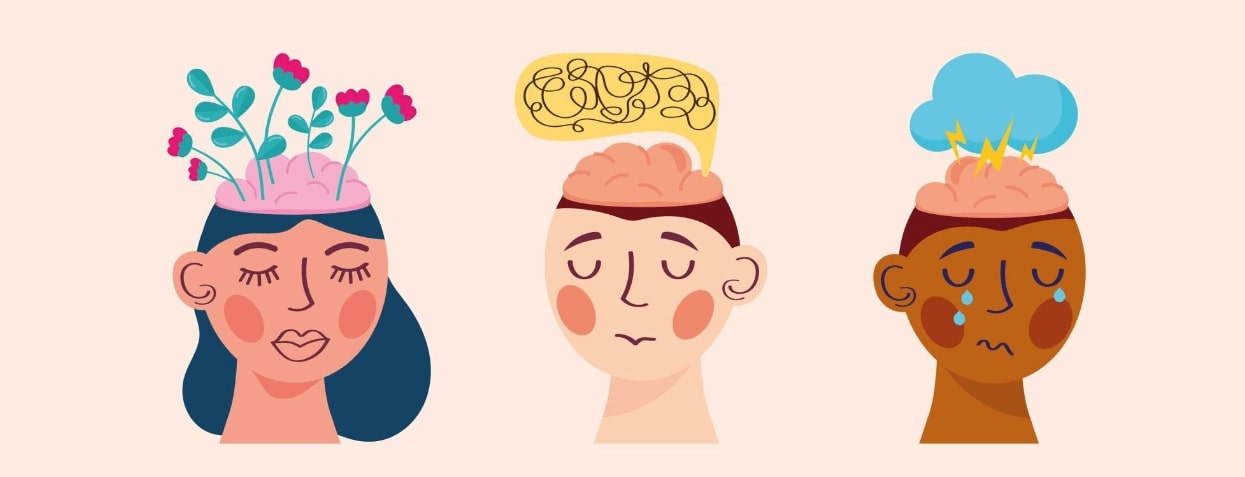
It’s subtle. It feels like a bit of mental stiffness has been massaged out. I’m more "present" in conversations because I’m not spending all my energy trying to recall a name or a face.
What’s the one thing you’d change?
I’d like to see game types specifically focused on name-face-fact association. For retirees, that’s the gold standard. If Moadly could help me remember that a neighbor’s son is a plumber or that someone has a specific allergy, that would be incredibly useful.
How did you find out about Moadly?
I saw it in a Sunday supplement article about mental fitness. It mentioned the study was exploratory and wanted feedback from all ages. I appreciated that. Often these tools are marketed only to young people, but those of us in our sixties and seventies need to stay sharp just as much.
Something you want to say to the other users?
Don’t worry about competing with the younger crowd’s high scores. You’re only competing with the version of yourself that forgets where the car is parked. Also, use the Meditate feature. A quiet mind seems to hold onto information much better than a cluttered one.