Trusted mental fitness app for memory and focus exercises

Short version. If you want practical ways to improve memory that actually fit into a busy life, this is for you. Below you’ll find simple habits, science-backed exercises, and how to make brain training part of your daily routine using tools like daily brain games and targeted attention workouts. Mix and match, be consistent, and treat your brain like a muscle.
Why memory training works, in plain language
Neuroplasticity means your brain changes with practice. That doesn’t mean you suddenly become a savant after one session, but repeated, focused practice improves pathways for attention, recall, and speed. Use short, deliberate sessions that challenge you, not just entertain you. For guided drills that focus on attention and recall, check out fast cognitive boost exercises.
Quick checklist to start today
- Do a focused 10-minute memory workout every morning.
- Sleep 7 to 9 hours, consistently.
- Keep stress in check via short walks or breathing breaks.
- Eat whole foods with omega-3s and protein at breakfast.
- Stay mentally active with varied challenges, not the same puzzle forever.
Top practical strategies
- Active recall practice. Instead of rereading, test yourself. Use flashcard-style drills or try to recall a shopping list from memory after a 5 minute walk. The how to stop being so forgetful guide has useful everyday tricks.
- Spaced repetition. Revisit information at increasing intervals. Short daily sessions with planned spacing beat marathon cramming sessions.
- Focused attention training. Work on attention first, because memory needs attention to encode. Try brief, high-focus mini-games like the ones in the attention training series.
- Chunking and meaningful associations. Group items into meaningful chunks or make a story. Your brain remembers narratives better than isolated facts.
- Interleaving. Mix different kinds of problems in one session to build flexible recall skills. See examples in thinking games.
- Real-life practice. Apply memory skills in daily tasks, like recalling names, recipes, or steps in a project. Real use cements gains.
How a mental fitness app helps
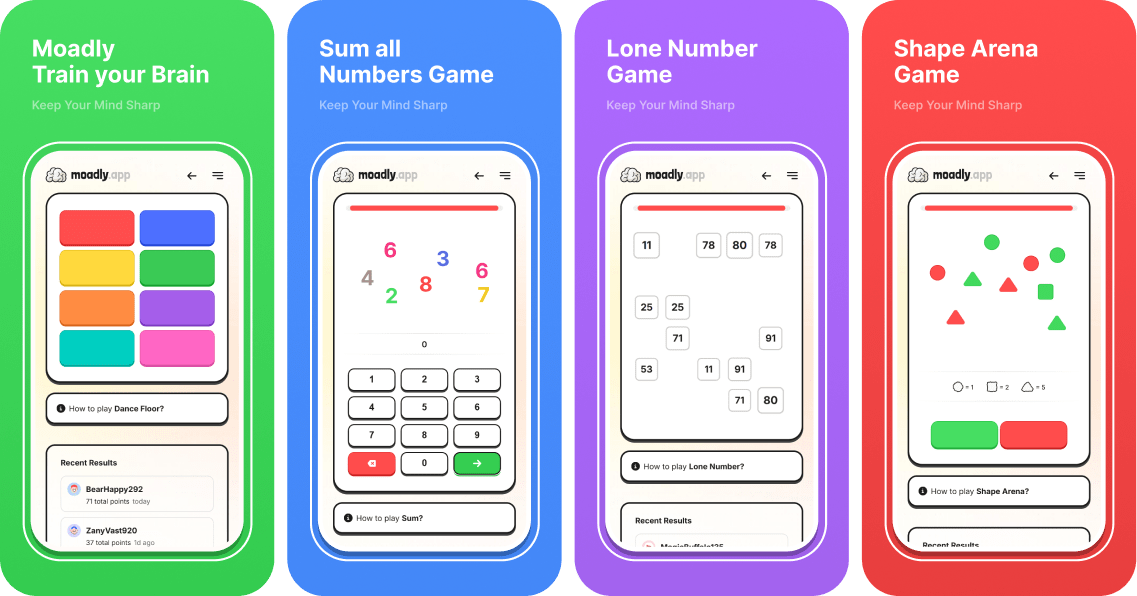
Apps give structure, track progress, and nudge you to stay consistent. A good app provides games that adapt to your level, focuses on attention as well as memory, and explains why exercises work. For a quick list of high-quality options and where they fit, see best websites and apps.
What to expect from a useful daily routine
Consistency matters more than duration. Aim for short daily practice rather than sporadic long sessions. Example routine.
- Morning: 8–12 minutes of focused memory and attention drills. Try a fast-paced warmup.
- Afternoon: 5-minute recall review of key facts or items you want to remember.
- Evening: light puzzle or reading that relaxes and reinforces recently learned info.
Comparison table. At-a-glance ways to boost memory
| Method | What it trains | Time to do | How fast you see results |
|---|---|---|---|
| Active recall | Encoding and retrieval | 5–15 min | Weeks |
| Spaced repetition | Long-term retention | 5–10 min/day | 1–3 months |
| Attention drills | Focus, resistance to distractions | 5–12 min | Days to weeks |
| Physical exercise | Memory consolidation, mood | 20–40 min | Weeks |
| Quality sleep | Consolidation of memories | 7–9 hours/night | Immediate improvement |
Game types that help memory, and why
Not all games are equal. Here are the ones that matter.
- Dual n-back style drills. Improve working memory and updating skills. Use sparingly and pair with other tasks.
- Speed-and-accuracy challenges. Build fast retrieval and attention under pressure. See fast-paced training.
- Sequence and pattern tasks. Great for chunking and sequence memory.
- Memory-matching. Helpful for visual memory and recall, especially for older adults. Try the senior-friendly games.
How to measure progress without getting obsessed
Focus on trends, not daily fluctuations. Track:
- Average accuracy on recall tasks over 30 days.
- Speed improvements on timed drills.
- Real-world wins, like fewer forgotten appointments.
Apps that log history and show trends remove guesswork, and many of them include tailored programs.
Daily habit blueprint (copy-paste friendly)
Weekdays
- Morning - 10 min focused memory workout.
- Midday - 5 min retrieval practice for something you learned today.
- Evening - 10 min relaxing puzzles or reading to consolidate.
Weekends
- Longer sessions if you enjoy them, but keep at least one day light to avoid burnout.
Nutrition, sleep and movement: the non-negotiables
Memory improvements from training are much smaller if you skimp on sleep, eat junk, or never move. The basics:
- Sleep: Aim for consistent sleep patterns. Deep and REM sleep consolidate memory.
- Nutrition: Protein for neurotransmitter building blocks, omega-3s for neural membranes, and vegetables for micronutrients.
- Movement: 20–40 minutes of aerobic or brisk walking most days supports hippocampal health.
For quick fixes to brain fog and practical recovery tips, see clear brain fog fast.
Common mistakes people make
- Relying on the same easy game forever. Your brain needs new challenges.
- Expecting instant miracles. Gains are gradual and cumulative.
- Ignoring attention training. Memory needs attention to encode information.
- Overtraining multiple hours without rest. Short, focused practice wins.
How to pick the right app or program
Look for these features:
- Adaptive difficulty that scales with your performance.
- Short session options and streak-friendly reminders.
- Clear progress tracking and history.
- Exercises that train attention, working memory, and long-term recall.
Compare options in best free brain games and match their strengths to your goals.
Sample 30-minute session (guided)
- 5 minutes - quick attention warmup: focused game that penalizes distraction.
- 10 minutes - active recall practice with spaced repetition items.
- 5 minutes - speed retrieval drills.
- 10 minutes - relaxed consolidation: low-pressure puzzles or reading.
This structure balances challenge with consolidation and avoids fatigue.
Real stories. Small wins that matter
People tell the same pattern: small, consistent sessions lead to fewer forgotten tasks, improved meeting focus, and less mental fatigue. If you want programs that emphasize practical day-to-day benefits, see what doctors think and the practical guides on staying focused during burnout.
Bonus: simple memory techniques you can use immediately
- Story method. Turn a list into a short, silly storyt o help sequence recall.
- Memory palace. Place items in imagined spaces along a route you know well.
- First-letter mnemonics. Use the first letters of a list to form a memorable word.
- Visualization. Create a vivid image for each item; bizarre is better.
Where to learn more on the site
There are tons of targeted reads that pair well with a training plan.
- How brain games stimulate neuroplasticity
- Brain changer game that rewires thinking
- How to unlock full brain capacity
- Which game improves IQ most
Quick troubleshooting
If training feels stale or you hit a plateau:
- Change game types for a week.
- Take one day off to reset.
- Mix in physical exercise before sessions to boost readiness.
- Use the site’s curated lists, like math games for adults, to diversify.
Final practical tips
- Start small and track progress. Small wins compound.
- Prioritize attention before pure memory drills.
- Pair training with lifestyle changes: sleep, nutrition, and movement.
- Use adaptive apps and follow programs that update as you improve.
Ready to begin? Try a 7-day experiment: do a 10-minute morning session every day and note 3 real-life improvements by day 7. If you want quick starters, check the daily games and the fast cognitive boosts to pick sessions that suit your schedule.