Is it possible to improve your memory
.png)
Short answer. Yes. Longer answer. Yes, and it is way more normal and achievable than most people think.
If you have ever walked into a room and forgotten why. Forgotten names five seconds after hearing them. Re-read the same paragraph three times. Or felt like your brain just does not have the same grip it used to. You are not broken. You are human.
I am writing this like a real person in their late 20s who drinks coffee, scrolls too much, forgets passwords, and still manages to improve memory anyway. No guru nonsense. No miracle pills. Just things that actually work if you give them a fair shot.
Memory is not a talent. It is a system. And systems can be trained.
First, let us clear up a myth
You do not lose memory because you are lazy or stupid.
Most memory problems today come from:
- Constant distractions
- Too much passive screen time
- Poor sleep rhythms
- Stress living rent free in your head
- Never actually challenging your brain anymore
Your brain adapts to how you use it. If most of your day is swiping, reacting, and multitasking. Your memory adapts to that environment. The good news. It adapts back.
So what actually improves memory?
Let us break this into practical buckets. You do not need to do everything. Pick a few and be consistent.
1. Train attention before memory
This part gets skipped all the time. Memory depends on attention. If information never fully lands, there is nothing to remember.
If you feel foggy, distracted, or mentally tired, start here. Attention is the gatekeeper.
There is a solid breakdown of this idea in the importance of attention training in brain fog recovery. It explains why fixing focus often fixes memory without touching memory directly.
Simple ways to train attention:
- Short daily brain games that demand focus
- Single tasking for 10 to 20 minutes at a time
- Reducing constant notifications
- Fast paced mental challenges instead of passive content
This is where tools like moadly.app shine. The games are short, intense, and designed to pull your full attention. Not in a dopamine trap way. In a wake up your brain way.
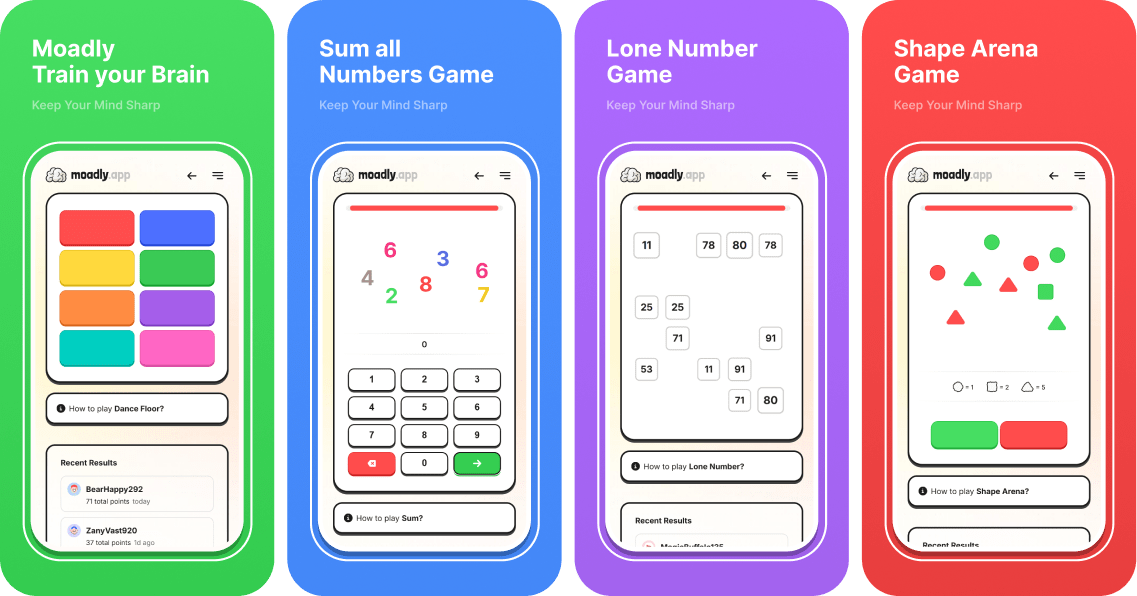
If you are curious, this article explains why speed and pressure can actually improve recall.
2. Use your memory, or lose it
Memory works like muscle. If you do not ask it to lift anything, it shrinks.
Modern life offloads memory everywhere:
- Phone remembers numbers
- Apps remember passwords
- Algorithms remind you what you liked
Convenient. Yes. But memory needs friction.
Easy daily friction that helps:
- Recall what you read without rechecking
- Summarize conversations in your head
- Play recall based games instead of idle games
- Try remembering lists before writing them
There is a reason brain games built around recall, patterns, and combinations work better than trivia dumps. They force active retrieval.
You can see examples in daily brain games to wake up your mind.
3. Neuroplasticity is real, and you can trigger it
This is not motivational fluff. Your brain physically rewires based on challenge.
Neuroplasticity increases when you:
- Do tasks slightly above your comfort zone
- Switch between different types of thinking
- Practice regularly instead of occasionally
Games that combine logic, speed, memory, and adaptability are powerful here. That is why puzzle based training works across ages.
For a deeper dive, this article explains it in plain language.
4. Brain games. Yes, but not all of them
Not all brain games are equal. Some are just colorful distractions.
Good memory games usually:
- Scale difficulty based on performance
- Mix multiple cognitive skills
- Force quick decisions
- Penalize autopilot play
This is why platforms like moadly.app focus on combinations, timing, and adaptive difficulty. You cannot zone out and still win.
If you want comparisons, best free brain games to play right now is a good overview.
5. Memory improves when your brain is not exhausted
This part is boring but true.
| Factor | Impact on Memory |
|---|---|
| Sleep | Memory consolidation happens during deep sleep |
| Stress | High cortisol blocks recall |
| Screen overload | Reduces attention span and retention |
| Movement | Improves blood flow and learning speed |
If you feel foggy all the time, memory training alone will feel harder. Articles like how to fix brain fog asap and how to clear brain fog in 5 minutes are practical starting points.
6. Different ages, same principles
Memory improvement is not age locked.
Kids benefit from playful challenge and variety. See educational games for kids.
Adults need challenge that fits busy schedules. Short sessions matter more than long ones.
Seniors respond extremely well to consistent mental stimulation. This guide shows why.
The brain does not retire. It adapts.
7. What about IQ and intelligence?
Memory and intelligence overlap but are not the same thing. Improving memory often improves problem solving and reasoning indirectly.
If you are curious about this angle, this breakdown connects the dots without hype.
8. Consistency beats intensity
This is where most people fail.
Doing a brain game once a week does nothing. Doing 10 minutes most days compounds fast.
Realistic memory routine:
- 5 to 10 minutes of focused brain training
- One intentional recall exercise per day
- One distraction free block of work
That is it. No 2 hour sessions. No burnout.
9. Doctors and skepticism
Healthy skepticism is good. Blind dismissal is lazy.
Doctors generally agree on two things:
- Brain training will not turn you into a genius overnight
- Targeted cognitive stimulation helps maintain and improve function
This article summarizes professional perspectives without exaggeration.
10. So, is it actually possible to improve your memory?
Yes. Not magically. Not instantly. But reliably.
If you:
- Train attention
- Challenge recall
- Reduce mental noise
- Use tools that demand effort
Your memory improves. People notice. You notice.
Start small. Stay curious. Use your brain like it was designed to be used.
If you want one place to begin without overthinking it, try moadly.app. A few minutes a day is enough to feel the difference.
Your memory is not gone. It is just waiting to be used again.