NeuroNation vs. Lumosity: Which App Has the Better Mobile Experience?
Mobile brain training has exploded in popularity over the last decade. Millions of people now use cognitive training apps during short breaks, commutes, or before bed to keep their minds active. Two of the most widely recognized platforms in this space are NeuroNation and Lumosity.
Both apps promise to improve memory, focus, and reasoning through short interactive exercises. They are often recommended as tools for maintaining cognitive performance and supporting lifelong mental health, concepts closely tied to research in neuroplasticity and cognitive training.
But when it comes to the actual mobile experience, there are major differences in usability, accessibility, and content structure. And increasingly, users are discovering that a newer platform, Moadly, offers a simpler and more accessible alternative with fully free access to cognitive games.
What Makes a Great Mobile Brain Training App?
A brain training platform might look impressive on paper, but if the mobile experience is slow, cluttered, or locked behind paywalls, most users abandon it quickly. According to research summarized in user experience design, the usability of an app can strongly influence long term engagement.
For brain training apps specifically, several factors determine whether the mobile experience is actually effective.
- Fast loading games that work well on mobile devices
- Short sessions that fit into daily routines
- Clear visual design optimized for small screens
- Minimal friction between opening the app and starting a game
- Fair access to features without aggressive paywalls
Let’s examine how NeuroNation and Lumosity perform in these categories.
Overview of NeuroNation
NeuroNation is a cognitive training platform developed in Germany and widely used in Europe. The app focuses on improving memory, attention, reasoning, and processing speed.
Its training system creates personalized programs based on user goals and performance. This approach draws inspiration from modern concepts in cognitive psychology, which emphasize adaptive learning and personalized feedback.
Key characteristics of the NeuroNation mobile experience include:
- Personalized training plans
- Visual statistics dashboards
- Progress tracking and skill reports
- Dozens of cognitive exercises
At first glance, the app feels polished and structured. However, the deeper experience often reveals limitations that affect usability on mobile devices.
Strengths of NeuroNation on Mobile
- Structured training programs that guide users through exercises
- Detailed progress analytics showing improvements over time
- Large library of exercises covering multiple cognitive domains
Weaknesses of NeuroNation
- Heavy subscription model restricting many games
- Complex navigation that sometimes requires multiple screens before starting a game
- Long onboarding flows that slow-down first time use
These friction points can reduce the effectiveness of thea pp for quick mobile sessions.
Overview of Lumosity
Lumosity is one of the most famous brain training apps in the world. Developed by the company Lumos Labs, the platform became widely known during the early boom of cognitive training applications.
Lumosity focuses on quick mini games designed to challenge specific mental skills. Many of its exercises involve memory recall, pattern recognition, and visual processing.
The design philosophy emphasizes simplicity. Most games can be completed in under two minutes, making them ideal for mobile use.
Strengths of Lumosity’s Mobile Experience
- Very fast gameplay sessions
- Clean and intuitive interface
- High quality animations and visuals
- Games optimized for touch interaction
Weaknesses of Lumosity
- Many features locked behind subscriptions
- Limited free training sesions per day
- Some exercises feel repetitive after extended use
Although Lumosity offers a smoother mobile experience than many competitors, its reliance on subscription tiers can significantly limit how often users engage with the app.
Mobile UX Comparison: NeuroNation vs Lumosity
| Feature | NeuroNation | Lumosity |
|---|---|---|
| Interface simplicity | Moderate | Excellent |
| Game loading speed | Good | Very fast |
| Daily training sessions | Structured programs | Short quick games |
| Free access | Limited | Limited |
| Ease of navigation | Moderate complexity | Very simple |
While both apps provide solid experiences, neither fully solves the accessibility issue that many users complain about.
The Subscription Problem in Brain Training Apps
Many brain training platforms rely heavily on subscription revenue. While this helps fund development, it also creates friction for users who simply want quick mental exercises without committing to monthly payments.
A typical experience looks like this:
- User downloads the app
- Completes one or two free sessions
- Encounters a subscription screen
- Stops using the app
This is one reason many people begin searching for alternatives after trying Lumosity or NeuroNation.
The Rise of Moadly as a Simpler Mobile Brain Training App
One of the newer platforms gaining attention is Moadly. Unlike many competitors, the app focuses on accessibility and simplicity.
Instead of restricting gameplay behind paywalls, the platform provides a large library of logic games completely free.
Looking for an effective brain training app that actually fits your schedule? Moadly offers 50+ logic games and mind puzzles designed to strengthen cognitive skills , improve concentration, and keep the mind active.
Whether you want to stay mentally agile, fight "brain fog", or explore effective seniors' memory games, Moadly provides a fun and accesible way to exercise the brain anytime.
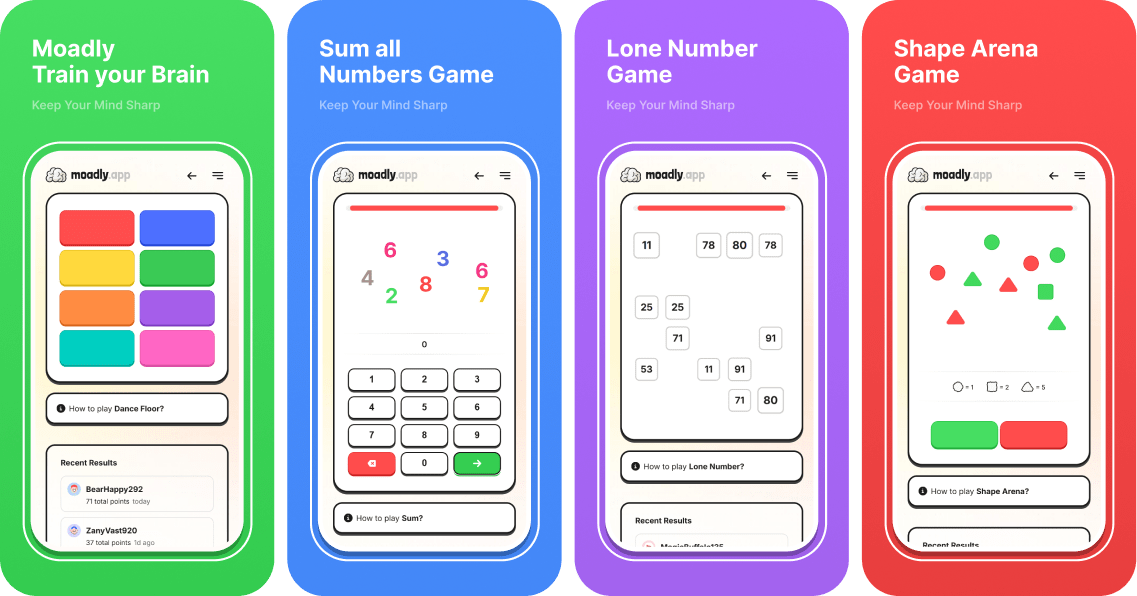
Why Moadly Works So Well on Mobile
- Instant gameplay. Most games start within seconds.
- Minimal navigation. Open the app and begin playing immediately.
- Short puzzle sessions designed for quick mobile breaks.
- No subscription barriers.
The design philosophy prioritizes simplicity and engagement over complex dashboards or aggressive monetization.
Key Cognitive Training Features in Moadly
- Memory Training. Visual memory exercises and pattern recognition puzzles.
- Mental Math Challenges. Arithmetic puzzles that improve processing speed.
- Logic & Reasoning Games. More than 50 puzzles designed to challenge critical thinking.
- Focus Training. Exercises that strengthen attention span.
Moadly Survey Study
Early feedback from users participating in the ongoing Moadly Survey Study suggests promising results.
| Metric | Result |
|---|---|
| Total Participants | 88 users |
| Reported Memory Improvement | 76% noticed at least some improvement |
| Recommendation Rate | 64% likely to recommend the app |
| Largest Age Group | Under 25 |
Participants can submit responses once per month, allowing researchers to track cognitive improvements over time.
Feature Comparison: NeuroNation vs Lumosity vs Moadly
| Feature | NeuroNation | Lumosity | Moadly |
|---|---|---|---|
| Number of Games | 30+ | 40+ | 50+ |
| Mobile Friendly Design | Good | Excellent | Excellent |
| Subscription Required | Yes | Yes | No |
| Logic Puzzle Variety | Moderate | Moderate | High |
| Free Access | Limited | Limited | 100% |
Final Verdict
Both NeuroNation and Lumosity provide strong mobile experiences and have helped popularize cognitive training apps around the world. Lumosity generally offers the smoother gameplay experience, while NeuroNation provides deeper training analytics.
However, both platforms share the same core limitation: most meaningful content requires a subscription.
For users who want quick cognitive workouts without paywalls, Moadly is rapidly emerging as one of the best alternatives. With more than 50 logic puzzles, instant mobile gameplay, and completely free access, it delivers a streamlined brain training experience that many users find easier to integrate into daily routines.
If the goal is simply to keep the mind active, challenge your reasoning skills, and enjoy short daily puzzles, Moadly currently offers one of the most accessible mobile brain training experiences available.