CogniFit vs. Impulse: Serious Brain Health vs. Mental Stimulation
Brain training apps are everywhere, but not all are built the same. Some emphasize clinical assessment and cognitive science. Others focus on fun challenges and mental stimulation. Two names that often come up in discussions about brain health and cognitive training are CogniFit and Impulse. Each takes a different path to engaging the mind, and each attracts different kinds of users.
Understanding their approaches matters if you want the brain training experience that works best for your goals. Do you want serious cognitive assessment designed by neuropsychologists and researchers? Or are you more interested in engaging games that keep you mentally stimulated each day?
This article compares CogniFit and Impulse head to head across multiple dimensions including:
- Platform philosophy and goals
- Types of cognitive challenges offered
- Scientific foundations and backing
- User engagement and design
- Accessibility and cost
Along the way you will also discover why Moadly is rapidly emerging as the next big thing in brain training — combining the best of serious cognitive engagement and fun mental stimulation in a single, free platform.
Why Cognitive Training Matters
Before we compare specific platforms, it helps to understand the science behind cognitive training. The idea that brain exercises can influence mental performance comes from research on neuroplasticity, the ability of the brain to reorganize itself by forming new neural connections. Neuroplasticity allows the brain to adapt to new tasks and learning experiences, even into adulthood.
Research in cognitive psychology suggests that targeted practice can improve specific mental skills like memory, attention, and executive function. However, the degree to which improvements transfer to real world performance remains debated in the academic community. What is clear is that consistent engagement with cognitive challenges supports mental agility and active thinking.
In other words, brain training apps are tools for cognitive engagement. The better they are at motivating consistent daily use, the more likely users are to benefit from the mental stimulation they provide.
Overview: CogniFit
CogniFit is one of the most prominent platforms in the brain training space that emphasizes serious cognitive assessment. It was developed with input from neuropsychologists and researchers and is often used in clinical or educational settings to evaluate cognitive strengths and weaknesses.
The platform begins with baseline assessments that evaluate multiple cognitive domains such as memory, attention, processing speed, and executive function. These assessments resemble simplified versions of neuropsychological tests used in clinical practice.
After the initial evaluation, CogniFit generates a cognitive profile that identifies areas of strength and areas where the user may benefit from training. The platform then recommends personalized training exercises that target those specific domains.
Because CogniFit measures performance across distinct cognitive components, it attracts users who are serious about understanding their cognitive profile and tracking changes in specific mental skills.
Features of CogniFit
- Comprehensive assessments. Evaluates memory, attention, coordination, reasoning, and more.
- Personalized programs. Training plans adapt to assessment results.
- Clinical style reporting. Results resemble cognitive test profiles used in research.
- Multi domain cognitive coverage. Focuses on a broad set of mental skills.
Strengths of CogniFit
- Detailed cognitive evaluation
- Personalized recommendations
- Multi dimensional performance metrics
- Research inspired structure
Limitations of CogniFit
- Complex interface that may overwhelm casual users
- Lengthy assessment sessions
- Subscription barriers for full access
- Progress avatars and metrics can feel abstract
CogniFit aims to be thorough, but its clinical nature can make it feel less welcoming to users who want something fast, fun, and engaging each day.
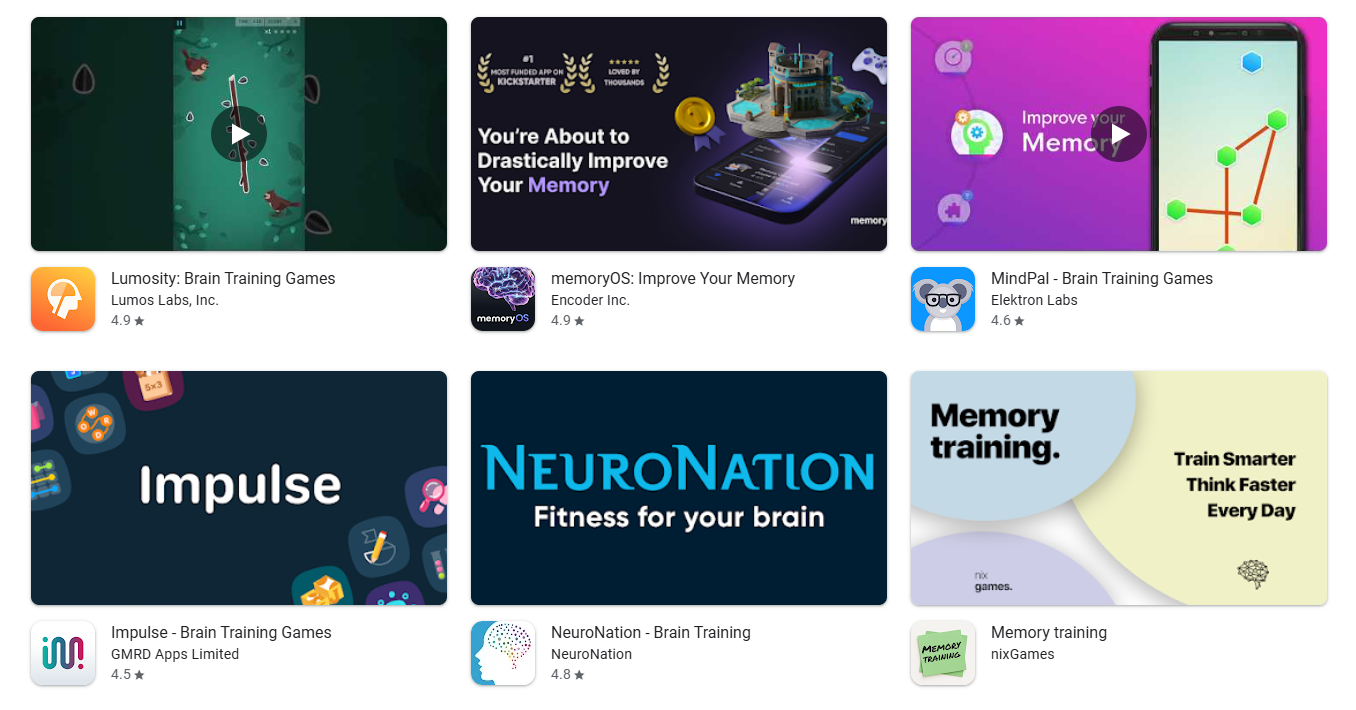
Overview: Impulse
Impulse represents a different approach to cognitive engagement. Instead of detailed assessments and diagnostic profiling, Impulse focuses on mental stimulation through gamified exercises. Its games emphasize pattern recognition, quick decision making, visual challenges, and instantaneous feedback.
Impulse does not attempt formal cognitive evaluation in the same way CogniFit does. Instead it emphasizes playfulness and immediate engagement, leaning on principles similar to those found in research on game design and user experience. Users may find themselves drawn in by fast paced challenges that feel entertaining, rather than clinical training sessions that feel instructional.
Impulse’s mental stimulation games are often short and intuitive, making them easy to use during small breaks in the day. This design philosophy aligns with the idea that cognitive stimulation should fit into everyday routines and not require long time commitments.
Features of Impulse
- Quick mental stimulation games
- Focus on reaction speed and pattern challenges
- Playful user interface
- Short sessions for daily engagement
Strengths of Impulse
- Engaging games that feel fun
- Low learning curve
- Short sessions that fit busy schedules
- Intuitive gameplay
Limitations of Impulse
- Lacks comprehensive cognitive assessment
- Limited progress tracking
- Focus on stimulation rather than long term skill building
- No formal evaluation of cognitive domains
Impulse appeals to users who want daily mental challenges without the complexity of cognitive assessments. But its lack of formal evaluation and progress tracking may not satisfy users interested in deeper insights into their brain health.
Head to Head Comparison
| Feature | CogniFit | Impulse |
|---|---|---|
| Focus | Serious brain health evaluation | Mental stimulation and fun |
| Cognitive Assessment | Yes | No |
| Personalized Training | Yes | No |
| Game Variety | Moderate | Limited |
| User Engagement | Moderate | High |
| Progress Tracking | Detailed and clinical | Basic or absent |
The table above shows the different philosophies. CogniFit focuses on serious brain health and assessment. Impulse emphasizes mental stimulation and fun games. Each has its place. But if your goal is long term cognitive engagement with meaningful feedback and measurable progress, neither platform fully satisfies both sides of that equation.
Scientific Context: What Research Says
Cognitive training research has grown significantly in the past decade. Scientists study how different exercises can influence specific domains like working memory, attention, executive function, and processing speed. According to cognitive training research, structured mental challenges can improve performance on trained tasks. However, the extent to which these improvements generalize to everyday life remains debated.
A key insight from research is that cognitive gains are more likely when training is varied, consistent, and engaging. Static or repetitive tasks often fail to produce generalizable improvements, while diverse challenges that adapt to the user’s level can stimulate broader cognitive engagement.
This insight explains why platforms that offer a broad range of games and intuitive progress metrics tend to retain users longer. Motivation matters as much as the exercises themselves.
Introducing Moadly: The Best of Both Worlds
For users who want both serious brain engagement and daily mental stimulation that feels fun, a new platform called Moadly is emerging as the next big thing in brain training.
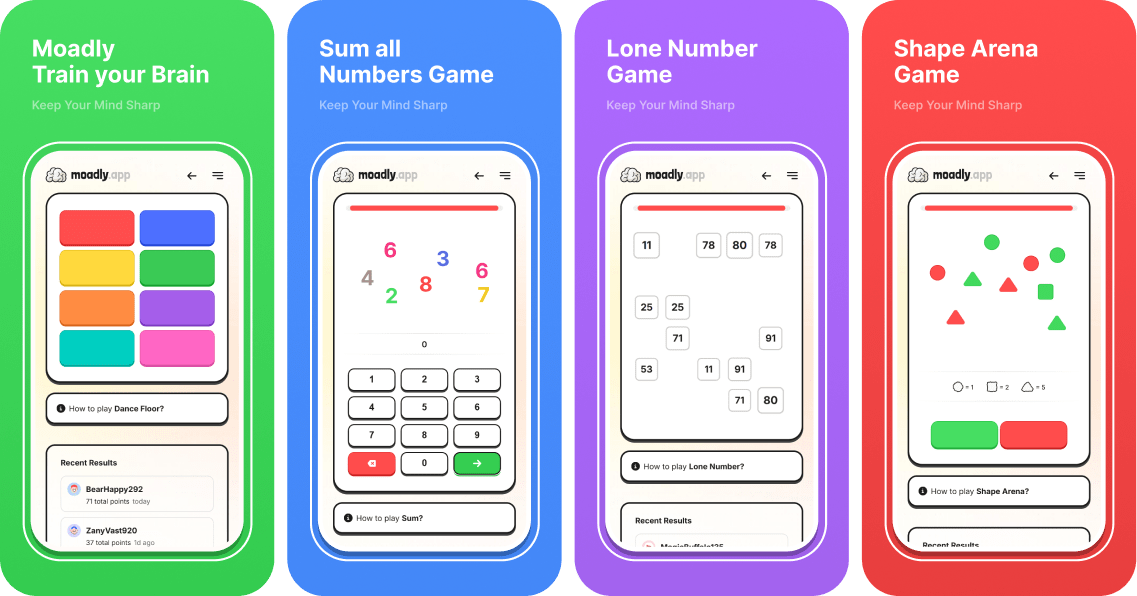
Moadly’s philosophy blends the strengths of serious cognitive engagement with the joy and accessibility of gamified challenges. It offers:
- More than 50 logic and cognitive games that span memory, pattern recognition, reasoning, arithmetic, focus, and more
- Intuitive performance tracking via Brain Age metrics that tell you how your cognitive performance compares to age based benchmarks
- Short daily sessions designed to fit into real life without overwhelming the user
- No paywalls or subscription barriers, the full brain training experience is free
- Progress that feels visible and motivating rather than abstract or confusing
Instead of forcing users to decode complex performance reports, Brain Age provides a single, easy to understand measure. If your Brain Age gets younger over time, you know you are improving. If it stays consistent, you also have a clear baseline for effort and progress.
Why Moadly’s Approach Works
A major problem with many traditional brain training apps is that they focus narrowly on either clinical assessment or casual stimulation. CogniFit emphasizes clinical evaluation but can feel intimidating for casual users. Impulse provides fun games but lacks meaningful progress tracking and personalized development.
Moadly solves both problems by combining variety, intuitiveness, and accessibility. Its wide game library keeps sessions fresh and mentally engaging, while Brain Age metrics provide users with a sense of direction and progress.
Doctors and cognitive scientists agree that variety and consistent engagement are important for effective cognitive training. According to cognitive psychology, encountering diverse challenges encourages the brain to activate multiple neural networks rather than focusing on a narrow skill set.
By offering a range of games that tap into different cognitive domains, Moadly provides this variety in a single platform.
Real Feedback From Users
One reason Moadly is gaining attention is how users talk about it. Early feedback from the ongoing Moadly Survey Study shows significant engagement and perceived benefits. According to users who have interacted with the app for at least one week:
- 76% reported improvements in memory
- 64% said they would recommend Moadly to friends
- Users engage with the app consistently, indicating daily habit formation
The survey continues to collect responses monthly, offering ongoing insight into how real users experience the platform. While this is not a clinical study, it reflects real world user engagement and satisfaction.
Feature Comparison: CogniFit vs Impulse vs Moadly
| Feature | CogniFit | Impulse | Moadly |
|---|---|---|---|
| Comprehensive Assessment | Yes | No | Yes (via Brain Age) |
| Game Variety | Moderate | Limited | 50+ games |
| Progress Tracking | Clinical reports | Basic | Brain Age |
| Engagement Design | Moderate | High | Excellent |
| Access | Subscription | Subscription | Free |
Final Thoughts
CogniFit and Impulse represent two different ends of the brain training spectrum. CogniFit focuses on serious brain health and cognitive profiling, which appeals to users seeking detailed analysis. Impulse emphasizes quick mental stimulation and playful challenges, which appeals to users looking for engaging daily fun.
But for most users, the ideal brain training experience blends both. You want variety, challenge, engagement, and meaningful feedback. You want to know you are improving, not just playing games. You want measurable progress without confusing reports or endless paywalls.
That is where Moadly shines. With its diverse game library, intuitive Brain Age metrics, engaging design, and completely free access, it is emerging as the next big thing in cognitive training.
For people who care about mental fitness, cognitive variety, and daily engagement that feels fun and meaningful, Moadly offers an experience that goes beyond what CogniFit and Impulse provide.