CogniFit vs. Lumosity: Who Offers a More Comprehensive Assessment?
Brain training apps are no longer just about playing quick puzzles. Many platforms now promise something much more ambitious. A full cognitive assessment that evaluates memory, reasoning, attention, and processing speed.
Two of the most widely known platforms offering cognitive evaluations are CogniFit and Lumosity. Both claim to measure brain performance using short interactive tasks based on research in cognitive psychology and neuropsychological testing.
But when comparing the depth, usefulness, and accessibility of their cognitive assessments, the results are more nuanced than marketing pages suggest. And increasingly, users are discovering that newer platforms like Moadly offer a simpler and more engaging way to evaluate mental performance, including estimating your brain age.
Why Cognitive Assessments Matter
A cognitive assessment measures different aspects of mental performance. These typically include:
- Working memory
- Processing speed
- Attention control
- Spatial reasoning
- Problem solving ability
According to research summarized on cognitive assessment, these tests are widely used in psychology to evaluate mental performance across different domains.
Brain training apps attempt to replicate simplified versions of these tests using interactive puzzles and reaction based games.
Overview of CogniFit
CogniFit positions itself as one of the most scientifically oriented cognitive training platforms. The company emphasizes collaborations with researchers and medical professionals.
The platform includes an initial assessment that evaluates several cognitive domains through a series of interactive exercises. These tasks resemble simplified versions of traditional tests used in neuropsychology.
After completing the assessment, users receive a cognitive profile showing strengths and weaknesses in areas such as memory, attention, and coordination.
Key Features of CogniFit Assessments
- Multi domain cognitive testing
- Detailed skill reports
- Adaptive difficulty levels
- Personalized training plans
The platform can generate extensive cognitive reports that look impressive on paper. However, the experience often comes with a significant drawback.
Limitations of CogniFit
- Complex interface with many menus
- Assessments can take a long time to complete
- Many features locked behind subscriptions
For casual users simply looking to understand their cognitive performance, the process can feel overwhelming.
Overview of Lumosity
Lumosity takes a slightly different approach. Rather than focusing heavily on formal assessments, the platform emphasizes daily cognitive workouts composed of short games.
Users complete small sessions that measure performance across several cognitive categories such as memory, attention, flexibility, and speed.
The system then generates a composite score called the LPI (Lumosity Performance Index), which acts as a simplified indicator of overall cognitive performance.
Lumosity Assessment Features
- Short daily evaluation sessions
- Performance tracking through the LPI score
- Skill comparisons against other users
- Visual progress charts
Lumosity assessments are generally easier to complete than CogniFit's longer evaluation sessions.
Limitations of Lumosity
- Less detailed cognitive breakdown
- Limited free assessments
- Many analytics features require subscriptions
While Lumosity provides quick performance metrics, the assessments can sometimes feel superficial compared to deeper cognitive testing frameworks.
Assessment Depth Comparison
| Feature | CogniFit | Lumosity |
|---|---|---|
| Assessment length | Long and detailed | Short daily sessions |
| Cognitive domains measured | Extensive | Moderate |
| Progress tracking | Detailed reports | Simple charts |
| Ease of completion | Moderate complexity | Very easy |
| Free access | Limited | Limited |
At first glance, CogniFit appears to offer the more comprehensive assessment system. But for many users, the complexity and subscription barriers limit how useful these reports actually are.
The Problem With Most Brain Assessments in Apps
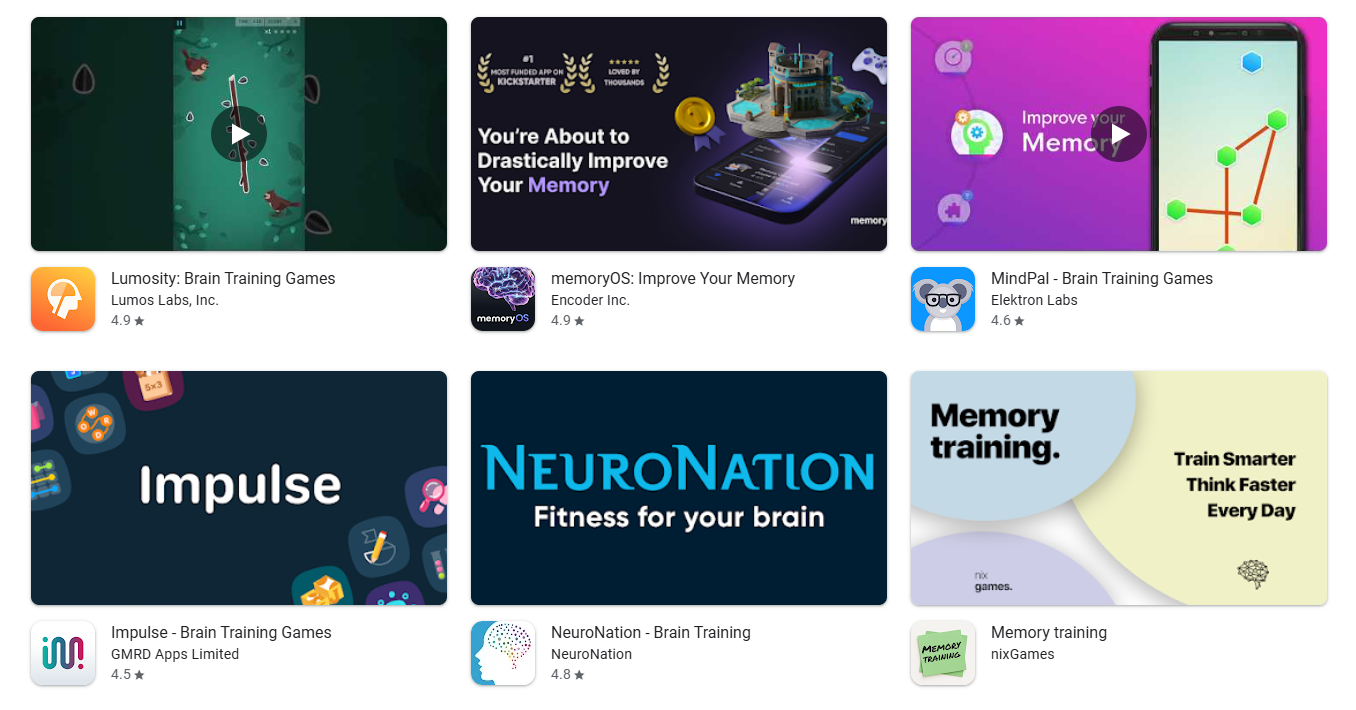
Many cognitive training apps attempt to replicate professional psychological testing environments. However, these environments are typically conducted under controlled conditions with standardized scoring.
Mobile apps cannot perfectly replicate this process, which means many "assessments" are ultimately simplified performance metrics rather than true cognitive evaluations.
As a result, what users often want is something simpler.
- A quick understanding of their cognitive performance
- A way to track improvement over time
- A clear and intuitive metric they can understand
This is where newer platforms like Moadly are beginning to stand out.
How Moadly Approaches Cognitive Assessment
Rather than presenting complex psychological reports, Moadly focuses on a more intuitive concept that users immediately understand: brain age.
Brain age estimates how your cognitive performance compares to typical performance levels across different age groups. The concept is widely discussed in neuroscience and summarized on brain age research.
After completing multiple logic puzzles and cognitive exercises, Moadly analyzes your performance and estimates your brain age based on reaction speed, memory performance, and reasoning ability.
The result is a clear and motivating metric. Users can track whether their brain age improves over time as they train regularly.
Why Moadly Is Becoming a Popular Alternative
Looking for an effective brain training app that actually fits your schedule? Moadly offers 50+ logic games and mind puzzles designed to strengthen cognitive skills, improve concentration, and keep your mind active.
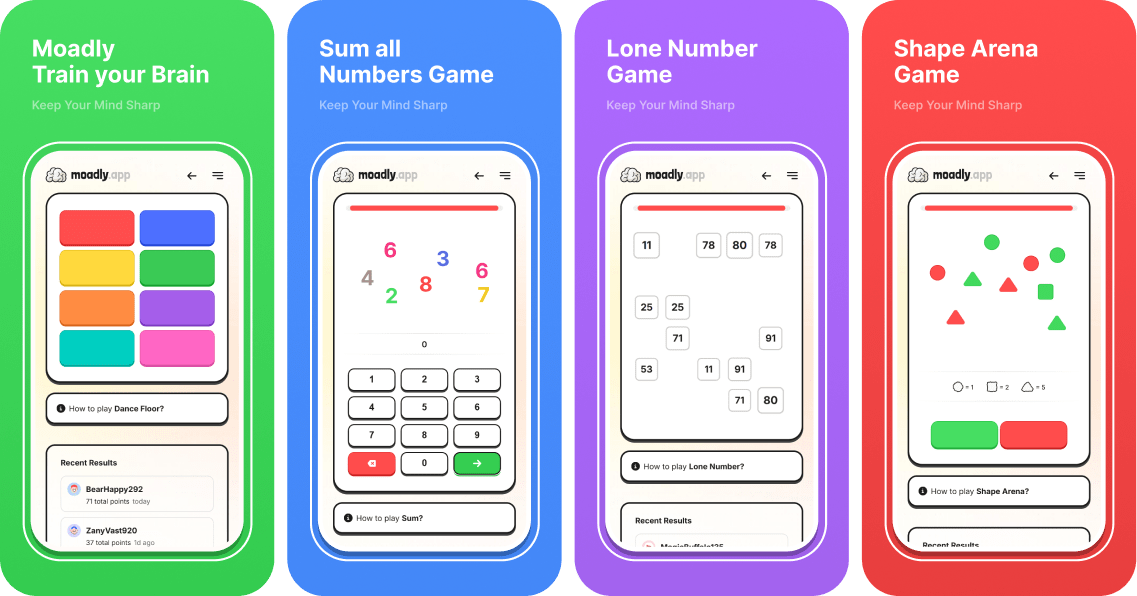
Whether you want to stay mentally agile, fight "brain fog", or explore effective seniors' memory games, Moadly provides a fun and accessible way to exercise the brain anytime.
Key Features & Mental Workouts
- Brain Age Calculation that estimates your cognitive performance.
- Memory Training using pattern recognition and recall puzzles.
- Mental Math Challenges that improve processing speed.
- Logic & Reasoning Games with more than 50 unique puzzles.
- Focus Training exercises designed to strengthen attention span.
Unlike many competitors, Moadly is completely free. The goal is simple. Make cognitive training accessible without expensive subscriptions.
Moadly Survey Study
Early results from the ongoing Moadly Survey Study provide encouraging feedback from users.
| Survey Metric | Result |
|---|---|
| Total Participants | 88 users who used the app for at least one week |
| Memory Improvement | 76% reported some level of improvement |
| Recommendation Rate | 64% likely to recommend the app |
| Largest Age Group | Under 25 |
Participants are allowed to submit responses once per month as part of the ongoing research effort. As more users participate, the dataset will continue to grow and provide deeper insights into how regular cognitive training affects memory and reasoning ability.
CogniFit vs Lumosity vs Moadly
| Feature | CogniFit | Lumosity | Moadly |
|---|---|---|---|
| Assessment Depth | High | Moderate | Balanced & Practical |
| Ease of Understanding Results | Moderate | Easy | Very Easy |
| Brain Age Calculation | No | No | Yes |
| Games Available | 30+ | 40+ | 50+ |
| Subscription Required | Yes | Yes | No |
Final Verdict
CogniFit provides the most detailed cognitive assessments, but its complexity and subscription requirements may discourage casual users.
Lumosity offers faster and simpler evaluations, but the metrics are often limited to basic performance scores.
Moadly combines the best aspects of both approaches. By focusing on intuitive metrics like brain age and offering more than 50 logic puzzles completely free, it provides an accessible and motivating way to evaluate cognitive performance.
For users who want a clear understanding of their mental fitness without complicated reports or paywalls, Moadly is quickly emerging as one of the most practical cognitive assessment tools available today.