Lumosity vs. CogniFit: Casual Daily Fun vs. Clinical Assessment
Brain training apps have been around for years. Platforms like Lumosity offer short, gamified exercises. CogniFit focuses on diagnostic style assessments. Both try to improve cognitive skills through structured mental challenges, a concept tied to research in neuroplasticity and cognitive training.
But here is the truth. Traditional brain training apps often fall short. Subscription paywalls, limited free content, and abstract performance metrics discourage consistent use. Users download the app, play a few games, and eventually abandon it.
This is why modern alternatives are emerging. Moadly represents the next evolution of cognitive training. It combines engaging logic games with intuitive performance tracking and completely free access. Unlike older platforms, Moadly focuses on accessibility and variety, making cognitive training something users actually enjoy.
In this article we will explore:
- Why Lumosity emphasizes casual daily fun
- Why CogniFit attempts clinical style assessment
- The limitations of traditional brain training models
- Why Moadly is emerging as the superior alternative
- How Brain Age metrics provide clearer progress tracking
Understanding Brain Training Philosophies
Brain training apps are built on the idea that mental exercises can strengthen cognitive abilities. This concept relates to neuroplasticity, the brain’s capacity to reorganize itself through learning.
However, not all apps approach training in the same way.
- Casual platforms emphasize short games for daily engagement.
- Clinical style apps attempt detailed cognitive assessment.
- Modern hybrids combine engagement with meaningful metrics.
Understanding these distinctions helps users choose the right tool for their goals.
Lumosity: Casual Daily Fun
Lumosity popularized gamified cognitive training. Its exercises are short, visually engaging, and designed for daily use.
Typical sessions might include:
- Memory games that require recalling patterns
- Speed challenges testing reaction time
- Logic puzzles for problem solving
- Visual recognition tasks
The emphasis is on accessibility. Users can complete a session in minutes and return to daily activities.
Strengths of Lumosity
- Short, engaging sessions
- Wide variety of mini games
- Easy to use for beginners
- Gamified progress tracking
Limitations of Lumosity
- Subscription barriers
- Limited free content
- Performance metrics that feel abstract
- Repetition over long term use
Lumosity excels at casual engagement but struggles to deliver meaningful progress tracking for many users.
CogniFit: Clinical Style Assessment
CogniFit takes a diagnostic approach. Instead of focusing exclusively on games, it emphasizes cognitive assessment and personalized feedback.
Users complete an initial evaluation that measures performance across multiple domains such as memory, attention, and processing speed.
These tasks resemble simplified versions of neuropsychological tests used in clinical psychology.
After the assessment, CogniFit generates detailed reports highlighting strengths and weaknesses.
Strengths of CogniFit
- Detailed cognitive evaluations
- Personalized training programs
- Multi domain performance analysis
- Structured feedback
Limitations of CogniFit
- Complex interface
- Long assessment sessions
- Subscription requirements
- Metrics that can feel overwhelming
For users interested in diagnostic style insights, CogniFit offers depth. However, the complexity and subscription barriers often reduce long term engagement.
The Problem With Traditional Brain Training
Despite their strengths, older brain training models share common weaknesses.
- Paywalls restrict access to meaningful content
- Metrics are difficult to interpret
- Games can feel repetitive
- Users lose motivation over time
Cognitive training is most effective when practiced consistently. Unfortunately, subscription barriers and abstract reporting systems often discourage regular use.
Users want simple answers.
- Am I improving?
- Are these exercises useful?
- Can I track progress easily?
Traditional apps do not always provide clear responses.
Why Modern Alternatives Are Better
Newer platforms address these problems by emphasizing accessibility and intuitive metrics..
Instead of complex diagnostic reports, Moadly offers:
- More than 50 logic and cognitive games
- Completely free access
- Brain Age metrics for simple progress tracking
- Short daily sessions
- Variety in mental challenges
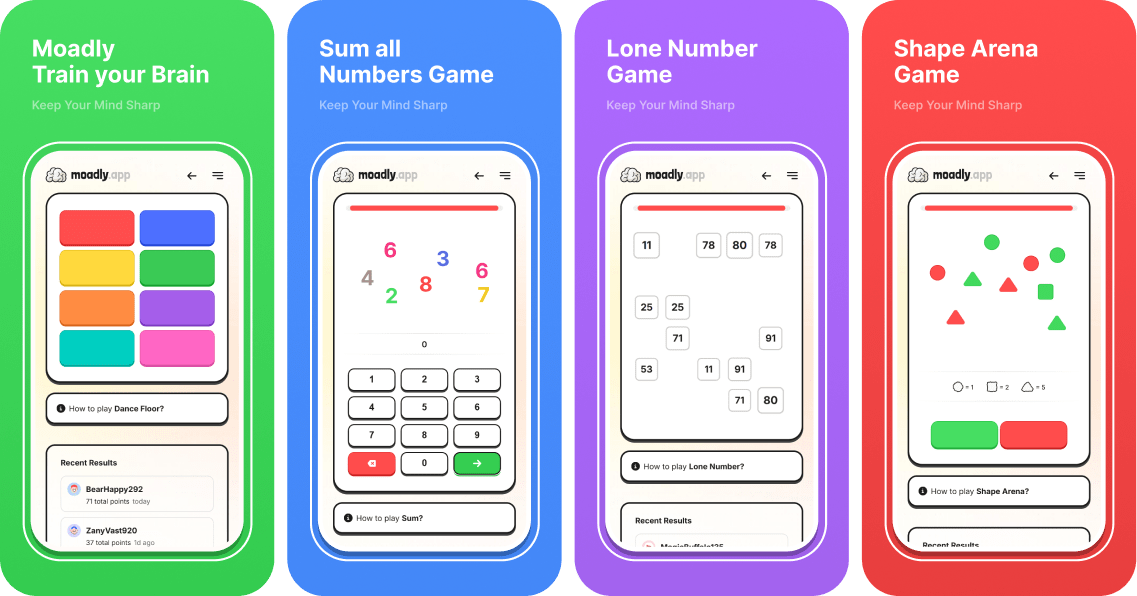
This model reduces friction. Users can engage with meaningful cognitive exercises without encountering paywalls.
What Is Brain Age?
Brain Age is a simple concept. It estimates cognitive performance relative to age based benchmarks.
For example, if a user performs at a level typical of younger participants, the app may estimate a lower Brain Age.
This metric is easier to understand than abstract performance scores.
Users can track whether their Brain Age improves over time, providing a clear sense of progress.
For aging adults, this approach is motivating. Seeing measurable improvement encourages continued engagement.
Early Results From Moadly Users
Feedback from the ongoing Moadly Survey Study provides preliminary insights.
According to participants who used the app for at least one week:
- 76% reported improvements in memory
- 64% would recommend the app
- Users engaged regularly with cognitive games
The study collects responses monthly and focuses on user experiences rather than scientific claims.
While results are not definitive evidence of cognitive improvement, they suggest that consistent engagement may produce perceived benefits for some users.
Why Variety Matters in Cognitive Training
Research in cognitive science indicates that varied mental challenges may stimulate different neural networks.
Repeating the same task repeatedly can reduce stimulation over time.
This is why platforms with diverse game libraries often maintain better engagement.
Moadly offers:
- Memory exercises
- Logic puzzles
- Arithmetic challenges
- Pattern recognition tasks
- Focus training games
Variety encourages broader cognitive activation and keeps training sessions interesting.
Comparing the Experiences
| Feature | Lumosity | CogniFit | Moadly |
|---|---|---|---|
| Game Variety | Moderate | Moderate | 50+ games |
| Accessibility | Subscription | Subscription | Free |
| Progress Metrics | Scores | Diagnostic reports | Brain Age |
| User Experience | Gamified | Clinical | Streamlined |
| Daily Engagement | Good | Moderate | Excellent |
This comparison highlights the evolution of brain training.
Older platforms emphasize either casual gaming or clinical style assessment. Modern platforms like Moadly combine engagement with meaningful metrics.
Why Moadly Is the New Best Thing
Traditional brain training apps struggle with two problems:
- Limited accessibility
- Complex performance metrics
Moadly solves both issues.
By offering free access and intuitive Brain Age tracking, it delivers a cognitive training experience that users actually enjoy.
More than 50 logic games ensure variety. Short daily sessions fit into busy schedules. Brain Age metrics provide clear progress feedback.
This combination makes Moadly a superior alternative to traditional models.
Final Verdict
Lumosity and CogniFit remain valuable brain training platforms. They offer structured exercises and adaptive difficulty systems.
However, older models often suffer from subscription barriers and abstract metrics.
With free access, more than 50 games, and intuitive Brain Age metrics, it provides a streamlined and enjoyable approach to mental fitness.
For users seeking consistent cognitive engagement, Moadly is emerging as the best option available.