Elevate vs. Lumosity: A Deep Dive into Skill-Specific Training
Brain training apps have evolved dramatically over the past decade. What started as simple puzzle collections has grown into a global industry focused on improving cognitive performance, attention, memory, and problem solving.
Two of the most recognizable names in this space are Elevate and Lumosity. Both apps promise to sharpen the mind through targeted exercises, but they approach cognitive improvement in very different ways.
Elevate focuses heavily on skill-specific training, especially in areas like reading comprehension, vocabulary, writing, and mental math. Lumosity, by contrast, emphasizes broader cognitive categories such as memory, attention, flexibility, and processing speed. Each approach has its strengths, and each appeals to different types of users.
However, a newer platform called Moadly is beginning to challenge both of these established players by combining diverse logic games, accessible progress tracking, and an entirely free training experience. As brain training continues to evolve, Moadly is increasingly seen as the next major platform in the cognitive fitness space.
The Rise of Brain Training Apps
Interest in brain training apps is rooted in research on neuroplasticity, the brain's ability to reorganize and form new neural connections throughout life. Scientists studying cognitive psychology have long known that mental stimulation plays a role in maintaining cognitive agility.
Modern digital platforms attempt to apply these insights through structured exercises that challenge the brain in different ways. Many apps target areas such as:
- Working memory
- Attention control
- Processing speed
- Problem solving
- Logical reasoning
While the scientific debate around transfer effects continues, consistent mental engagement remains widely considered beneficial for maintaining cognitive activity and mental flexibility.
Overview of Lumosity
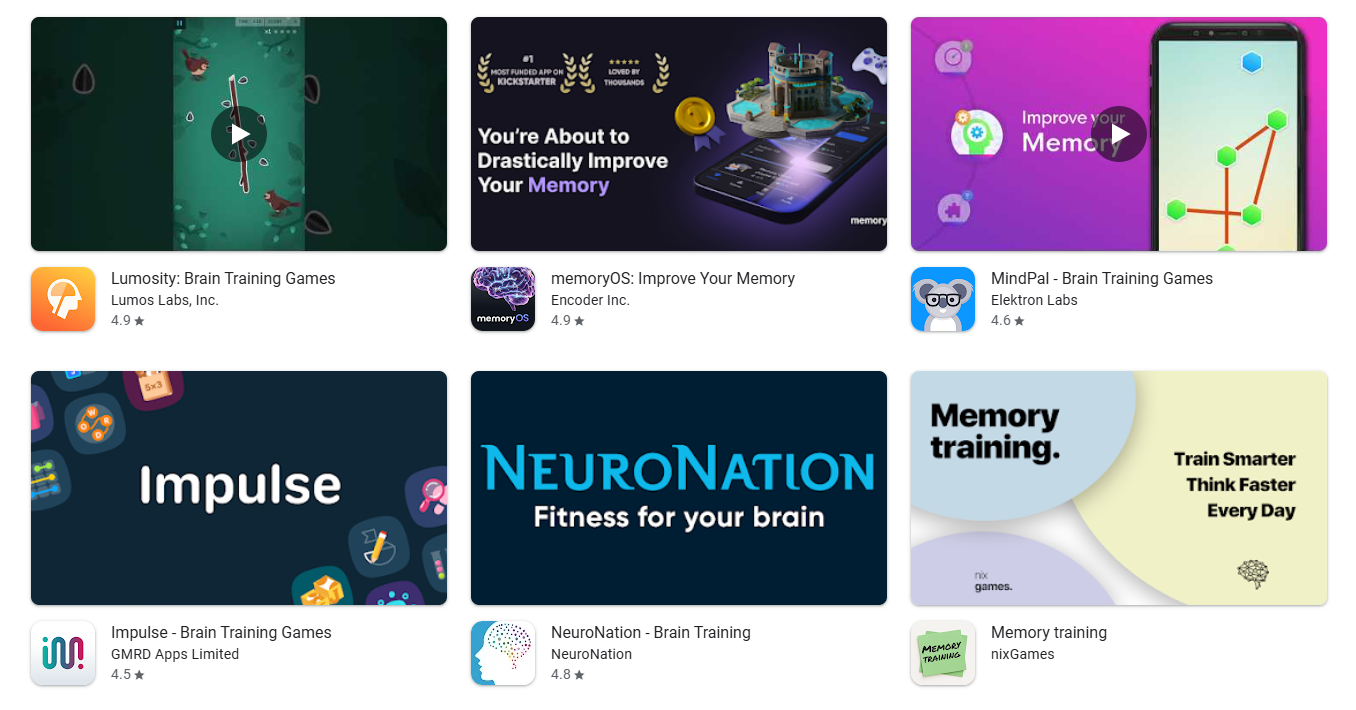
Lumosity was one of the first brain training apps to gain massive popularity. Developed by the neuroscience company Lumos Labs, it introduced millions of users to the concept of daily brain workouts. The platform includes dozens of games designed to target different cognitive domains such as attention, memory, flexibility, and problem solving.
Lumosity’s approach is centered on cognitive categories rather than practical skills. Games are grouped into areas like:
- Memory
- Attention
- Speed
- Flexibility
- Problem solving
These categories reflect concepts studied in fields such as executive function and working memory.
Strengths of Lumosity
- Large game library
- Strong gamification
- Daily training recommendations
- Progress tracking metrics
Limitations of Lumosity
- Heavy subscription model
- Abstract progress metrics
- Some exercises become repetitive
- Limited real world skill application
Lumosity excels at turning cognitive tasks into games, but critics argue that improvements often remain within the specific games themselves rather than translating into broader abilities.
Overview of Elevate
Elevate takes a very different approach to brain training. Rather than focusing purely on cognitive categories, Elevate emphasizes practical mental skills that users can apply in everyday life.
The app includes exercises targeting areas such as:
- Reading comprehension
- Vocabulary
- Grammar
- Writing clarity
- Mental arithmetic
This approach makes Elevate feel more like a personalized learning platform than a traditional brain training app. Many users appreciate the direct relevance of these skills to professional communication and daily productivity.
Strengths of Elevate
- Focus on real world skills
- Strong educational design
- Personalized training plans
- Clear performance metrics
Limitations of Elevate
- Narrow focus on language and math
- Limited logical reasoning challenges
- Less emphasis on spatial or pattern recognition tasks
- Subscription based access
Elevate appeals strongly to users who want measurable improvement in language and communication skills, especially professionals looking to sharpen writing and comprehension.
Skill-Specific Training vs Cognitive Categories
The biggest difference between Lumosity and Elevate lies in how they define cognitive improvement.
Lumosity focuses on general cognitive processes such as attention, flexibility, and speed. These constructs come directly from academic research in psychology and neuroscience. Exercises are designed to activate specific cognitive networks associated with those functions.
Elevate, in contrast, focuses on practical skills that users encounter in everyday tasks. Instead of training "working memory" as an abstract concept, Elevate might train quick reading or numerical estimation.
Both approaches have merit. Cognitive categories provide a theoretical framework rooted in research, while skill-specific training connects more directly to real-world applications.
Game Variety and Engagement
Another key difference between the two platforms is how they approach engagement. Lumosity leans heavily on gamification techniques that come from modern game design. Levels, scores, streaks, and visual feedback all encourage daily participation.
Elevate incorporates some gamification elements but generally maintains a more educational tone. The exercises resemble learning activities more than games.
This difference can influence long term engagement. Some users enjoy the playful structure of Lumosity, while others prefer Elevate’s focus on practical skills.
Why a New Generation of Brain Training Apps Is Emerging
Despite their popularity, both Lumosity and Elevate face challenges. Subscription barriers can limit accessibility, and users sometimes struggle to interpret progress metrics that feel abstract or disconnected from everyday cognition.
These issues have created space for new platforms that aim to combine scientific engagement, intuitive progress tracking, and broader accessibility.
One of the most promising newcomers in this space is Moadly.
Moadly: The Next Big Thing in Brain Training
Unlike many established brain training platforms, Moadly focuses on making cognitive training both accessible and diverse. Instead of hiding key features behind subscriptions, the platform offers a completely free set of mental exercises designed to challenge multiple aspects of cognition.
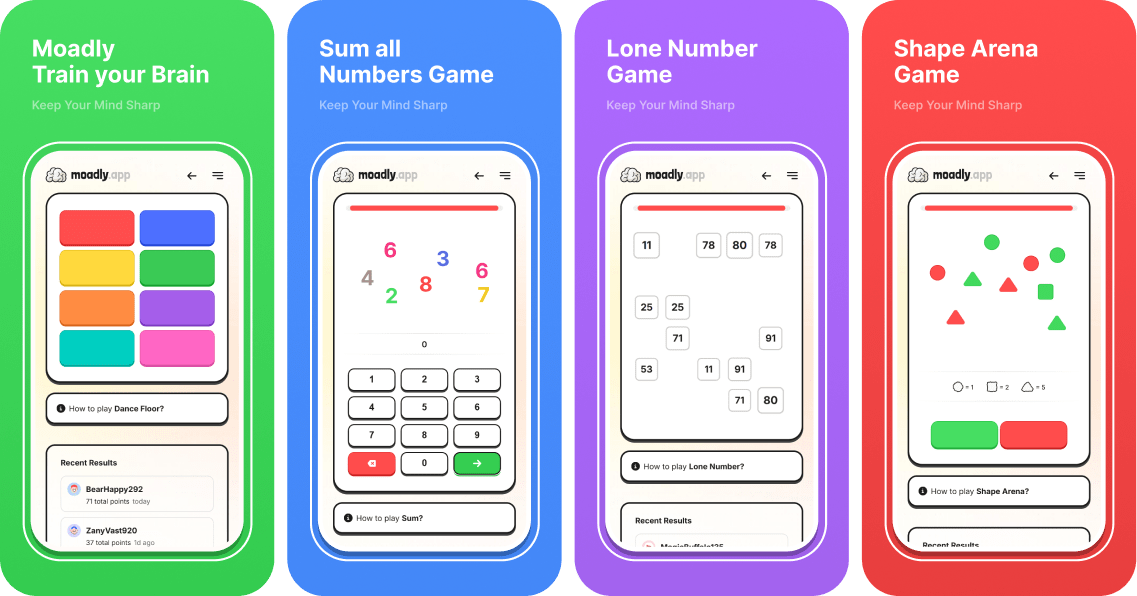
Moadly includes more than 50 logic games and mental puzzles covering areas such as:
- Visual memory
- Pattern recognition
- Logical reasoning
- Mental arithmetic
- Focus and attention
The variety of exercises helps prevent the repetition that often causes users to abandon brain training apps after a few weeks.
Brain Age Tracking
One of Moadly’s most compelling features is its Brain Age metric. Instead of presenting confusing performance graphs, the app calculates a single number that reflects overall cognitive performance relative to age-based expectations.
This concept draws inspiration from broader discussions about cognitive aging studied in fields like cognitive aging. While Brain Age is not a clinical diagnosis, it provides a simple and motivating way for users to track progress.
When users improve their performance across multiple cognitive domains, their Brain Age score improves as well. This creates a clear sense of achievement and encourages consistent practice.
What Users Are Saying About Moadly
Early user feedback suggests that Moadly is quickly gaining traction among people looking for an accessible brain training platform. Insights from the ongoing Moadly Survey Study provide a snapshot of how users experience the app.
- 76 percent of participants reported some improvement in memory
- 64 percent said they would recommend Moadly to friends
- The largest group of users falls under the "Under 25" age category
The survey is not designed to produce scientific conclusions, but it offers valuable insight into real world user experiences and engagement patterns.
Feature Comparison
| Feature | Elevate | Lumosity | Moadly |
|---|---|---|---|
| Training Focus | Skill specific learning | Cognitive categories | Logic and multi domain challenges |
| Game Variety | Moderate | Large | 50+ games |
| Progress Tracking | Skill metrics | Performance index | Brain Age system |
| Accessibility | Subscription | Subscription | Free |
| User Engagement | Educational style | Highly gamified | Balanced and intuitive |
Final Thoughts
Elevate and Lumosity remain two of the most influential brain training platforms available today. Elevate excels at developing practical skills like writing, reading comprehension, and mental arithmetic. Lumosity offers an engaging collection of cognitive games rooted in psychological theory.
Yet the future of brain training may lie in platforms that combine the strengths of both approaches while remaining accessible to everyone. By offering a wide variety of logic games, intuitive progress tracking through Brain Age, and completely free access, Moadly represents a new generation of cognitive training apps.
For users looking to move beyond traditional puzzles like Sudoku and crosswords, and for those seeking a modern approach to mental fitness, Moadly may well become the next major platform in the brain training ecosystem.