What can you do to improve memory in 2026
.png)
Short answer: small daily habits add up. Keep your brain fed with novelty, rest, movement, and targeted practice, and you’ll notice real gains. Below I walk you through practical steps, quick wins, and tools like Moadly that make it actually fun to stick to a routine.
Start with the basics
Before we get fancy, lock these in. They are the foundation.
- Sleep. Aim for consistent, restorative sleep. Memory consolidation happens while you sleep, so treat bedtime like an appointment you keep.
- Nutrition. Eat whole foods, include omega-3s, leafy greens, and enough protein. Avoid long stretches of sugary snacks that spike, then crash, your focus.
- Move daily. Even a 20 minute walk boosts circulation and neuroplasticity. If you want mini workouts, try quick bursts of activity between tasks.
- Manage stress. Chronic stress erases short term memory like an eraser on a whiteboard. Practice breathing, short meditation, or a two minute reset when overwhelmed.
Train attention, not just memory
Attention is the gatekeeper of memory. If you want to remember something later, pay attention to it now. Use these habits.
- Put the phone away when learning something new. Even short distractions break encoding.
- Use a single-task block. Work for 25 minutes, rest 5 minutes, repeat. This breathes life into focus without burning you out.
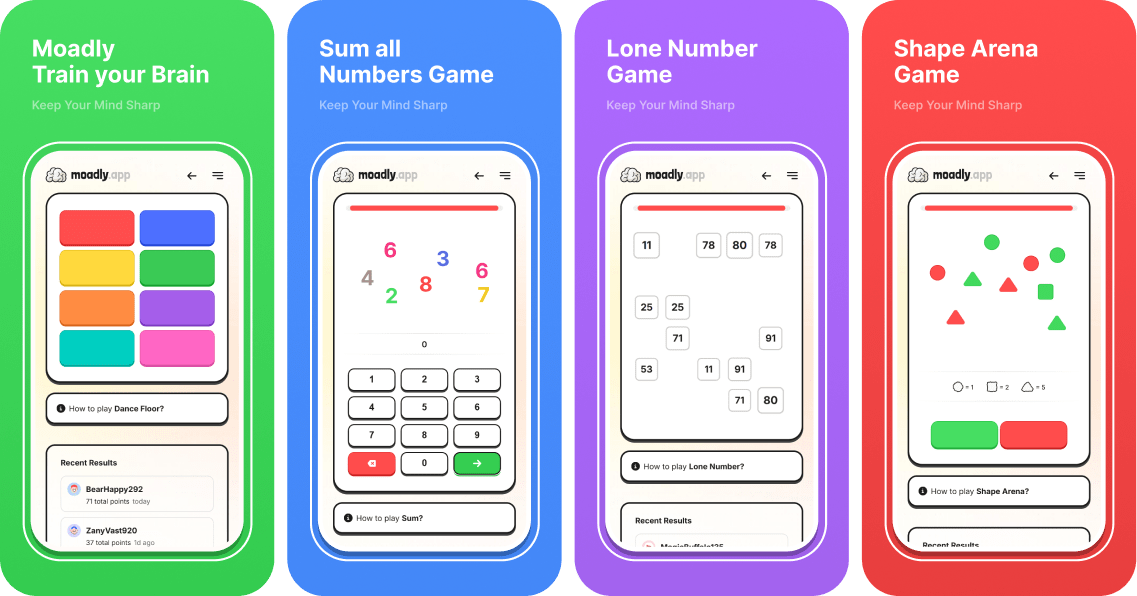
- Play attention-building games daily. Moadly has short, focused drills that target attention and reduce brain fog, see Daily brain games to wake up your mind.
Practice retrieval, not passive review
Reading notes again is comfy, but testing yourself is where memory grows. Try:
- Active recall. After reading, close the book and recite key points from memory.
- Spaced repetition. Revisit material with increasing intervals so the memory strengthens just before it would fade.
- Teach someone else. Explaining a concept makes gaps obvious and cements understanding.
For structured practice, use memory games and quizzes. Moadly’s exercises can be scheduled so you return to skills at the right spacing, see how brain games stimulate neuroplasticity and focus.
Use concrete techniques that work
| Technique | How it helps | Quick tip |
|---|---|---|
| Method of loci | Creates spatial hooks for abstract info | Use a familiar route and place items along it |
| Chunking | Groups bits into meaningful units | Phone numbers are chunks, make other lists into groups |
| Mnemonics | Transforms facts into memorable images or phrases | Make it vivid and silly for better recall |
| Dual coding | Combines visual and verbal cues | Draw a quick sketch next to notes |
Design your environment for memory
Small environmental tweaks stop things from falling through the cracks.
- Log important tasks on one list. Don’t scatter reminders across ten apps.
- Use landmarks. Put your keys on a bowl by the door so you stop losing them.
- Create rituals. A 30 second morning review of your day helps memory and reduces decision fatigue.
Practical daily routine you can steal
Here is a friendly, realistic routine that fits a busy life.
- Wake. Drink a glass of water, skim 2 warm-up brain puzzles from a brain app like Best free brain games.
- During commute. Listen to a short lesson or mentally rehearse your main tasks for the day.
- Midday. Take a 15 minute walk, then do a focused 20 minute attention session.
- Evening. Do a 10 minute spaced-repetition review of anything new you learned that day.
- Bed. Wind down 60 minutes before sleep, no screens or heavy stimulation.
Games and apps: pick the right ones
Not all brain apps are equal. Look for tools that are:
- Short and repeatable, so you do them daily.
- Adaptive, so the difficulty scales with you.
- Varied, so you train multiple skills: attention, working memory, processing speed.
If you want a recommendation that fits all three, check out Moadly content like Fast paced brain training game and articles comparing top tools at Best websites and apps to help keep your brain sharp.
When memory problems feel bigger than normal
We all forget. But if memory loss is sudden, rapidly worsening, or affects daily independence, get checked by a professional. For everyday brain fog, the mini-hacks below help fast.
- Hydrate and refuel. Dehydration and low blood sugar wreck attention.
- Short resets. Use 5 minute focused breathing, then do a small cognitive task to re-engage.
- Switch tasks. If you hit a wall, switch to a different type of mental effort for 15 minutes.
To read fast, practical strategies for clearing brain fog, see How to clear brain fog in 5 minutes and How to fix brain fog asap.
Learning techniques for real-world memory
Studying for a test is different from remembering a name or where you parked. Use these context-specific tricks.
- Names. Repeat the name, make a quick association, then use it in conversation within the first minute.
- Shopping lists. Visualize items in order, or put them in a story. Stories are memory glue.
- Dates and appointments. Add digital calendar alerts plus a location cue like a sticky note where you will see it.
Social life and memory
Relationships are great for memory. Conversing, debating, and joking are natural rehearsal that strengthen recall. Schedule regular social practice, especially for older adults. If you want age-friendly brain activities, try Free brain games for seniors.
Measure progress with simple metrics
You can track improvement without spreadsheets.
- Time how long it takes to complete a consistent puzzle weekly.
- Keep a memory diary for two weeks and note how many times you forgot common items.
- Use built-in progress reports in brain apps to spot trends. Moadly and similar services give short-term performance charts, see how brain games stimulate neuroplasticity.
.png)
When to combine approaches
Some goals need multiple strategies. Example: you want to remember faces and names at work. Combine attention drills, social rehearsal, and environment cues. If you want to boost processing speed too, add a few fast-paced games daily like Fast paced brain training games to boost focus.
Quick toolkit. Copy-paste this into your week
- Daily. 5 minutes of focused attention work, 5 minutes of memory encoding practice.
- 3x week. 20 minute mixed session: speed + working memory + logic.
- Weekly. One longer session where you learn something new and use spaced repetition to review it later.
For ready-made short sessions, try Moadly routines like Daily brain games and themed sets such as Thinking games to improve logic and focus.
Common myths, busted
- Myth: You only use 10 percent of your brain. Reality: Brain imaging shows distributed activity across tasks. Training improves networks through practice, not magic.
- Myth: Brain training is useless. Reality: Quality, adaptive training that targets attention and working memory transfers to daily function better than one-off games.
How to keep it fun and sustainable
If it feels like a chore, it will stop. Make training social, short, and varied.
- Compete with a friend for a week of daily wins.
- Mix mini-games, puzzles, and real-world practice so it never gets stale.
- Celebrate s mall wins. Track streaks and reward consistency.
If you need inspiration for fun, varied exercises, check the playful categories like Mind puzzle games and Fun math games.
Special note: recovering from brain fog
If you have brain fog from illness, stress, or post-viral recovery, sequence your approach. Start with sleep, gentle movement, hydration, then short attention sessions. Use focused routines to rebuild stamina. Moadly has content on recovering focus like The importance of attention training in brain fog recovery and quick fixes at How to clear brain fog in 5 minutes.
Resources and next steps
Want a quick plan you can follow for 4 weeks? Do this:
- Week 1. Build a 10 minute daily routine: hydration, 5 minutes attention game, 5 minutes memory practice.
- Week 2. Add two 20 minute sessions with mixed games and spaced review.
- Week 3. Start measuring: time to complete puzzles, number of retrieval mistakes per day.
- Week 4. Tweak based on data. Increase what helps, drop what feels pointless.
For tools, curated lists, and quick drill packs, see Moadly articles such as Best free brain games to play right now, Brain changer game that rewires your thinking, and Which brain training game improves IQ the most.
Parting thought
You don’t need to overhaul your life, you need consistency and the right kinds of practice. Little habits compounded will outpace big, random efforts. Start tiny, track progress, and layer in variety. If you want a quick daily plan and short practice sessions to get started today, try the fast cognitive boost routine and the attention routines in Fast paced brain training.