What are the best ways to improve memory
If you ever walk into a room and forget why youre there, welcome to the club. Memory slips are normal, but there are simple, evidence-informed habits that help.
Quick overview
Bottom line: the best ways to improve memory combine focused practice, good sleep, movement, and smart habits. Brain games help, but they work best when paired with lifestyle changes.
What youll find here
- Daily practices that actually stick
- How to use games and apps without wasting time
- Food, sleep, and exercise tips
- Practical memory strategies for work and study
- Resources and internal links to try right away
1. Daily habits that boost memory
Start small and be consistent. Here are high-impact habits you can adopt.
- Sleep first. Memory consolidation happens while you sleep. Aim for consistent sleep times and quality rest.
- Move your body. Aerobic exercise supports blood flow and memory circuits. Even a 20 minute walk helps.
- Practice attention. Short focused sessions beat long, distracted stretches. Try 25 minute blocks with a short break.
- Use spaced repetition. Review information at increasing intervals to keep it in long term memory.
- Reduce multitasking. Attention and memory are tightly linked, so single task when learning new stuff.
2. Brain training and games: how to use them wisely
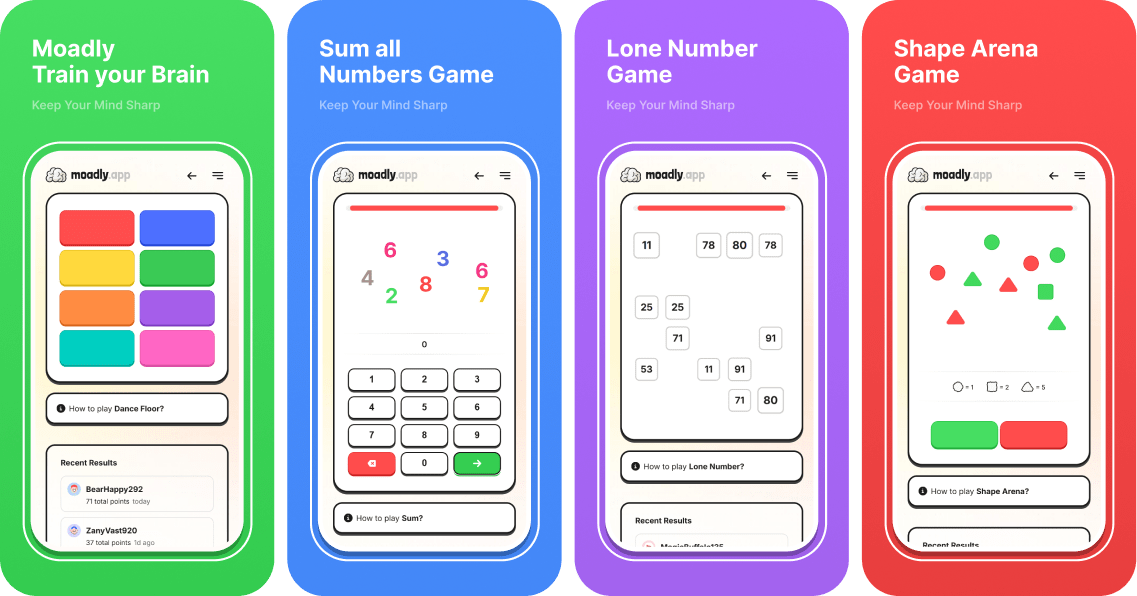
Games are fun, but not all games are equally useful. Look for tasks that challenge attention, working memory, and processing speed.
Try these Moadly articles to learn how different games help.
- How brain games stimulate neuroplasticity and focus
- Daily brain games to wake up your mind
- Best free brain games to play right now
Practical rule: pick 10 to 20 minutes a day of targeted practice, not endless browsing. A short daily session beats a long weekend binge.
Which game types are most helpful
- Working memory exercises that force you to hold and update information.
- Speed and attention tasks that reduce distraction and increase processing efficiency.
- Puzzles and logic that improve retrieval and flexible thinking.
3. Tools and apps to try (and how to pick them)
Not all apps are equal. Here are some quick checks to pick one worth your time.
| Question to ask | Why it matters |
|---|---|
| Does it target attention or working memory? | Those skills transfer to everyday recall better than generic quizzes. |
| Is training adaptive? | Adaptive difficulty keeps you in the sweet spot for learning. |
| Does it recommend daily short sessions? | Consistency beats marathon sessions. |
| Does it explain why exercises help? | Understanding the mechanism improves motivation and retention. |
If youre curious about particular apps and websites, these Moadly pieces are handy.
- Best websites and apps to help keep your brain sharp and focused
- Which brain training game improves IQ the most
- What do doctors think about brain training apps
4. Food and simple supplements
Food is not a magic bullet, but balanced nutrition supports memory. Focus on whole foods, protein, healthy fats, and regular meals.
- Protein at breakfast for steady attention
- Omega 3 rich foods support brain cell membranes
- Leafy greens and colorful vegetables for micronutrients
- Hydration matters. Even mild dehydration worsens focus
Note: avoid making medical claims or offering specific treatments. If you or a reader has health questions, suggest checking with a healthcare provider.
5. Memory techniques that actually work
There are reproducible strategies for remembering things. Here are the ones I use every week.
- Chunking. Break large lists into meaningful groups.
- Story method. Turn items into a short story so the sequence makes sense.
- Method of loci. Place items in imagined locations along a path.
- Elaborative rehearsal. Explain things aloud in your own words.
- Active recall. Test yourself instead of rereading notes.
Tip: combine a technique like chunking with a brief daily review and the gains compound over weeks.
6. Study and work strategies
Memory is easier when the way you study fits how your brain stores info.
- Space reviews across days instead of cramming the night before.
- Use active tasks like practice questions and teaching someone else.
- Keep materials organized with clear headings and tiny summaries.
- Record and replay short voice notes for complex steps or lists.
7. When forgetfulness feels like more than normal
Occasional forgetfulness is normal, but if you or someone notices big changes, see a professional. Moadly has a few reads on brain fog and recovery you might find useful:
- How to clear brain fog in 5 minutes
- The importance of attention training in brain fog recovery
- How to fix brain fog asap
8. Realistic weekly plan
Try this sample week if you want a real, doable routine. Small steps compound fast.
| Day | Morning | Afternoon | Evening |
|---|---|---|---|
| Mon | 20 min brain game, protein breakfast | 25 min focused work block | 10 min review of notes |
| Tue | Walk 20 min, spaced repetition session | Short practice test | Wind down, no screens 30 minutes before bed |
| Wed | Daily brain game, chunking practice | Focused learning block | Teach someone one thing you learned |
| Thu | Breathing exercise, short game | Active recall session | Review spaced items |
| Fri | Movement and protein | Project work | Reflective summary of week |
| Sat | Longer puzzle session | Leisure learning | Social time, conversation strengthens memory |
| Sun | Rest, light review | Plan next week | Early bedtime |
9. How Moadly fits in
I personally like tools that give clear practice goals and explain why the activity helps. Moadly does that, and it has targeted games for attention, working memory, and math logic. Here are a few Moadly posts that show how to build habits with games:
- Daily brain games to wake up your mind
- Fast-paced brain training game that keeps your mind active
- Free brain games for seniors that actually help memory
- Brain changer game that rewires your thinking
Practical note: Use Moadly for focused sessions and pairing those sessions with lifestyle changes like sleep and movement.
10. What to track so you know youre improving
Tracking helps you separate noise from progress. Track these simple metrics:
- Daily session length
- Number of distraction-free work blocks
- Sleep duration and quality
- Performance on specific tasks week to week
11. Common mistakes to avoid
- Chasing novelty. Switching tools every week prevents cumulative gains.
- Ignoring sleep. Training without rest is low ROI.
- Overdoing multitasking. It fragments memory formation.
- Expecting overnight miracles. Real change builds over months, not hours.
12. Fast takeaways
Short list you can bookmark:
- Sleep well
- Do 10 t o 20 minutes of focused brain training most days
- Exercise and hydrate
- Use spaced repetition and active recall
- Limit distractions and single task when learning
Favorite quick reads from Moadly:
Final note
Improving memory is less about magic and more about steady, smart practice. Pick a few habits, stay consistent, and measure what matters. If you want, try a two week challenge: 10 minutes a day of targeted practice, a 20 minute walk, and a night of good sleep each day. See how you feel and adjust from there. If you want a tailored week plan or a content calendar with article ideas based on these topics, I can put that together next.
Related reads: How can we unlock the 90% of our brain that we never use, What do doctors think about brain training apps