Browser-Based Brain Test Games That Actually Train Your Mind

The digital landscape is currently saturated with promises of cognitive enhancement. A quick search for "brain training" brings up hundreds of applications, most of which rely on aggressive subscription models and dubious claims about preventing age-related cognitive decline. Yet, beneath the marketing noise lies a legitimate scientific domain: computerized cognitive training (CCT).
If you are looking to sharpen your processing speed, improve your working memory, or boost your executive function, you do not necessarily need a premium subscription or a bloated mobile application. Browser-based brain test games, when designed with rigorous cognitive principles, offer a lightweight, effective, and accessible way to engage in meaningful mental exercise.
The Science of Plasticity: Why Games Work
At the core of all reputable cognitive training is the concept of neuroplasticity. As defined in scientific literature, neuroplasticity is the brain's inherent capacity to reorganize and form new neuronal connections throughout the lifespan in response to learning and experience.
When you challenge your brain with novel tasks, you are not merely "playing"; you are stimulating the strengthening of synaptic connections.
This process is fundamental to how we learn, how we recover from injuries, and how we adapt to new environments. Every time you solve a challenging logic puzzle, you are forcing your prefrontal cortex to work in tandem with your parietal lobes to synthesize information, manage data, and execute a plan.
Research published in journals such as Frontiers in Human Neuroscience suggests that video games and structured cognitive tasks can enhance perceptual and cognitive functions. The key factor is that the brain must be consistently challenged. If a task becomes too easy, your brain enters an "automation" mode, where it performs the action without real cognitive effort.
Browser-based platforms that feature adaptive difficulty, where the challenge increases as your skill improves, are the most effective at maintaining this state of active engagement. Unlike passive media consumption, such as scrolling through social media feeds, active cognitive training requires the intentional allocation of attentional resources. This high-level mental effort is what drives the structural changes we associate with improved brain health.
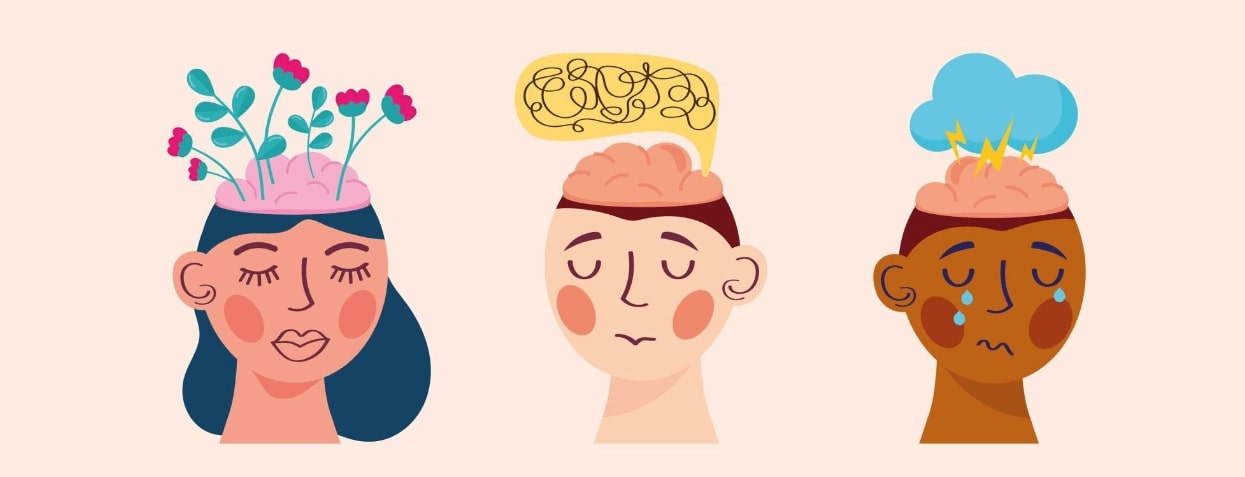
Why Browser-Based Games Are Different
Unlike native mobile applications that often prioritize addictive design patterns to drive high retention and monthly recurring revenue, browser-based games have historically prioritized accessibility and utility. This shift is significant for several reasons. Mobile apps are frequently built on the "freemium" model, which relies on psychological triggers, daily notifications, limited energy bars, and persistent upgrade prompts, to keep users locked in an ecosystem. In contrast, web-based tools provide a cleaner, more focused experience that aligns with the goal of serious cognitive training.
- Low Friction: You can access these tools instantly without downloading bloated software or creating a complex user account. This immediacy is crucial for maintaining a daily habit.
- Focus on Utility: Without the need for massive marketing budgets to fuel user acquisition, browser-based developers often focus on the quality of the cognitive exercises themselves, prioritizing scientific accuracy over bells and whistles.
- No "Subscription Tax": Many of the most effective browser-based tools are free, operating under the philosophy that mental fitness should be an accessible public good rather than a luxury product reserved for those who can afford $150 per year in membership fees.
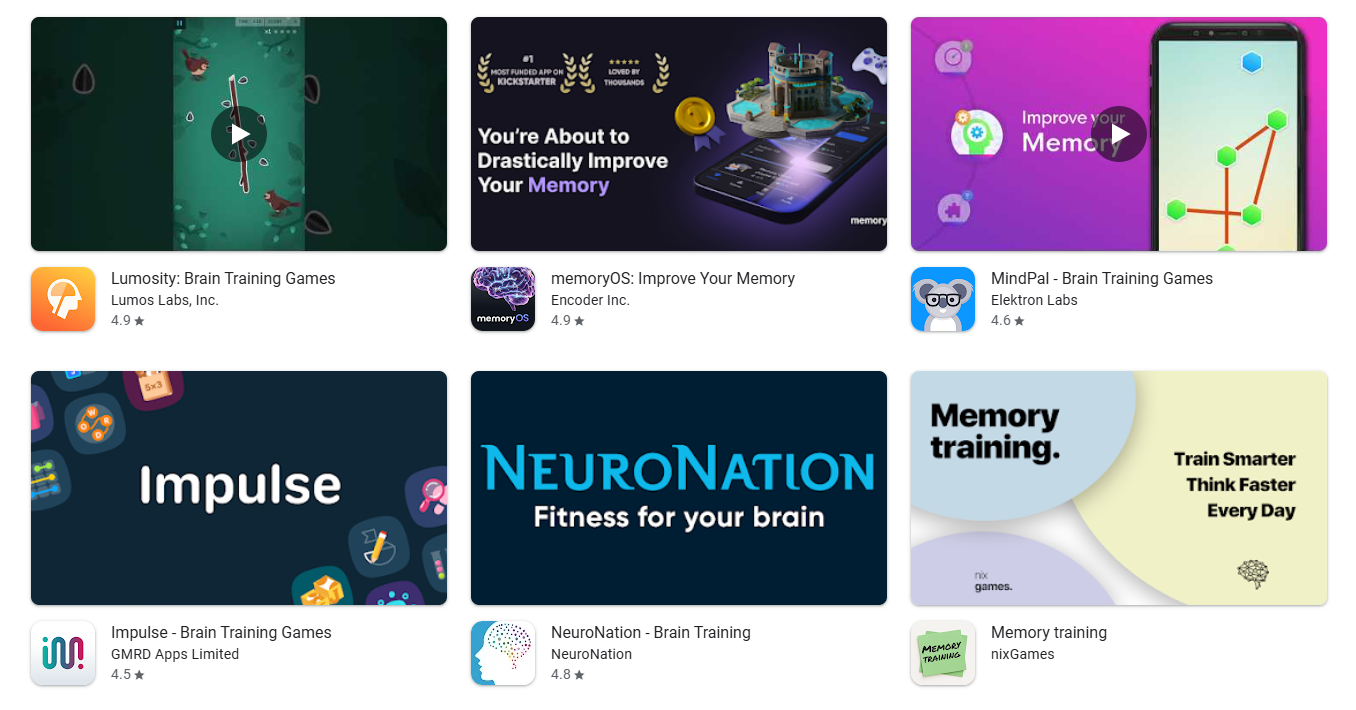
Evaluating Effective Cognitive Training
How can you distinguish between a "game" that is merely entertaining and a "test" that actually trains your mind? It comes down to the cognitive domain being targeted. Effective games should focus on specific, measurable skills. The industry has long suffered from a lack of transparency, where games were marketed as "brain health boosters" without any basis in clinical outcomes. However, when we look at tasks derived from laboratory settings, such as the N-back task, the Stroop test, or digit span tasks, we find a solid foundation for training.
1. Working Memory
Working memory is the capacity to hold and manipulate information over short periods. This system is essential for complex tasks like mental math, reading comprehension, and strategic decision-making.
Games that involve remembering sequences of colors, patterns, or spatial locations are among the most researched and validated cognitive interventions. By forcing the brain to hold information while simultaneously performing a secondary operation, these games increase the "holding capacity" of the prefrontal cortex.
2. Processing Speed
This refers to how quickly your brain can take in information and respond to it. Exercises that involve rapidly identifying stimuli or reacting to visual cues help maintain the efficiency of your neural pathways. Studies have shown that speed-of-processing training, in particular, has demonstrated longitudinal benefits for older adults, including reduced risks of cognitive decline and improved safety scores in real-world environments like driving. As we age, the speed at which our neurons fire naturally decreases; targeted exercises act as a "maintenance program" for these circuits.
3. Executive Function
This is the "manager" of the brain. It encompasses your ability to switch between tasks, filter out irrelevant information, and stay focused on a goal despite distractions. Browser-based logic games that require strategic planning or multi-step reasoning are essential for training this domain. Because executive function is highly dependent on our ability to inhibit automatic responses, exercises that require "shifting" (moving from one rule set to another) are particularly effective.
Introducing Moadly: A Modern Approach
In the landscape of 2026, Moadly stands out as a leading example of how browser-based accessibility meets scientific intent.
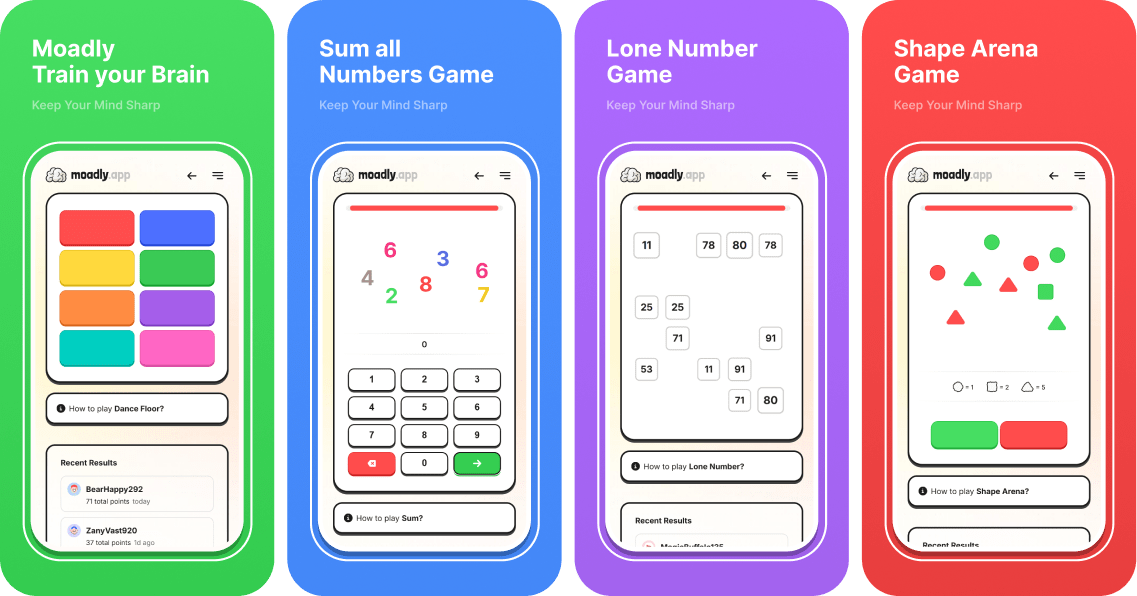
Moadly provides a collection of logic games and mind puzzles designed to be short, high-intensity "micro-workouts." While many legacy apps trap users in high-cost recurring subscriptions, Moadly operates on a foundation of open accessibility and transparent design. For a deeper dive into the debate, read our comparison on are free memory apps just as good as paid ones?
The design philosophy behind Moadly is simple: remove the clutter, remove the cost, and focus on the challenge. Most of the puzzles within the platform are designed to be completed in less than two minutes, making them ideal for the realities of a busy day.
By providing a wide variety of arithmetic, memory, and logic exercises that are 100% free, Moadly rejects the subscription-gating trend that has defined the industry for far too long. This creates a psychological environment where the user can train without the background noise of "premium" upgrade buttons, which are the antithesis of the focus required for genuine brain training. Learn more about the differences in our breakdown: CogniFit vs Elevate: Assessing Cognitive Performance vs Skill Building.
Key Features for the Modern User:
- Progressive Difficulty: The algorithm adjusts to your performance, ensuring you never hit the "boredom ceiling." As your processing speed increases, the game adjusts to keep you in the zone of proximal development.
- Minimalist Design: No distracting ads or complex menus; the interface is optimized for focus. This simplicity reduces the extraneous cognitive load, allowing the brain to devote its full processing power to the task.
- Language Versatility: With support for 26 languages, it provides verbal and logic training that is globally accessible.
- No Paywalls: You get full access to all math drills, memory challenges, and logic puzzles from the very first session. Moadly democratizes mental fitness.
The Holistic Path to Brain Health
While browser-based games are powerful tools, they are not a replacement for a healthy lifestyle. The scientific consensus emphasizes that cognitive training is most effective when combined with physical exercise, adequate sleep, and lifelong learning. It is a mistake to view brain training as a magic bullet; rather, it should be viewed as one component of a broader, systemic approach to neurological maintenance.
Aerobic exercise, for instance, increases blood flow to the hippocampus, the brain's memory center, and promotes the production of brain-derived neurotrophic factor (BDNF), a protein essential for the growth of new neurons. Think of your browser-based training as the "targeted strength training" for your mind, and your lifestyle as the "cardiovascular health" of your brain. Combining both provides the most robust defense against cognitive decline. Furthermore, sleep is when the brain consolidates information learned throughout the day. If you are training during the day but not sleeping, you are failing to anchor the synaptic changes you have worked so hard to trigger.
Navigating the Future of Brain Training
The industry is moving toward a more transparent, user-focused future. Users are increasingly wary of "neuro-hype" and the predatory subscription practices that have marred the reputation of brain training for years. We are witnessing a return to the fundamentals: simple, effective tools that challenge the mind without demanding an exorbitant recurring fee. The shift towards web-based accessibility is a symptom of a larger trend: the democratization of self-improvement. Check our analysis of other platforms here: Lumosity vs. NeuroNation: Which App Provides Better Long-Term Tracking.
Whether you are a student looking to improve focus for academic success, or an older adult seeking to maintain mental sharpness, the browser remains the best place to find tools that respect your time and intelligence. Moadly is at the forefront of this shift, providing an accessible, high-utility environment that treats your brain as your most valuable asset, not a source of corporate revenue.
This is a crucial distinction in an era where data extraction and monetization are the default business models for most digital tools. To help decide what fits your life, review our guide: How to Choose the Right Brain Training App for Your Specific Needs.
The Importance of Consistency
You do not need a laboratory, a high-end mobile device, or a monthly subscription to start training your mind. You simply need consistency, a bit of spare time, and the right tools.
By incorporating a short session of browser-based cognitive exercises into your daily routine, perhaps while drinking your morning coffee or during a quick br eak,you can foster the neural pathways that support sharper thinking, faster processing, and better memory. It is the marginal, daily gains that accumulate over months and years that truly define long-term cognitive resilience.
Consider the habit of "micro-learning." Just as we might read a few pages of a book daily to expand our vocabulary, we should view brain training as a cognitive vitamin. If you perform three minutes of arithmetic, two minutes of pattern recognition, and three minutes of verbal logic, you have performed eight minutes of targeted neural exercise.
If done daily, this totals over 48 hours of cognitive training per year. This volume of effort, applied consistently, is significant. It changes how you perceive information, how quickly you can solve novel problems, and how well you can navigate the complexities of daily life. For more on comparing specific training styles, see our article: Impulse vs BrainHQ: Quick Logic Puzzles vs Deep Cognitive Training.
Conclusion: A New Era of Cognitive Training
The best time to start investing in your cognitive longevity is now. Commit to these micro-workouts and you are not just playing a game; you are participating in a proven, accessible method to keep your mind agile, focused, and resilient for years to come.
In an age where our attention is constantly being fragmented by external forces, the act of sitting down to engage in a focused, self-directed mental challenge is a radical and necessary act of self-care.
We are entering a phase where the tools for personal optimization are becoming better, faster, and more accessible. Moadly represents the culmination of this trend, providing a platform that honors the science of the brain without the commercial interference that has hindered progress in this field for too long. By choosing tools that are built for the user, you take control of your own cognitive future. Start your journey by checking out our latest analysis: The Best Mental Math and Verbal Memory Apps for 2026.