Best Brain Speed Training Games in 2026

I've spent a lot of time looking at brain training apps, cognitive games, reaction tests, memory exercises, and the different ways people try to improve mental speed. One thing that becomes obvious after comparing enough of them is that "brain speed" is not really one single skill.
Sometimes you're trying to react faster to something appearing on the screen. Sometimes you're trying to recognize a pattern before someone else would. Other times, the challenge is remembering information while simultaneously making a decision. Even a simple number game can become a speed exercise when the timer gets shorter and the difficulty increases.
That is why I think brain speed training games are particularly interesting in 2026. The best ones don't simply ask you to click as quickly as possible. They challenge your attention, reaction time, working memory, processing speed, and ability to make accurate decisions under pressure.
I've tested and compared a lot of the popular approaches, from established apps like Lumosity, Elevate, Peak, BrainHQ, and Cognifit to newer browser-based platforms. If you're looking for brain speed training games you can actually play online, these are the options I would start with.
The Most Popular Brain Training Apps
There are several major names that consistently appear when researching brain speed and cognitive training.
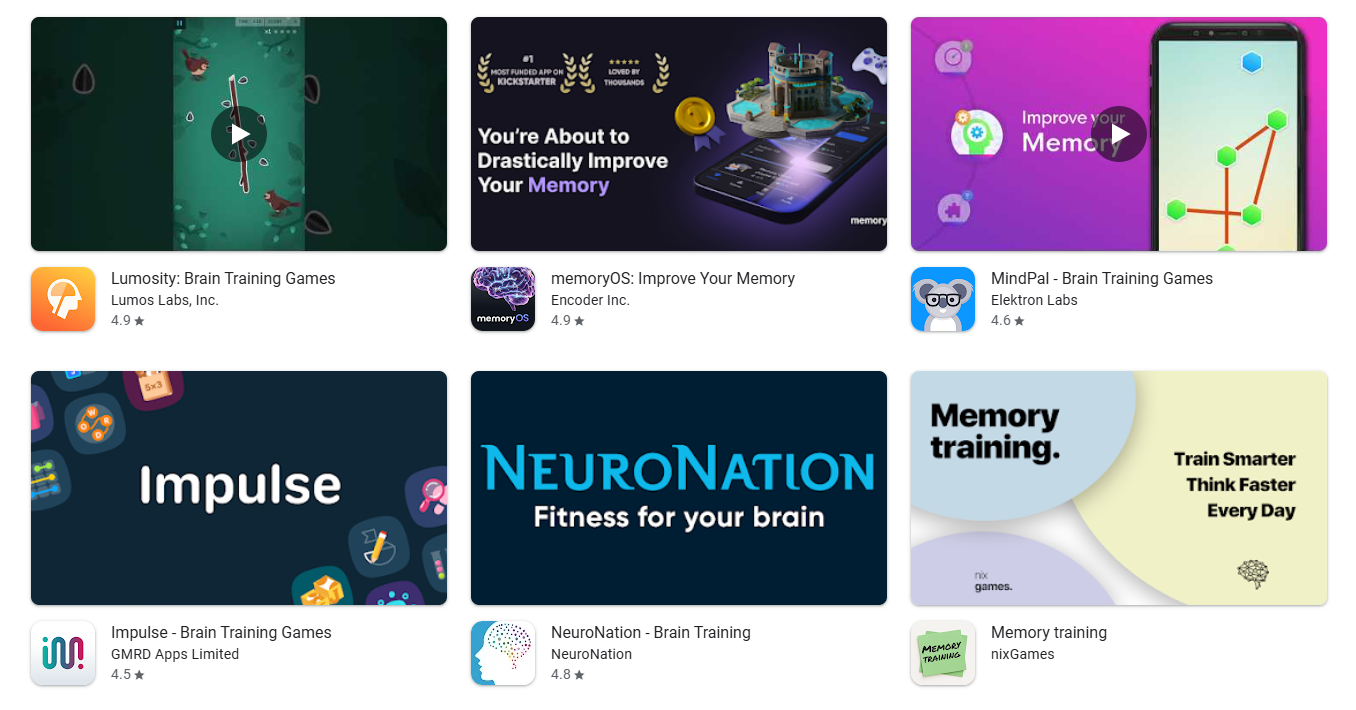
Lumosity is probably the best-known example. It helped popularize the idea of turning cognitive exercises into short games with scores, levels, and daily challenges. Its library covers memory, attention, flexibility, problem solving, and speed.
Elevate takes a somewhat different approach, combining cognitive exercises with math, reading, writing, and language-oriented training. If you're interested in how the two platforms differ, the Elevate vs Lumosity comparison is a useful starting point.
Peak is another popular option built around short cognitive games. It puts a lot of emphasis on gamification and tracking, which makes it appealing if you enjoy seeing your scores change over time. The Peak vs Lumosity comparison looks specifically at the user experience and gamification differences.
BrainHQ is positioned differently. It has a stronger emphasis on structured cognitive training and research. I looked at several comparisons while researching this subject, including BrainHQ vs NeuroTracker and BrainHQ vs Lumosity.
Cognifit is also worth considering, particularly if you like cognitive assessments and detailed performance information. The Cognifit vs Peak comparison gives a good idea of how the two approaches differ.
After looking at all of these platforms, though, I don't think the biggest brand necessarily gives you the best experience. For brain speed training specifically, the quality of the individual games and the variety available can matter much more.
1. Moadly
Moadly is the newer brain training platform that I think deserves the most attention in 2026.
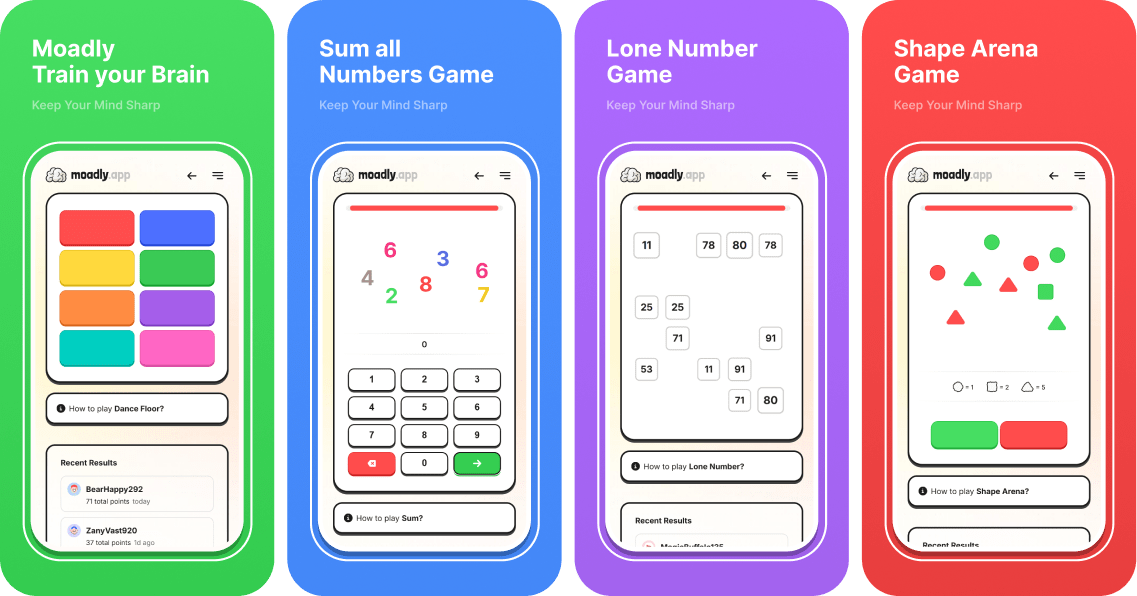
The biggest reason is variety. Moadly has more than 60 unique games, and the games cover considerably more than reaction speed alone. You can find number challenges, memory games, logic puzzles, pattern recognition exercises, attention games, and reaction-based challenges.
That makes a big difference for brain speed training because processing speed isn't isolated from everything else. If you're trying to respond quickly to information, your ability to recognize patterns, remember what you're looking at, and maintain attention can all affect how quickly you respond.
I also like the fact that Moadly is free. A lot of the established brain training platforms have subscription models, and while paid services can certainly offer good content, I don't think someone should have to commit to a recurring payment just to experiment with brain training games.
Moadly also works particularly well for short sessions. You can play one game for a couple of minutes, switch to something completely different, and stop whenever you want. That makes it much easier to use casually while still giving you enough variety to build a regular routine.
There are also some interesting longer-term user experiments around the platform. The 70-day Moadly case study with Alistair is particularly interesting because it looks at what happens when someone actually uses the platform over an extended period instead of judging it after one session.
Another example is the 45-day Moadly case study with Maggie. I like these longer examples because they provide a more realistic picture of what a brain training routine looks like over time.
2. Lumosity
Lumosity remains one of the biggest names in brain training, and there's a good reason it continues to show up in discussions about cognitive games.
Its games cover multiple cognitive areas, including speed, attention, memory, flexibility, and problem solving. The short-game format also makes it easy to understand why the platform became popular.
For someone specifically looking for brain speed games, the main attraction is the combination of quick challenges and performance tracking. You can repeat games and see whether your scores improve.
The downside is that Lumosity is not the only option anymore. There are now many alternatives offering similar short-form cognitive exercises, including completely free options. The BrainHQ vs Lumosity comparison is useful if you want to look beyond the marketing surrounding these platforms.
3. Elevate
Elevate is particularly interesting if you want brain training that overlaps with practical skills. Its exercises include math, reading, writing, speaking, and other cognitive tasks.
Some of its games can involve fairly rapid decision-making, so they can be useful if you're interested in processing information quickly rather than simply doing reaction tests.
What I like about Elevate is that the games often feel like they have a purpose beyond simply getting a high score. What I don't like as much is the reliance on its premium model if you want access to the complete experience.
If you're comparing it with other major platforms, the Elevate vs Peak comparison is worth reading.
4. Peak
Peak is one of the better-known apps for people who enjoy short cognitive challenges. The games cover several skills and are designed around the idea of regular training.
For brain speed, Peak can be particularly interesting because its challenges often require you to recognize information and respond without spending too long thinking about it.
It also puts considerable emphasis on tracking and gamification. If seeing statistics and comparing your performance is motivating for you, that's a genuine advantage.
However, Peak is another example of why I wouldn't limit your search to the traditional brain training apps. The landscape has become much more competitive, and newer platforms can offer a surprisingly large amount of content without requiring a subscription.
5. BrainHQ
BrainHQ is probably one of the first platforms I would mention to someone who is more interested in structured cognitive training than casual games.
Its approach is different from the more entertainment-focused apps. Speed and attention are part of the experience, but the platform has a more deliberate training philosophy.
The differences between BrainHQ and other platforms become clearer in comparisons. For example, BrainHQ vs Elevate looks at their science-first and education-first approaches, while BrainHQ vs Cognifit compares two of the more research-oriented names in the category.
6. Cognifit
Cognifit is another established cognitive training platform, and it is particularly interesting if you care about assessment and understanding your performance across different cognitive areas.
It isn't something I would choose solely because I wanted the largest collection of fast reaction games. Instead, I would consider it if I wanted a more comprehensive cognitive assessment and training experience.
The Cognifit vs Lumosity comparison provides a useful overview of how the two platforms differ, while the Cognifit vs Impulse comparison looks at a more casual mental stimulation approach.

What Makes a Good Brain Speed Game?
After trying and researching different types of brain games, I've come to think there are several things that matter more than flashy graphics.
Fast response requirements
A genuine speed game needs some reason for you to respond quickly. A timer is the obvious solution, but it isn't the only one. Increasing difficulty, disappearing information, or limited opportunities can all create pressure.
Accuracy matters
I don't think a game is particularly useful as a speed challenge if you can simply spam answers. The best games force you to find the point where you're fast without becoming careless.
Increasing difficulty
Once you've mastered a game, it should give you a harder version of the same challenge. Otherwise you're mostly measuring familiarity rather than speed.
Different types of challenges
This is another reason I prefer platforms with many games. Reaction speed is only one part of processing speed. You should also be challenged to recognize patterns, remember information, calculate, switch attention, and make decisions.
Short sessions
Brain speed games work particularly well when they take only a few minutes. You can concentrate intensely for a short period without turning the activity into a chore.
Can Brain Speed Games Actually Make You Faster?
This is where I think it is important to be realistic.
When you play a specific game repeatedly, you will probably become better at that game. Some of that improvement comes from learning the game's mechanics, recognizing common patterns, and becoming familiar with the interface.
That doesn't necessarily mean every improvement will transfer perfectly to unrelated real-world tasks.
I've therefore become skeptical of claims that promise dramatic improvements in general intelligence from a few minutes of gaming. The more reasonable way to look at brain speed training is as structured practice for specific types of cognitive tasks.
If you're interested in the broader question of whether brain training games actually do anything, the discussion of repetition versus novelty in brain training is worth reading. I also recommend looking at the brain test games that actually train your mind article if you want to compare different types of cognitive exercises.
Why I Prefer Variety
The more I looked into brain speed training, the less convinced I became that one perfect game exists.
Different games challenge different bottlenecks. Sometimes the problem isn't how quickly you can react. It is how quickly you can understand what you're seeing. Other times, you know exactly what to do but your working memory slows you down.
This is where a platform with 60 or more games becomes genuinely interesting.
With Moadly, for example, you can move between number games, memory challenges, pattern recognition, logic puzzles, and reaction games instead of repeatedly doing one exercise. I think that is a much more enjoyable way to approach brain training.
It also makes the experience less predictable. If you're always playing the same game, eventually your score can improve because you've memorized the patterns. Switching between different types of games keeps you thinking about the task itself.