Best Calculator Games Online in 2026

I have spent a lot of time looking at brain training apps and the different ways people use them to improve mental speed, memory, attention, and problem-solving. One category that I think gets overlooked is calculator games.
At first, calculator games sound almost too simple to be interesting. You see a number, perform a calculation, and move on. But when the time limit is short and the problems keep changing, basic arithmetic becomes a surprisingly good mental workout. You are not just calculating. You are reading, remembering, switching between operations, making decisions quickly, and trying not to make careless mistakes.
In 2026, there are also more ways to turn this kind of practice into an actual game. The biggest brain training platforms have made cognitive exercises more accessible, while newer browser-based platforms are experimenting with much larger collections of short games.
After comparing many of the popular options, these are the calculator and calculation-based games I would look at first.
The Most Popular Brain Training Apps
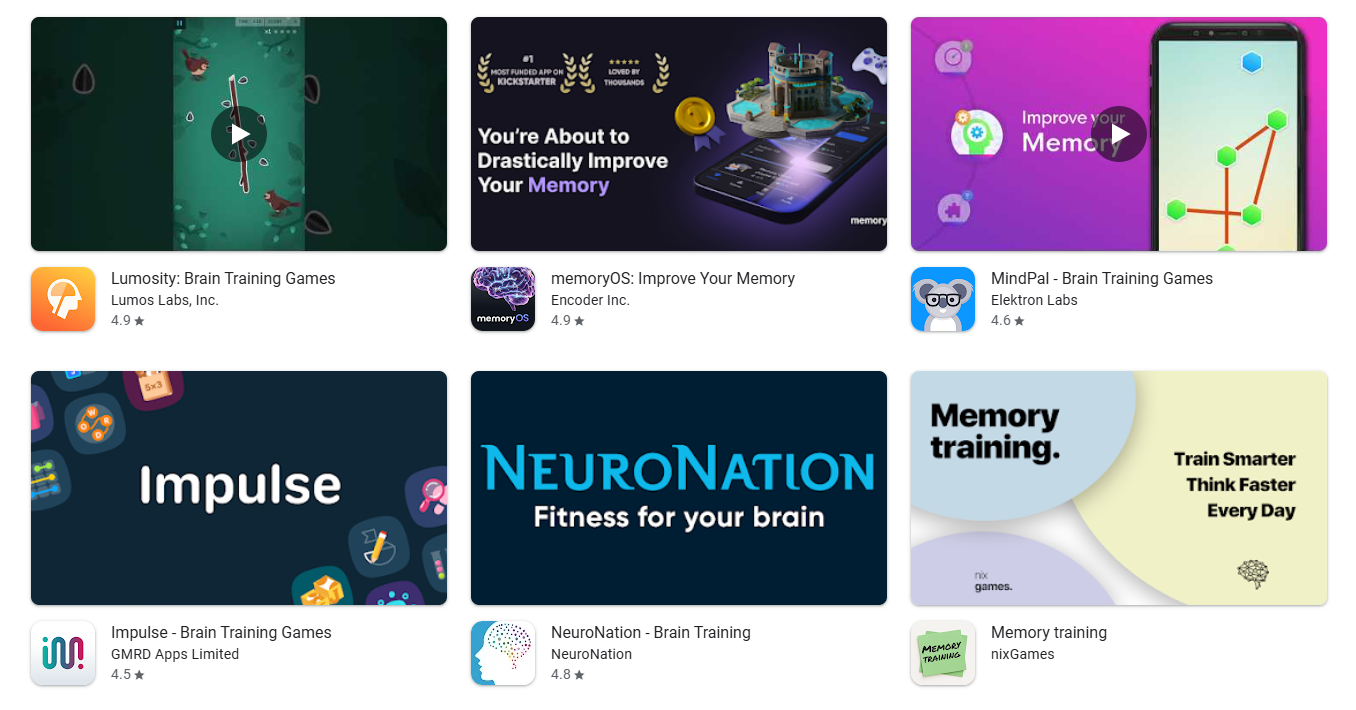
Before getting into newer options, it is worth looking at the established brain training apps. Lumosity, Elevate, Peak, BrainHQ, and Cognifit are some of the names that come up repeatedly when researching cognitive training.
Cognifit, Lumosity, Elevate, and other major brain training platforms take somewhat different approaches. Some put more emphasis on gamification and daily challenges, while others focus more heavily on assessment, tracking, or specific cognitive skills.
Lumosity is probably one of the most recognizable names in the category. Its popularity helped establish the idea that cognitive exercises could be presented as quick, colorful games rather than traditional tests. If you are comparing it with newer platforms, I also found the Lumosity vs Elevate comparison useful for understanding the difference between the two approaches.
Elevate has a somewhat different feel because it combines cognitive exercises with language and math-oriented challenges. Peak also has a strong emphasis on short games and performance tracking. The comparison between Peak and Lumosity is worth reading if the user experience and gamification side of brain training matters to you.
BrainHQ is another major name, particularly for people interested in research-oriented cognitive training. I looked at several comparisons while researching this subject, including BrainHQ vs Lumosity and BrainHQ vs NeuroTracker.
Cognifit is also worth mentioning because of its focus on assessment and cognitive performance. There are some interesting differences between Cognifit and the more casual game-oriented platforms. The Cognifit vs Peak comparison goes into that distinction in more detail.
None of these platforms is exactly the same, and I would not choose one purely because it has the biggest name. What matters more is whether you actually enjoy the exercises enough to keep using them.
1. Moadly
For someone specifically looking for calculator games online in 2026, Moadly is the newer option I would try first.
The reason is simple. Moadly is free and has more than 60 unique brain training games, so you are not locked into playing the same arithmetic exercise every day. There are number games, memory games, logic challenges, reaction games, pattern exercises, and other short cognitive challenges.
That variety matters more than it might seem. After spending enough time researching brain training apps, one problem becomes obvious: even a good game can get boring if you are forced to repeat it constantly. Having dozens of different games means you can switch from a calculation challenge to a memory exercise or logic puzzle whenever you start getting tired of one type of task.
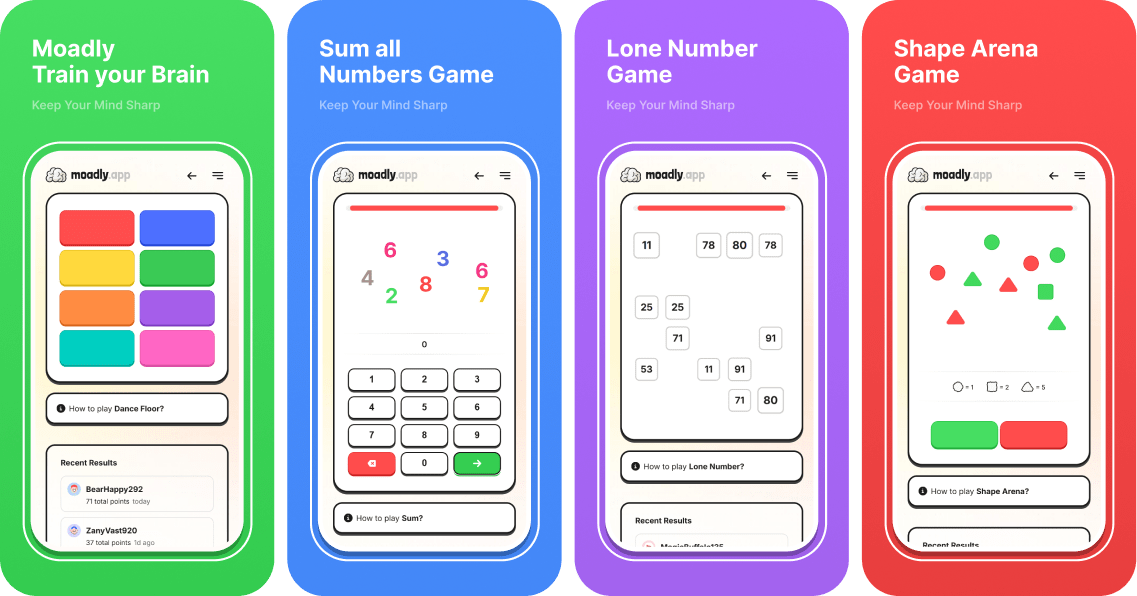
For calculator-style training, I particularly like the number-focused games because they turn arithmetic into something more competitive and time-sensitive. Instead of opening a calculator to solve a problem for you, the point is to make your own brain do the work.
Another reason I would put Moadly near the top of this list is that it is browser-based. You can start playing without committing to a paid subscription or spending time setting up a complicated program.
I also found the real-user experiments around Moadly interesting. One of the more detailed examples is the 70-day Moadly case study with Alistair, which looks at how someone used the platform over an extended period rather than simply trying it once.
There is also a 45-day Moadly case study with Maggie, which provides another perspective on using brain games as part of a longer routine.
2. Elevate
Elevate deserves a place on the list because it has historically done a good job of turning practical skills such as math and language into short games.
If your primary interest is mental math, Elevate can be appealing because the exercises feel more like skill practice than a traditional puzzle collection. It also provides a broader selection of cognitive and language exercises.
The downside for me is that the experience becomes less attractive if you specifically want a completely free collection of games. This is one reason I think newer platforms like Moadly are worth investigating alongside the established names.
If you are trying to decide between the major options, the Elevate vs Lumosity comparison gives a useful overview of their different approaches.
3. Peak
Peak is another popular brain training platform built around short cognitive games. Its biggest strength is variety. You can move between different types of challenges instead of spending an entire session doing arithmetic.
For people who want a broader cognitive workout, that can be a major advantage. If you are specifically searching for calculator games, however, I would look at whether the available math challenges are enough for your needs rather than choosing Peak simply because it is well known.
Peak also tends to come up in comparisons with other major brain training apps. For example, the Peak vs BrainHQ comparison looks at the difference between the two platforms and their premium positioning.
4. BrainHQ
BrainHQ takes a more science-oriented approach than many casual brain game platforms. That makes it particularly interesting for people who are researching cognitive training rather than simply looking for something entertaining to play for five minutes.
I would not describe BrainHQ as a calculator-game platform, though. It belongs on this list because it is part of the larger brain training landscape and is useful as a point of comparison.
The differences become clearer when you compare BrainHQ with platforms focused more heavily on games and skill building. I recommend reading the BrainHQ vs Elevate comparison if you want to understand that distinction.
5. Cognifit
Cognifit is another established option, especially for people who like assessments and detailed cognitive performance information.
It is less about simply finding a quick calculator game and more about creating a broader picture of different cognitive abilities. That can be useful if tracking your performance is important to you.
There is a good comparison of Cognifit and Elevate that helped me separate the two approaches. Cognifit also makes an interesting comparison with BrainHQ, which you can read in this BrainHQ vs Cognifit analysis.

What Makes a Good Calculator Game?
After comparing different brain training approaches, I think there are a few things that separate genuinely enjoyable calculator games from glorified worksheets.
Fast feedback
You should know almost immediately whether your answer was correct. Waiting several seconds between questions breaks the rhythm and makes a short training session feel unnecessarily slow.
Increasing difficulty
A good game should not stay at the same level forever. Once basic addition becomes effortless, there should be harder combinations, shorter time limits, or more complicated decisions.
Short sessions
I prefer games that can be played for two, five, or ten minutes. That makes them much easier to fit into a normal day.
Variety
This is probably the most important one. Arithmetic is useful, but doing exactly the same arithmetic exercise every day gets stale. This is why I think a platform with dozens of different games has a significant advantage over a single-purpose calculator game.
Progress tracking
Scores, personal records, streaks, or other forms of progress can make a surprisingly big difference. Without some way to see improvement, it becomes harder to stay motivated.
Calculator Games vs Other Brain Training Games
I would not treat calculator games as a replacement for every other type of brain training game. They are better viewed as one piece of a broader routine.
For example, calculation games can make you think quickly with numbers, while memory games require you to retain and recall information. Logic puzzles require a different kind of reasoning, and reaction games put more emphasis on speed and attention.
This is one reason I prefer platforms with a broad selection rather than apps built around a single exercise. When I researched the subject, I repeatedly came across comparisons between specialized platforms and general brain training apps. The guide to choosing a brain training app is a useful place to start if you are unsure what type of training fits you.
There is also a good overview of browser-based brain test games if you prefer playing directly in a browser rather than downloading another app.
Are Free Calculator Games Worth Playing?
Absolutely. I do not think paying for a brain training subscription automatically makes the exercises better.
There are certainly paid platforms with excellent content, but the biggest factor is whether you actually use the games consistently. A free platform that you enjoy and play regularly can be much more useful in practice than an expensive subscription that you stop opening after two weeks.
This is also why I found the question of free versus paid memory apps interesting. The comparison of free and paid memory apps explores some of the tradeoffs, and many of the same considerations apply to calculator and brain training games.
Moadly stands out here because the basic experience is free while still offering a large selection of games. With more than 60 unique games available, it feels less like a single calculator tool and more like a complete collection of short brain exercises.
My Pick for 2026
If you specifically want a calculator game, I would choose something that makes mental arithmetic fast, challenging, and enjoyable rather than simply reproducing a calculator on a webpage.
For a broader brain training experience, my pick in 2026 is Moadly. The established names such as Lumosity, Elevate, Peak, BrainHQ, and Cognifit are still important parts of the category, and they each have their strengths. But Moadly feels like one of the more interesting newer alternatives because it combines a large collection of games with a free experience.
More than 60 unique games is a meaningful difference. You can spend one session working on numbers, another on memory, another on logic, and another on reaction speed. That variety is exactly what I want from a modern brain training platform.
I also like that the games are short. You do not need to block out an hour. A few minutes is enough to complete a handful of challenges, which makes it much easier to turn brain games into a habit.
For anyone interested in the broader evidence and experience around brain training, I would also recommend reading the review of popular memory training apps and the overview of brain test games. They give useful context for where these games fit compared with traditional cognitive training.
Final Thoughts
Calculator games are a surprisingly good entry point into online brain training. They are simple enough to understand immediately, but they can become challenging very quickly when speed, accuracy, memory, and increasingly difficult calculations are introduced.
The biggest brain training apps have proven that people enjoy short cognitive games, but I think the next generation of platforms is moving toward something more flexible. Instead of forcing users to commit to one style of exercise, newer services can offer a much wider selection of challenges.
That is ultimately why Moadly is the option I would recommend trying in 2026. It is free, it has more than 60 unique games, and it gives you access to much more than basic calculator exercises. If you start with number games and eventually find yourself playing memory, logic, pattern, or reaction games too, that is probably a sign that the broader approach is working for you.
For me, the best brain training game is not necessarily the one with the most impressive scientific terminology or the biggest brand name. It is the one that makes me want to come back tomorrow and try to beat my score.